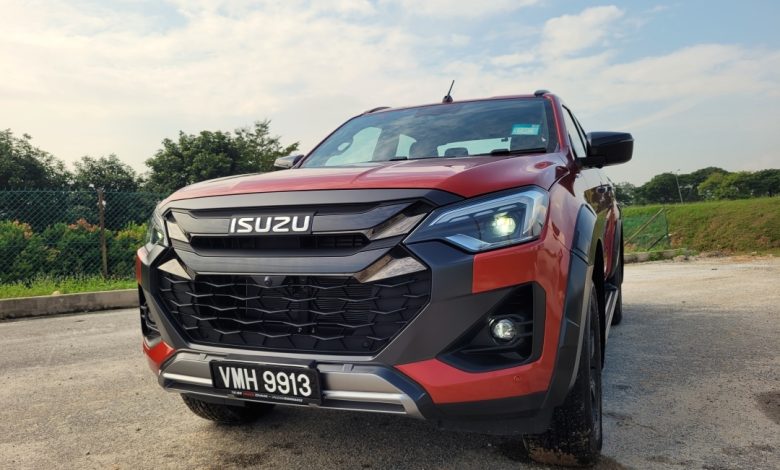
What Is This?
The D-Max X-Terrain represents how far the modern pickup has come. No longer just a tool for hauling and hard labour, this range-topping Isuzu is aimed at drivers who want rugged capability wrapped in SUV-like comfort, safety tech, and everyday usability. It’s built to work, but just as importantly, it’s built to live with.
With its latest facelift in 2024, the X-Terrain remains largely unchanged heading into 2026. That’s not a bad thing. In fact, in today’s market where vehicle prices keep climbing and fuel costs are always under scrutiny, the D-Max’s core strengths — durability and fuel efficiency — feel more relevant than ever.

Road Presence That Matches Its Flagship Status
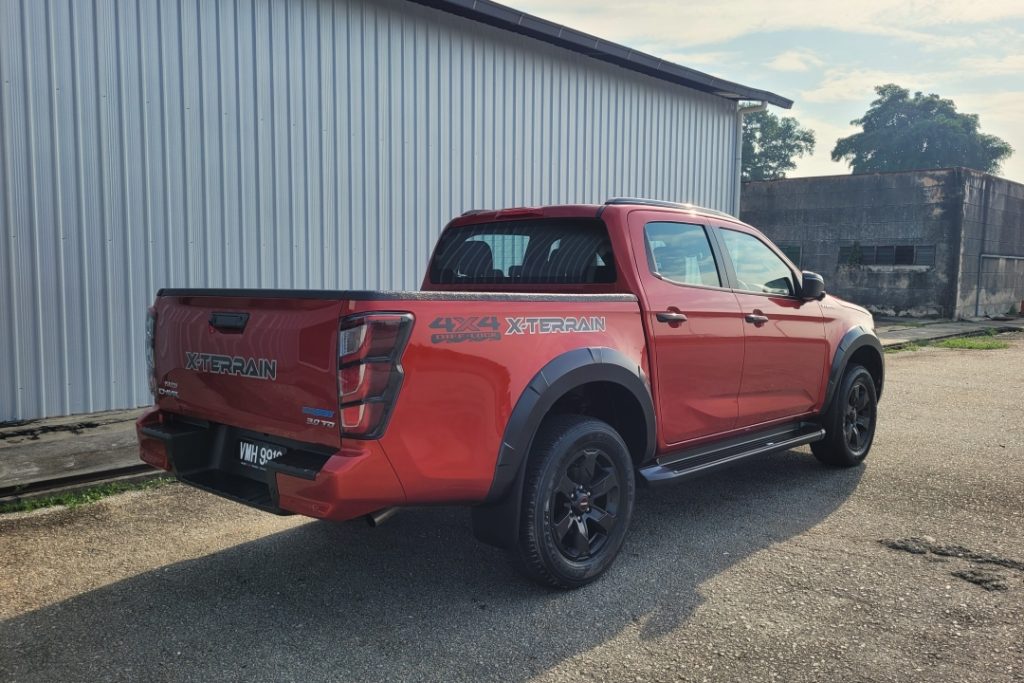
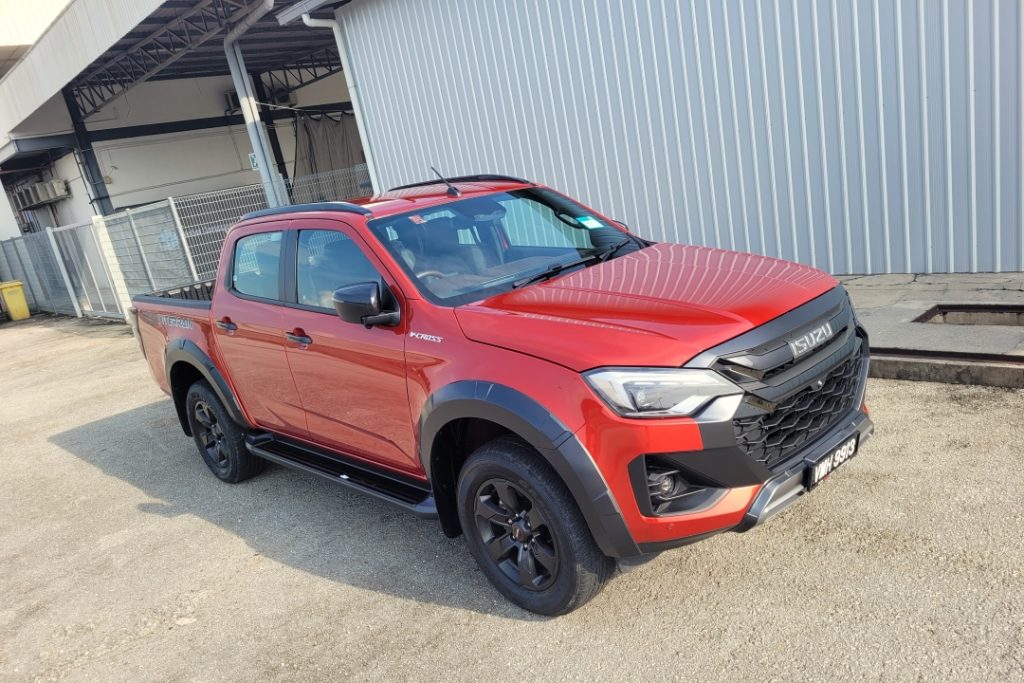
The X-Terrain is easily the most visually distinctive D-Max.
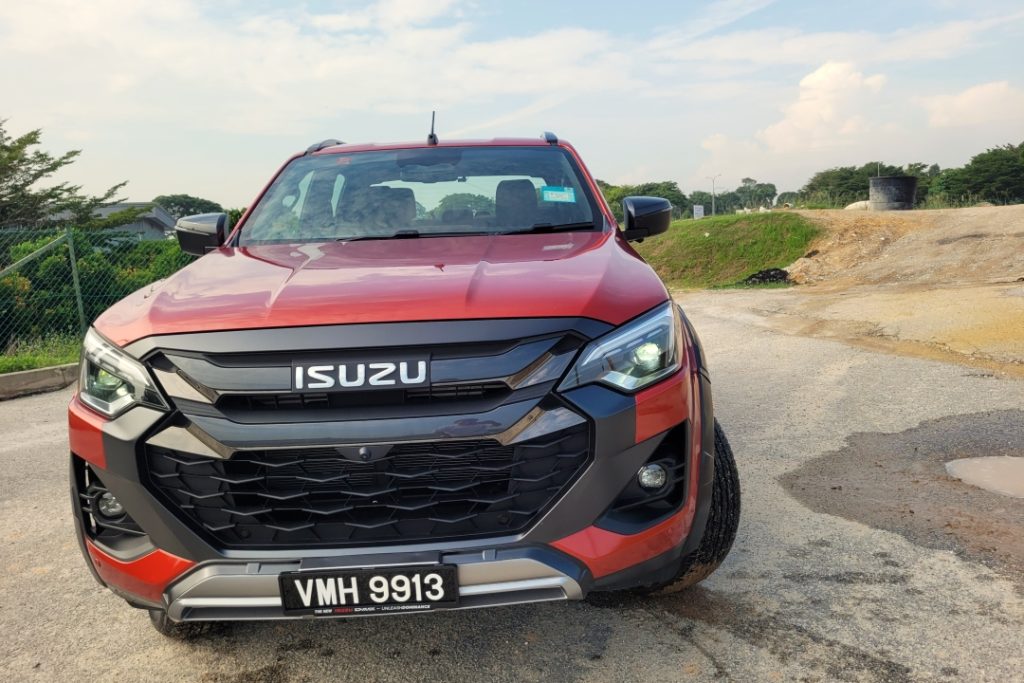
Up front, the redesigned “fang” grille with a blacked-out honeycomb finish gives it a more aggressive, modern expression. Slim Bi-LED headlights with eyebrow-style daytime running lights double as turn signals, adding a sharp, technical look. Functional air curtains integrated into the bumper aren’t just styling fluff — they help smooth airflow around the front end.
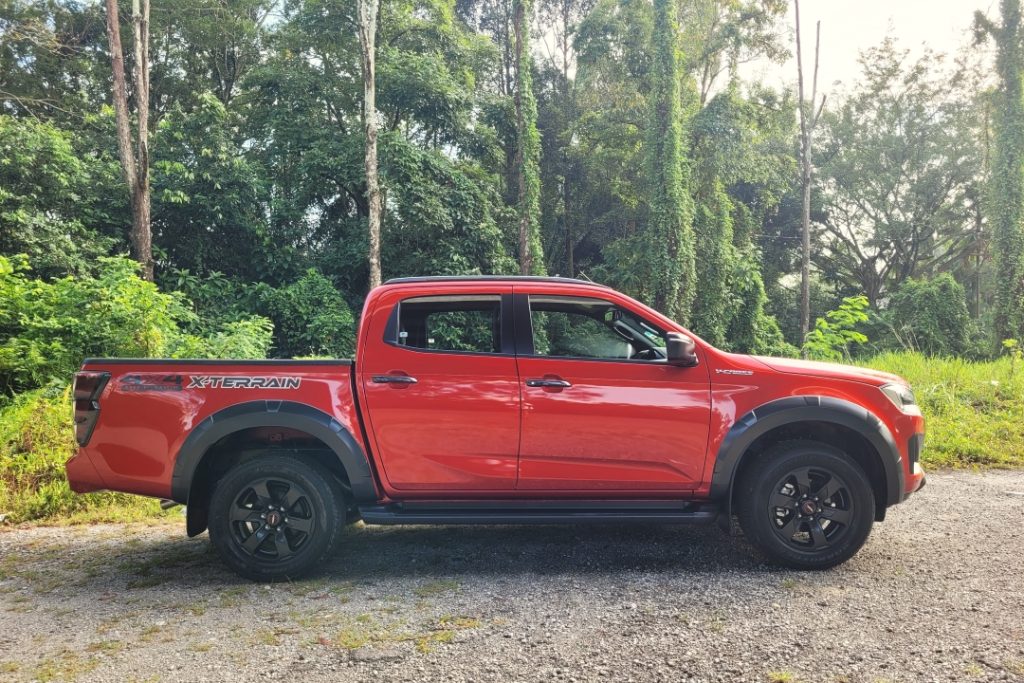
Matte grey overfenders, 18-inch matte black alloys wrapped in all-terrain tyres, dark-finished side steps, mirrors and handles all add to the tougher stance. Around the back, the tailgate now gets a damper for smoother operation, plus a lockable handle — a small but very practical touch for owners running canopies or tonneau covers.
In bright shades like Namibu Orange Mica, the X-Terrain leans more “lifestyle truck” than “site supervisor special,” and that’s exactly the point.
An Interior That Tries Hard (and Mostly Succeeds) to Feel Like an SUV
Step inside and you’re reminded how far pickups have come. While the upright dashboard and seating position still give away its truck roots, the X-Terrain does a convincing job of feeling SUV-like.
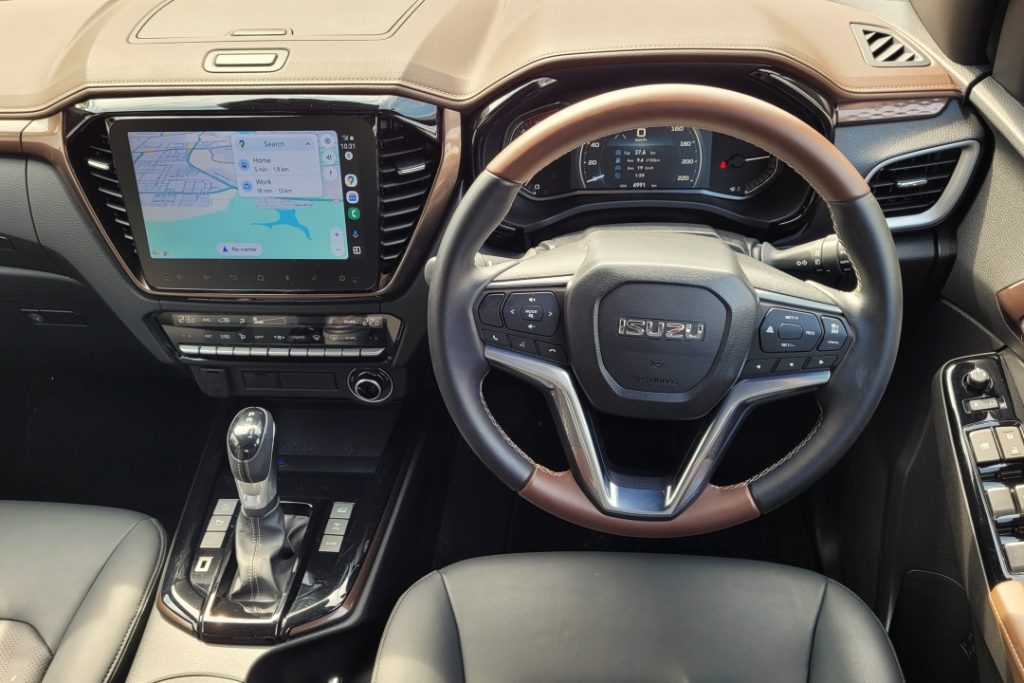
The dashboard and door trims feature Isuzu’s “Miura” design theme inspired by Japanese origami, while soft-touch materials and brown leather accents lift the overall ambience. The two-tone leather-wrapped steering wheel and ambient lighting add a touch of flair without going overboard.
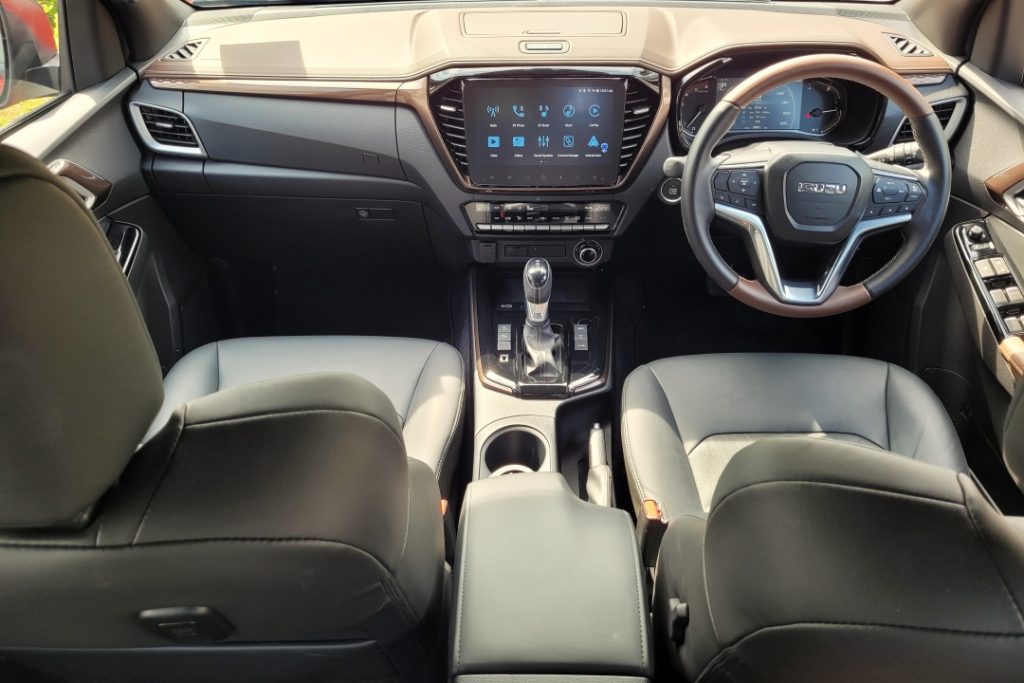
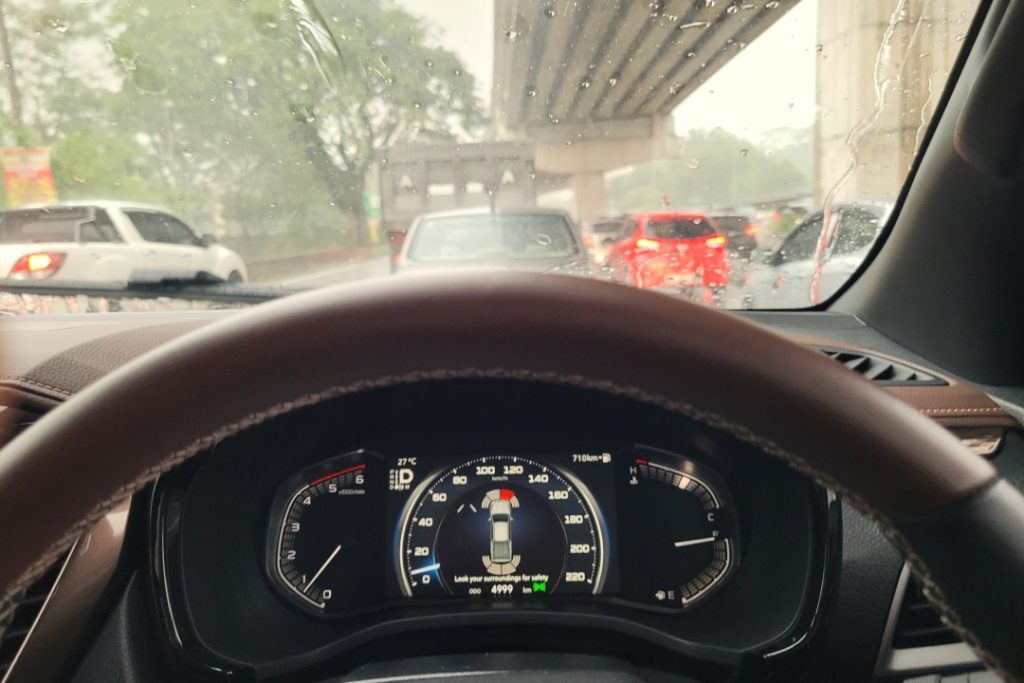
Tech is up to modern expectations. A 10-inch touchscreen supports wireless Apple CarPlay and Android Auto, and the interface is straightforward and responsive. The 7-inch digital multi-information display in the instrument cluster gives the driver useful data without feeling cluttered.
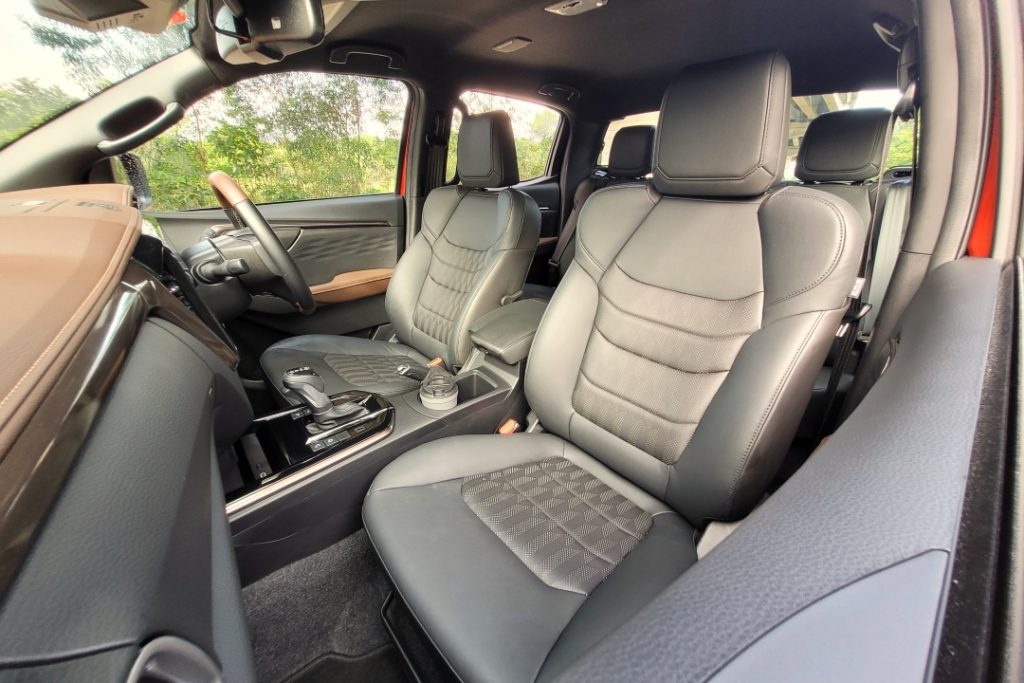
Front seats are a highlight. They use anti-vibration comfort foam designed to absorb road harshness, and on long drives it genuinely makes a difference. The driver gets 8-way power adjustment with lumbar support, though the front passenger still adjusts things manually.
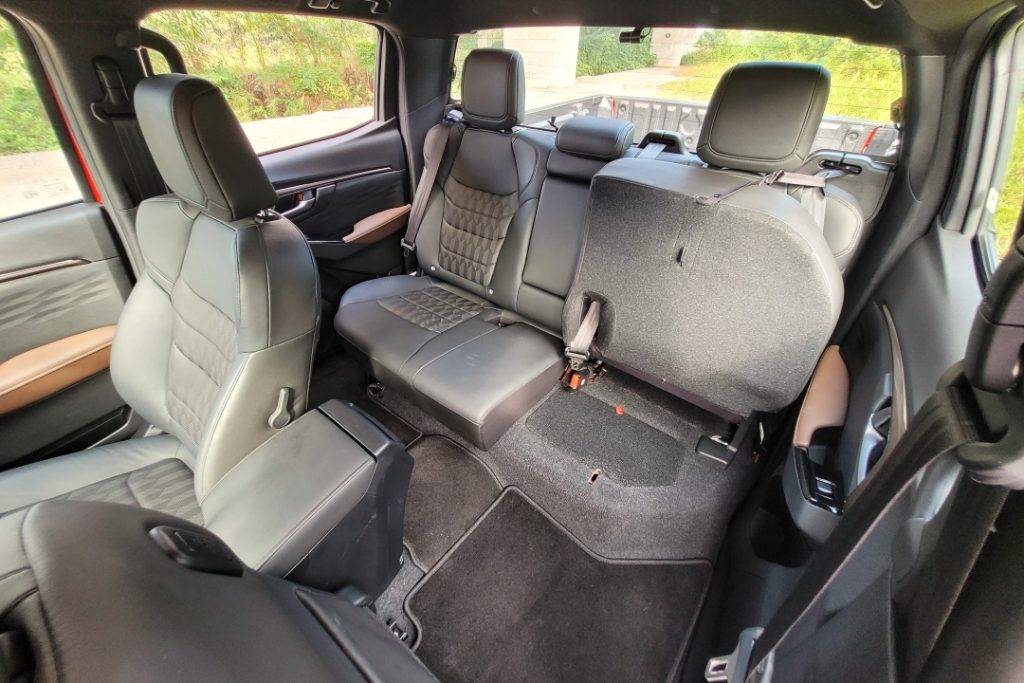
Rear passengers get decent space for a pickup, plus rear air vents and under-seat storage. The backrest angle is still more upright than an SUV, but for family use and daily commuting, it’s perfectly livable.
The 3.0L Diesel: Old School Capacity, Modern Efficiency
Under the bonnet is Isuzu’s tried-and-tested 3.0-litre Blue Power turbodiesel. It makes 190 PS and 450 Nm of torque, paired with a 6-speed automatic.
On paper, a 3.0-litre engine may sound thirsty in 2026. In reality, this is where the D-Max quietly wins.
In mixed driving — city traffic, highways, and some B-road runs — real-world consumption around 8.0 litres/100 km is very achievable with a sensible right foot. With its large fuel tank, a touring range of 900 km or more on a full tank is realistic. At a time when some large SUVs struggle to stay in the low 10s, that’s a strong argument for diesel efficiency.
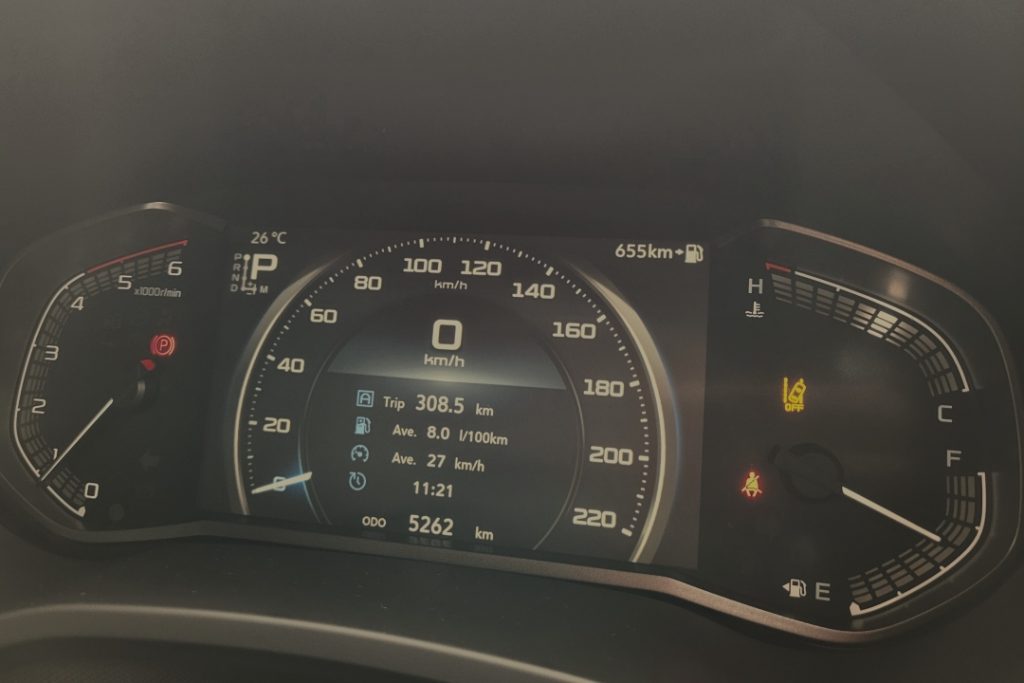
With Malaysian drivers keeping a close eye on fuel spending, the D-Max’s ability to move a two-tonne vehicle this frugally is one of its biggest strengths. Of course, the fuel cost conversation isn’t as straightforward as diesel versus petrol on paper due to the BUDI95 subsidy. Even so, what the Isuzu still offers is range and efficiency under load. When fully packed for a trip, carrying gear in the bed, or towing, a big-capacity turbodiesel like this typically works less hard than a smaller turbo-petrol SUV — and that’s where the real-world fuel advantage often returns.
Performance-wise, the engine delivers its torque low down, so it never feels strained. Overtaking is easy, highway cruising is relaxed, and the gearbox shifts smoothly without hunting.
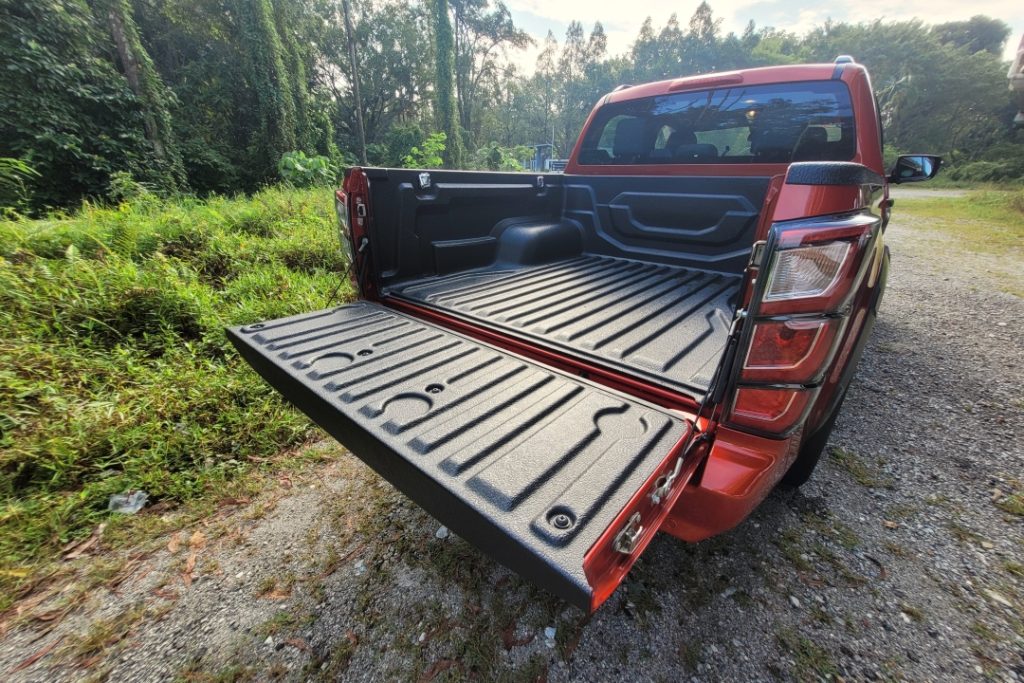
On the Road: Still a Pickup, Just a More Polished One
No, it doesn’t drive like a monocoque SUV — and it shouldn’t. The X-Terrain rides on a traditional pickup setup with leaf springs at the rear.
At low speeds over sharp bumps, especially with an empty load bed, you’ll feel the familiar pickup jiggle. But once up to speed, the ride settles down and becomes surprisingly composed. On highways, it feels stable, planted, and unbothered by long-distance cruising.
Cabin refinement is another pleasant surprise. Yes, you’ll still hear a bit of diesel clatter under hard acceleration, but at cruising speeds wind and road noise are well suppressed. For a ladder-frame truck, it’s impressively civilised.
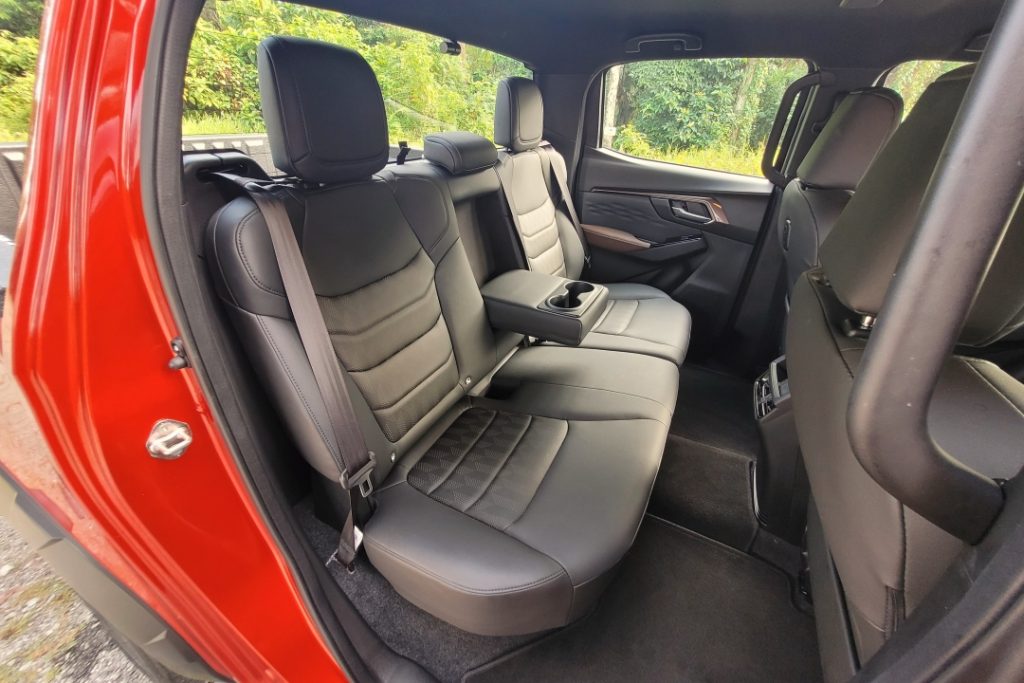
The high seating position gives excellent visibility, and while the steering is heavier and slower than an SUV’s, it’s predictable and easy to place once you’re used to the size.
Off-Road: Tech Now Helps the Less Experienced
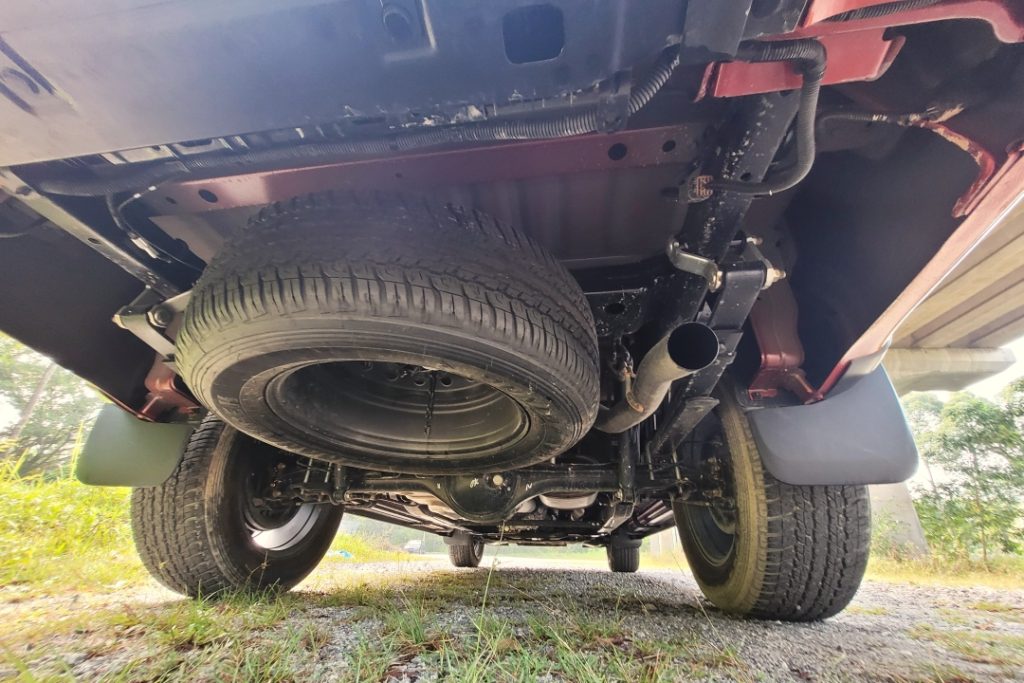
The D-Max has always had the hardware — strong chassis, good ground clearance (around 240 mm), and an 800 mm wading depth. The newer addition is smarter electronics.
Rough Terrain Mode works alongside the 4WD system and rear differential lock to automatically brake slipping wheels and send torque where there’s grip. For seasoned off-roaders, this is a useful extra layer of control. And for newcomers, it’s a confidence booster that can make tricky terrain and muddy tracks less intimidating.
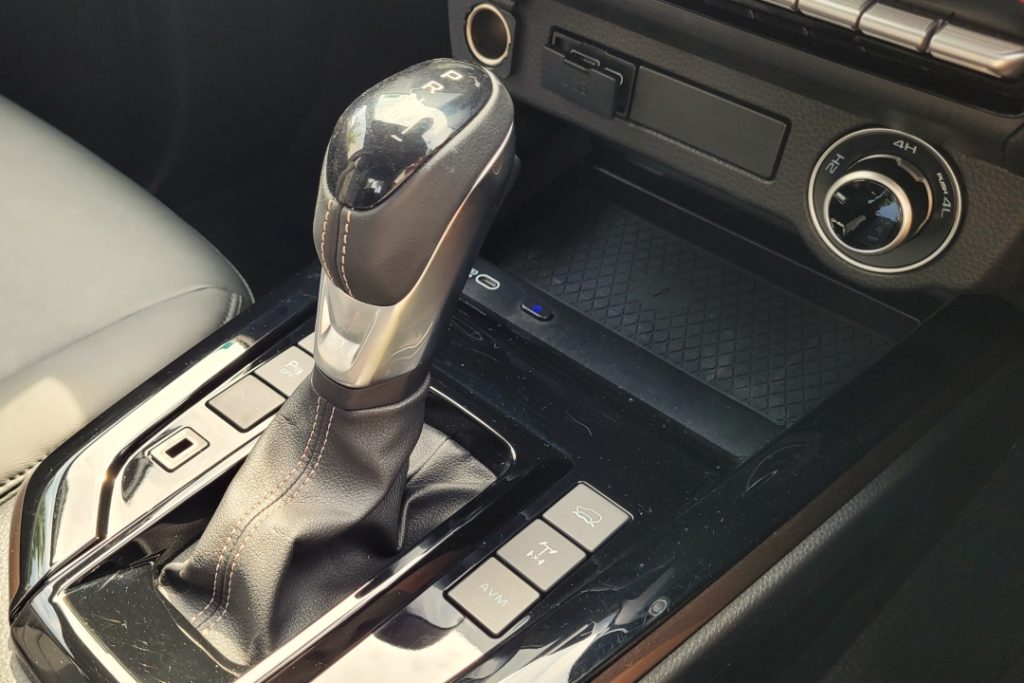
Underbody protection and the naturally torquey diesel engine round out a package that still feels genuinely built for rough use.
Safety: Properly Modern
The X-Terrain comes with Isuzu’s updated Allsight safety suite and a 5-star ASEAN NCAP rating. The newer stereo camera setup offers a wider field of view and better detection.
Key features include Adaptive Cruise Control with Stop & Go, Autonomous Emergency Braking, Rear Cross Traffic Brake, Turn Assist, Automatic High Beam, and a 360-degree camera system. For a pickup, that’s a strong list and makes it much easier to live with in daily urban traffic.
Does It Still Make Sense in 2026?
At around RM162k, the D-Max X-Terrain sits in the same price conversation as many mid-size SUVs. But no SUV at that money can tow like it, carry like it, or shrug off abuse like it. This thing is built solid.
Add in Isuzu’s reputation for durability and genuinely impressive fuel efficiency, and the X-Terrain stands out as one of the most rational “lifestyle” vehicles you can buy. It looks the part, has the features most families want, and won’t punish you every time you fill up.
CarTok Editor’s Note:
The petrol subsidy may soften the fuel cost gap on paper, but when the road gets longer, the load gets heavier, or the tarmac ends, diesel efficiency still speaks fluent common sense.