2025 Sales Results: Malaysian Automotive Industry Crosses 800,000 Mark for Second Straight Year

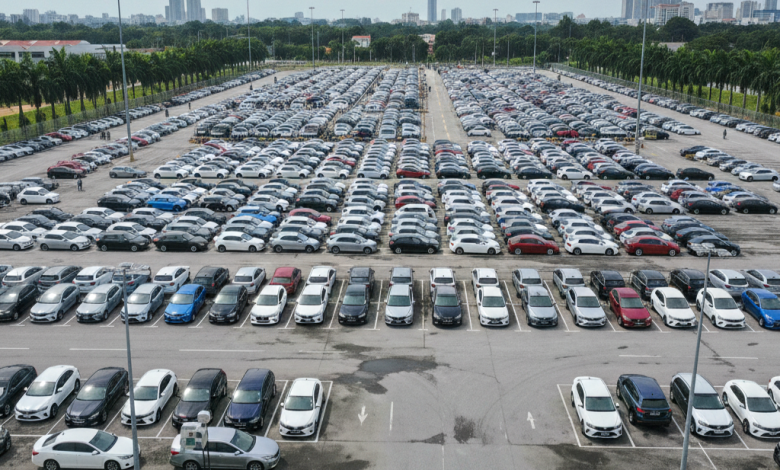
In 2025, the Malaysian automotive industry recorded its second consecutive year of vehicle sales exceeding 800,000 units, according to the Malaysian Automotive Association (MAA), reinforcing the sector’s post-pandemic resilience despite growing cost and policy headwinds.
Total Industry Volume (TIV) reached 820,752 units, marking a marginal 0.5% increase over 2024’s 816,747 units. The milestone represents back-to-back record-breaking years for the industry, a feat not previously achieved in Malaysia’s automotive history.

Record Monthly and Quarterly Sales in 2025
Beyond the annual figure, 2025 also delivered several all-time records:
- Highest monthly TIV ever recorded: 90,716 units (December 2025)
- Highest quarterly TIV ever recorded: 241,416 units (Q4 2025)
December 2025 marked only the second time Malaysia’s monthly vehicle sales crossed the 80,000-unit threshold, surpassing the previous record of 81,735 units set in December 2024.
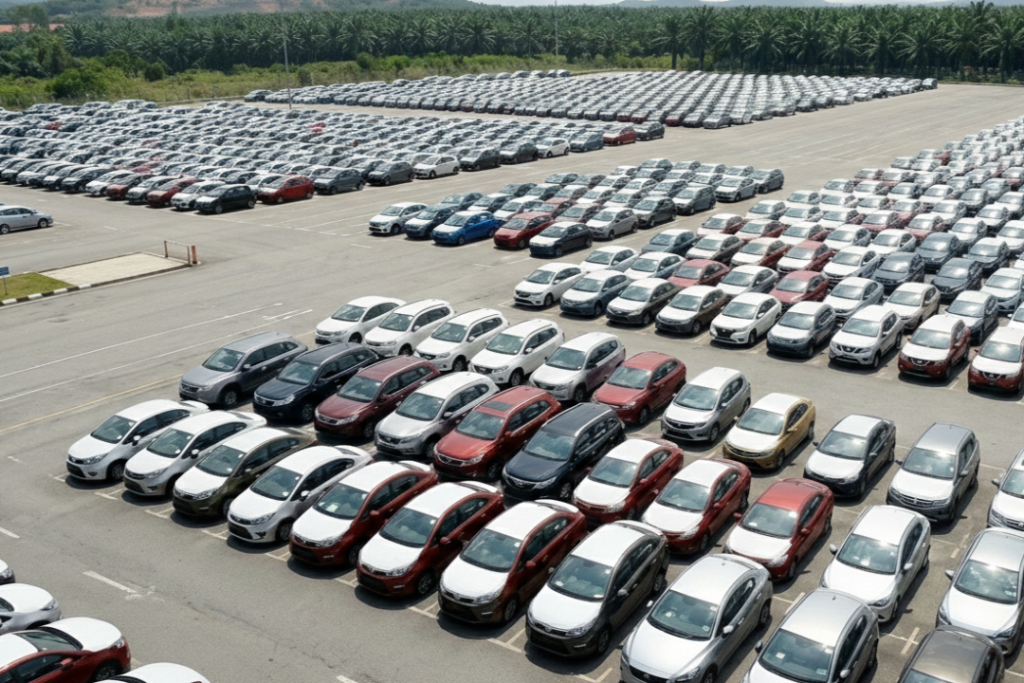
MAA attributed the strong sales momentum to a combination of macroeconomic stability and aggressive year-end market activity.
“Malaysia’s automotive industry recorded another milestone year in 2025, with total industry volume surpassing 800,000 units for the second consecutive year and achieving record monthly and quarterly sales. This performance was supported by resilient consumer demand, favourable financing conditions, and growing acceptance of electrified vehicles, reflecting the industry’s continued strength and transition towards more advanced and sustainable mobility,”
said Mr Mohd Shamsor Mohd Zain, President of the Malaysian Automotive Association.
Economic and Market Drivers Behind 2025 Performance
MAA highlighted several factors that sustained industry demand throughout the year:
- GDP growth of 4.7% in the first three quarters of 2025, driven by domestic demand and recovering exports
- Lower financing costs, following the reduction of the Overnight Policy Rate (OPR) to 2.75% since July 2025
- Stable socio-political conditions, supporting employment and business confidence
- Unemployment rate at an 11-year low of 2.9%
- Strong order backlogs, particularly in the A-segment
- Aggressive OEM and distributor promotions, especially in Q4 2025
National Makes Strengthen Market Share
National brands continued to consolidate their position in the market, increasing their combined share by 0.4 percentage points to 62.3% of total industry volume, equivalent to 511,468 vehicles sold.
Non-national brands recorded 309,284 units, a slight 0.6% decline year-on-year, largely due to weaker commercial vehicle demand.
Commercial vehicles accounted for 8% of total TIV in 2025, down from 9% in 2024, continuing a downward trend following the removal of diesel subsidies in June 2024.
SUVs and Electrified Vehicles Drive Passenger Car Growth
Passenger vehicle sales rose 1.6% year-on-year to 759,098 units, with SUVs emerging as the primary growth driver:
- SUV sales: 228,572 units (+13.4% YoY)
- Passenger cars declined slightly, while MPVs remained broadly stable
Electrified vehicle adoption also accelerated sharply:
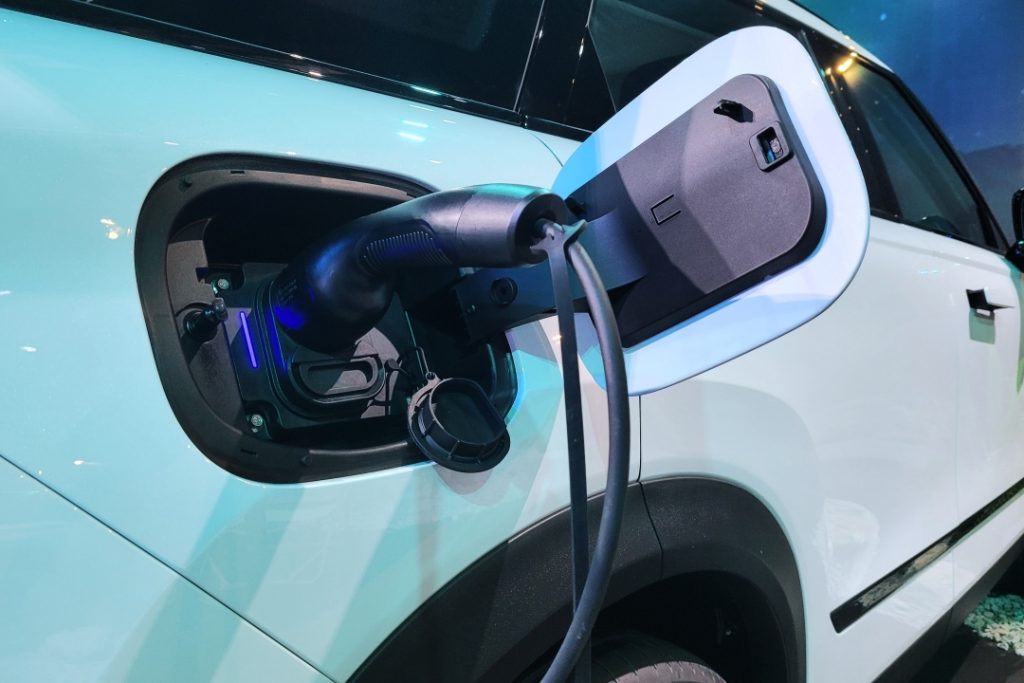
- Battery electric vehicle (BEV) sales rose 109% in 2025 to 30,848 units
- Combined xEV sales (HEV + BEV) reached 69,363 units, a 52% increase year-on-year
MAA noted that the impending expiry of imported CBU BEV incentives at the end of 2025 contributed to accelerated registrations.
Industry Production Declines Despite Record Sales
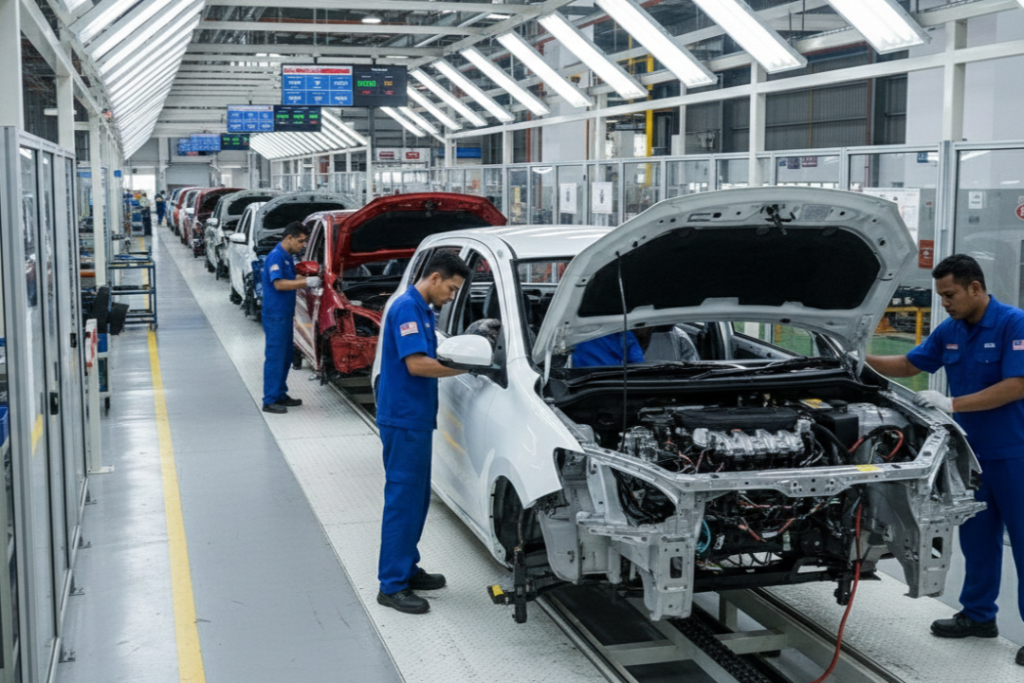
Total Industry Production (TIP) declined 5% in 2025 to 747,780 units, compared with 790,347 units in 2024.
According to MAA, the divergence between sales and production reflects higher imports of CBU BEVs and front-loaded registrations ahead of incentive expiry, rather than weakening domestic demand.
2026 Outlook: Cautious Optimism Amid Policy Uncertainty
For 2026, MAA projects a TIV of 790,000 units, representing a 3.8% decline from 2025, citing several downside risks:
- Moderating GDP growth forecast at 4.0–4.5%
- Global trade uncertainty and geopolitical tensions
- Inflationary pressures affecting manufacturing and operating costs
- Expiry of imported EV tax incentives and potential excise duty changes
- EV adoption still at an early stage, with limited local assembly capacity
- Rising cost of living affecting consumer purchasing power

At the same time, several stabilising factors remain in place:
- Continued low unemployment
- Strong demand for affordable, fuel-efficient vehicles
- Ongoing EV ecosystem development and new model introductions
- Competitive promotions and value-added ownership packages
MAA forecasts xEV sales of 100,000 units in 2026, equivalent to 12.7% of total industry volume, split between 51,000 hybrids and 49,000 BEVs.
KLIMS 2026 Confirmed for June
MAA also confirmed that the Kuala Lumpur International Mobility Show (KLIMS) 2026 will take place at MITEC from 12 to 21 June 2026, positioning the event as a key platform for new technology, mobility solutions, and brand launches.
CarTok Editor’s Note
Two years above 800,000 units is no longer a post-pandemic rebound story — it is Malaysia’s new automotive baseline. The question now is not demand, but how policy clarity and local EV execution keep pace with it.