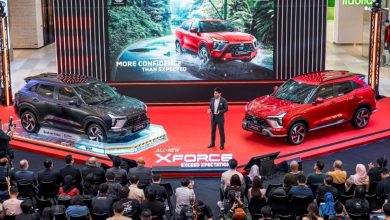
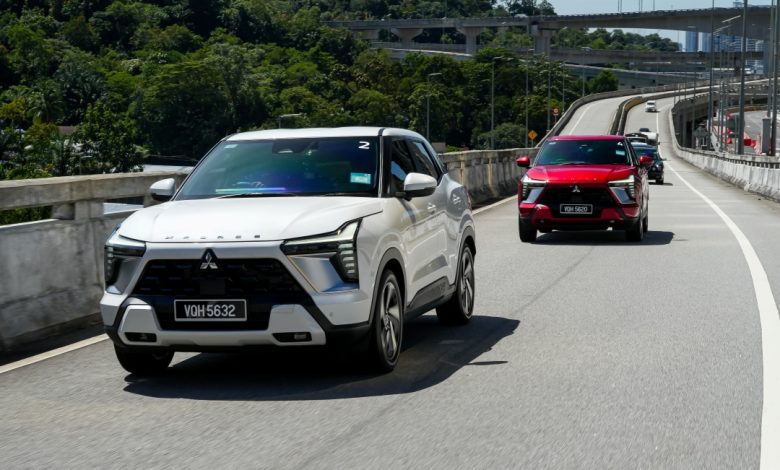
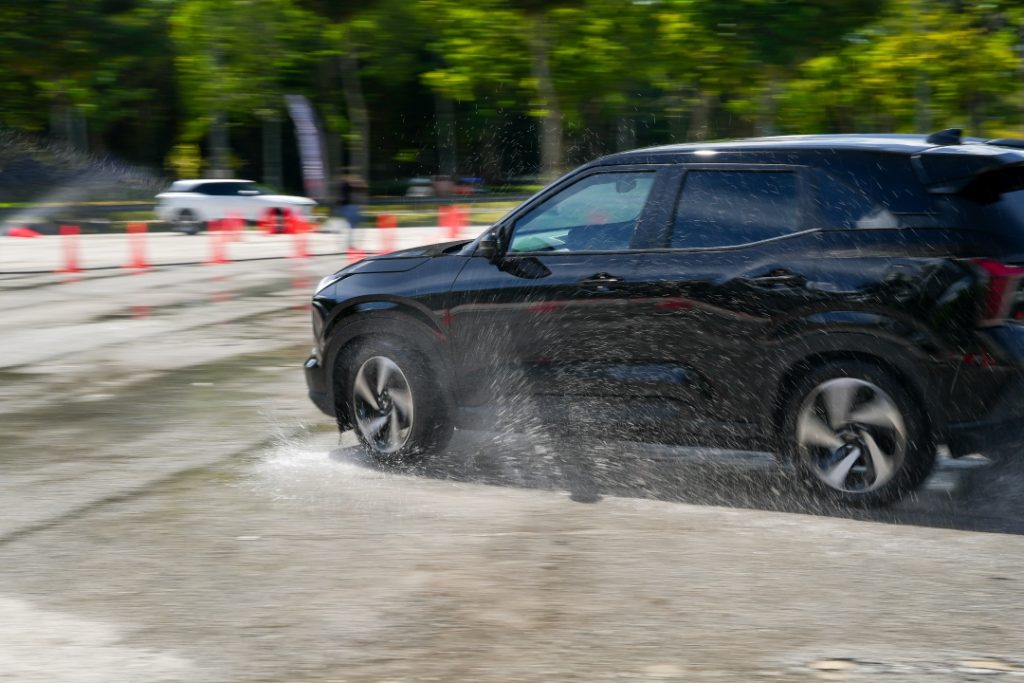
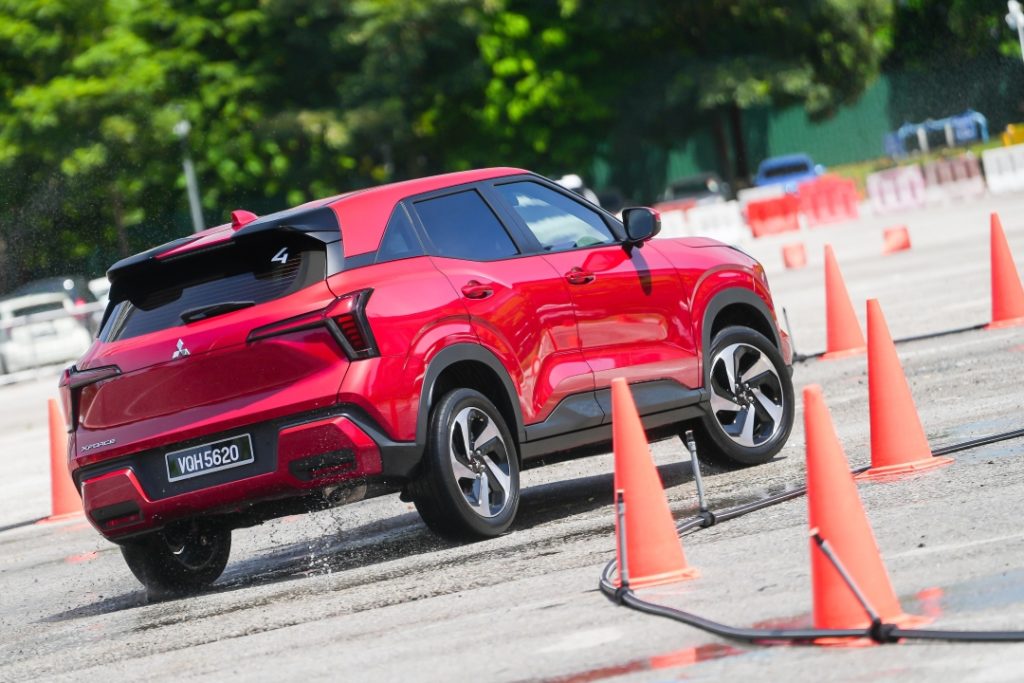
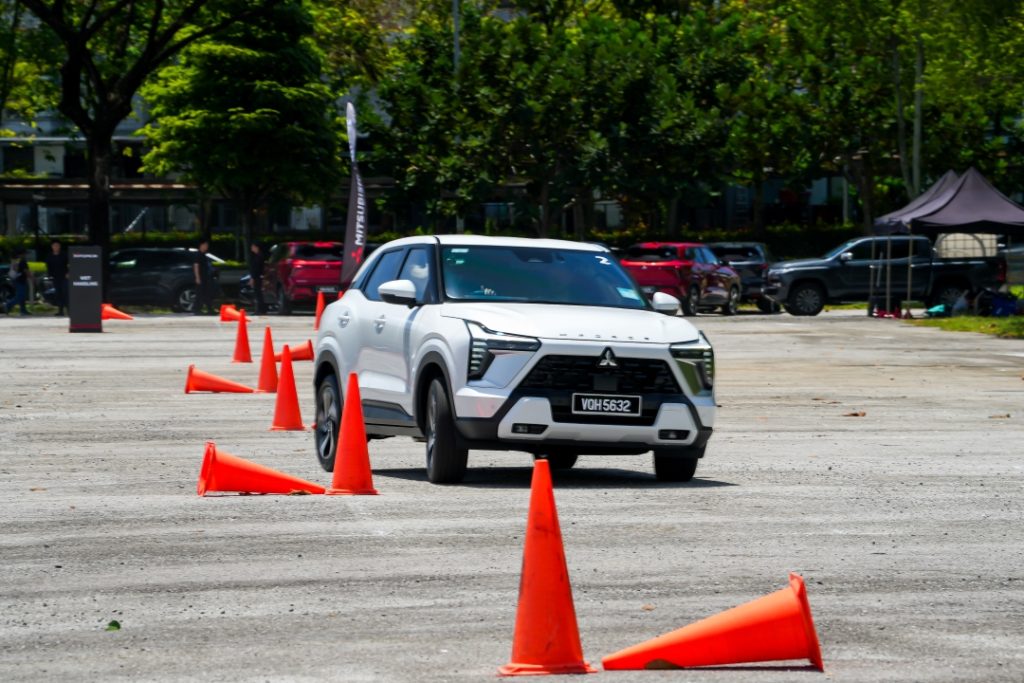
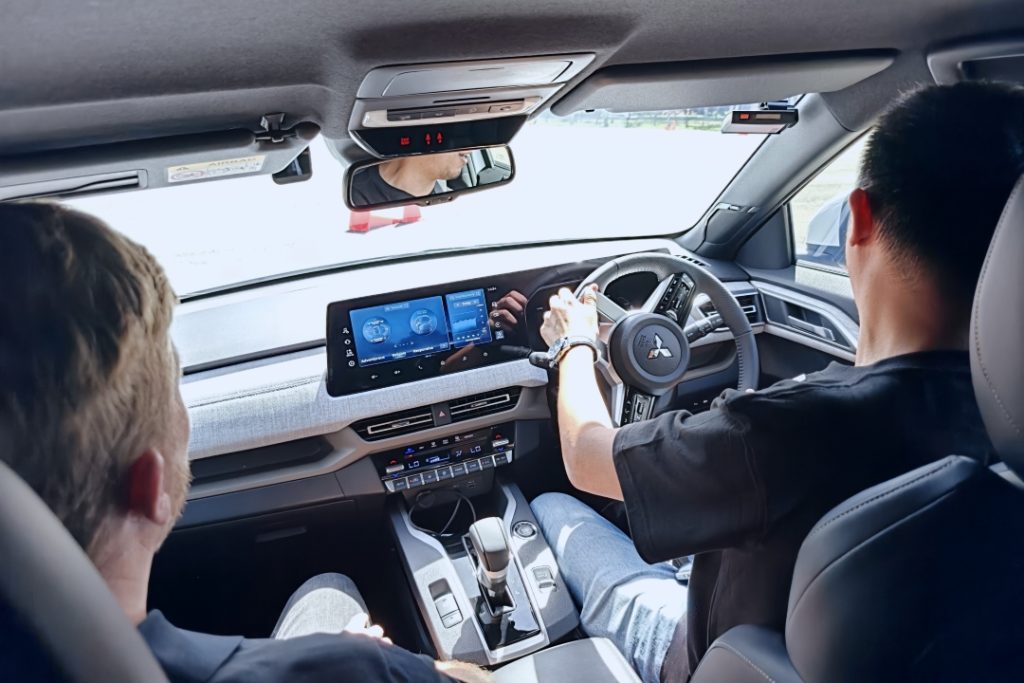
Mitsubishi Motors Malaysia recently revealed the Xforce to motoring media and hosted a hands-on preview which included a test drive through the urban setting and a dash on the highway. This was topped off with some closed circuit driving that involved slalom, hard braking and wet-surface exercises designed to show what the car’s chassis, CVT and new Wet Mode can actually do.
The result is a clear, pragmatic package — stylish and well equipped, engineered with sensible mechanical changes that matter for Malaysian drivers.

Quick Verdict
Before you read on, here is a quick verdict based on the preview drive.
The Xforce doesn’t chase class-leading power figures or win drag races — it prioritises composure, ride comfort and wet-weather confidence instead. It may not excite like some turbocharged rivals, but it feels better judged for real-world roads. If you value stability and practicality over straight-line punch, this is one of the more convincing new entries in the segment.
Design & Interior — Premium Look, Practical Details
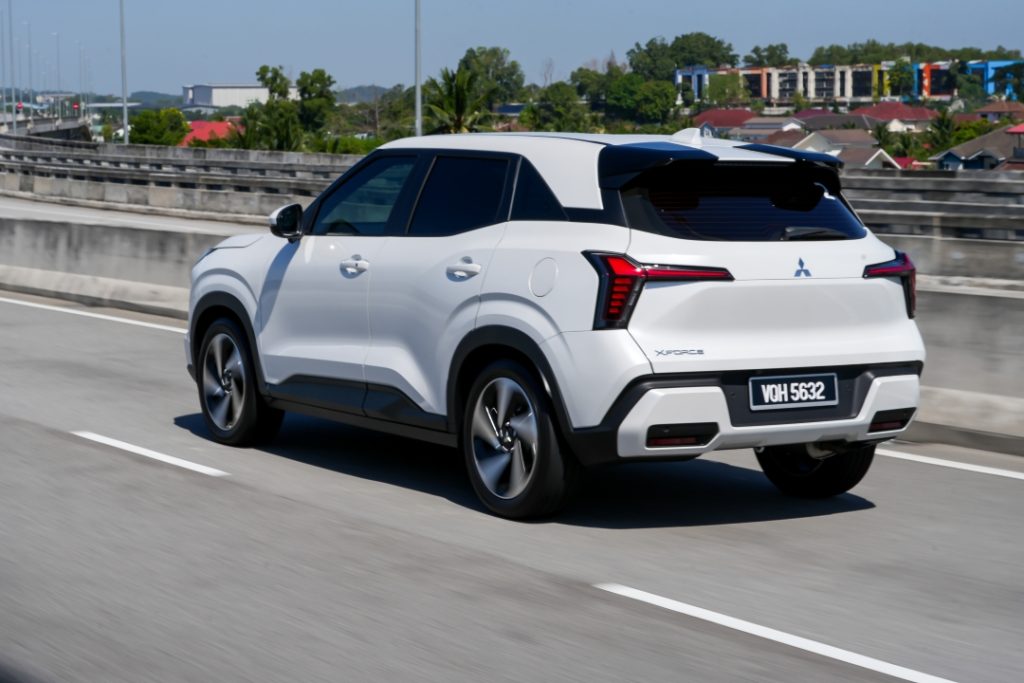
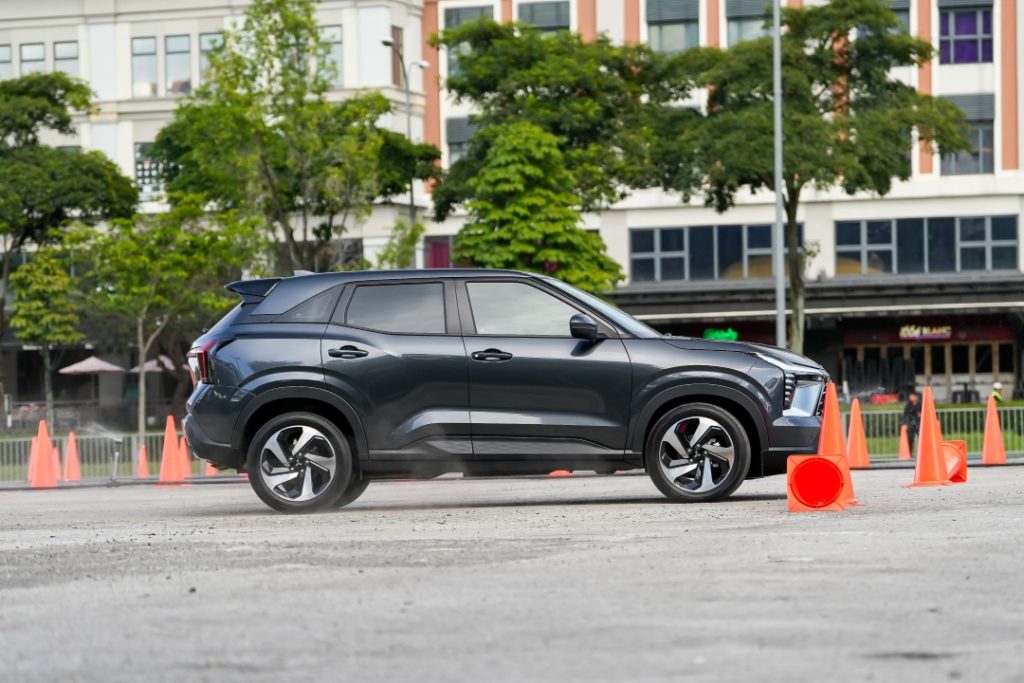
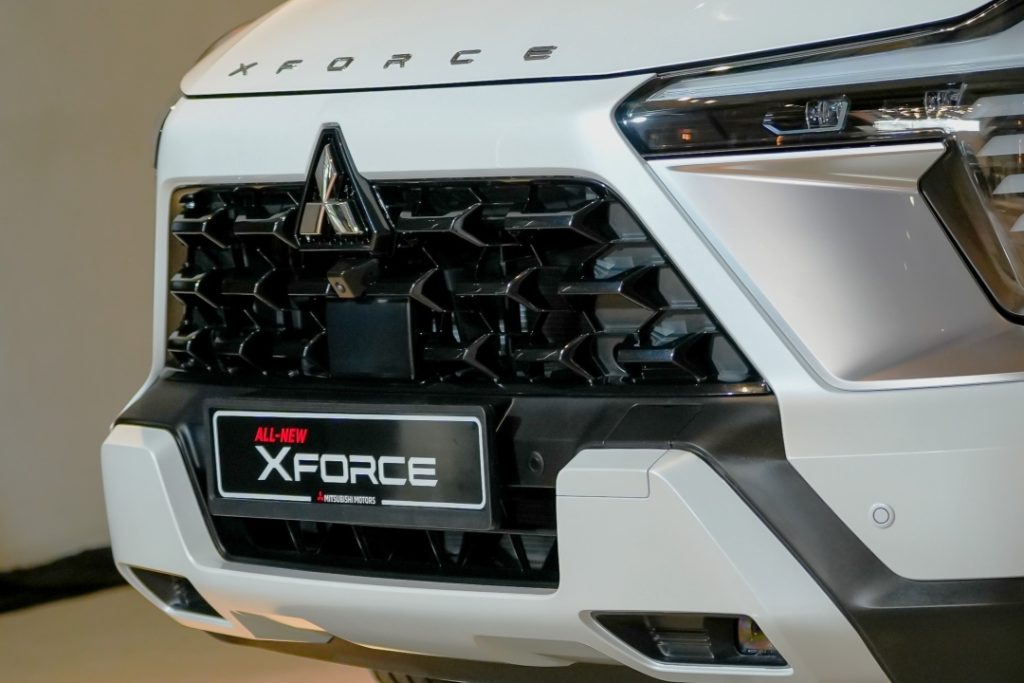
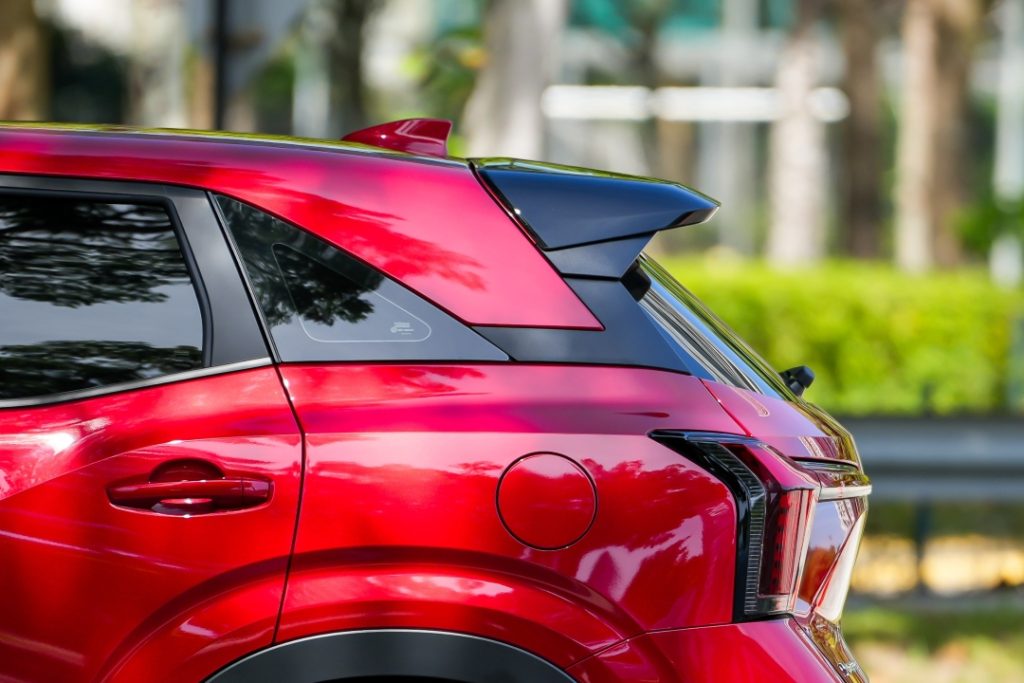
Mitsubishi’s “Silky & Solid” styling is visible at first glance: T-shaped LED signature lighting, pronounced fender flares and a planted, athletic stance. The “Silky & Solid” design language even earned the Xforce an iF Design Award in 2024.
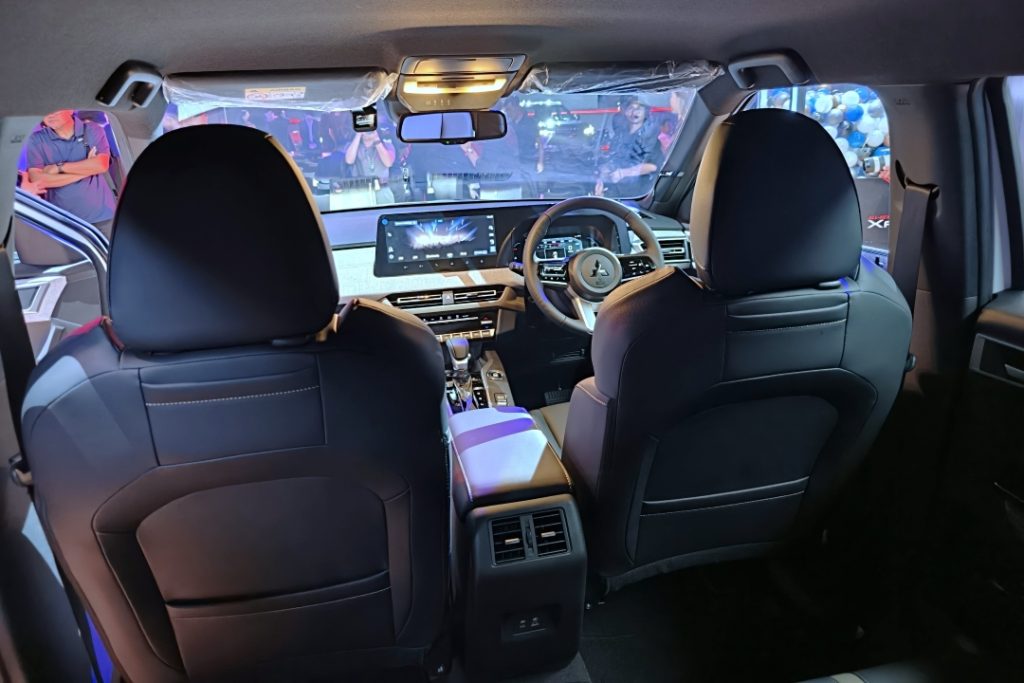
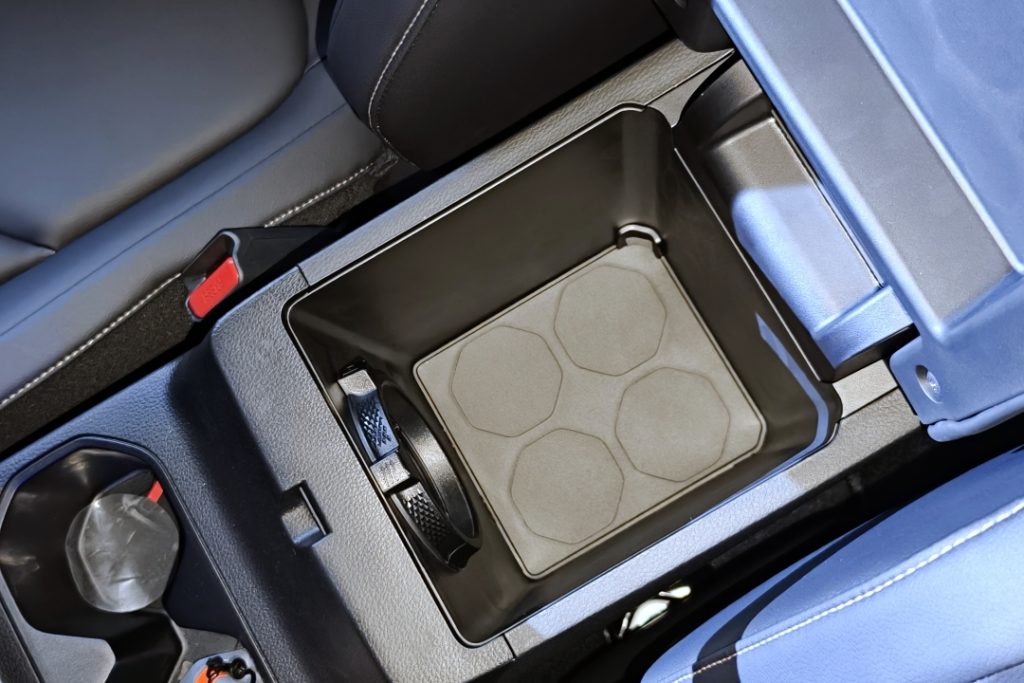
The Xforce Ultimate’s cabin pushes above segment expectations: a 12.3-inch infotainment screen, 8-inch digital cluster, Mélange fabric dash trim, and thoughtful storage (23 compartments, an under-seat drawer & a cooled centre console) make the interior feel more grown-up than some rivals.
Rear passengers benefit from class-leading shoulder room and an 8-step reclining 40:20:40 rear seat — useful for longer trips. Legroom at the back is generous and the seat base is supportive enough for adults to help on longer journeys. The cushioning is neither too firm nor too soft, which helps over uneven roads. In the front, adjustable lumbar support for the driver would bring up the experience a notch.
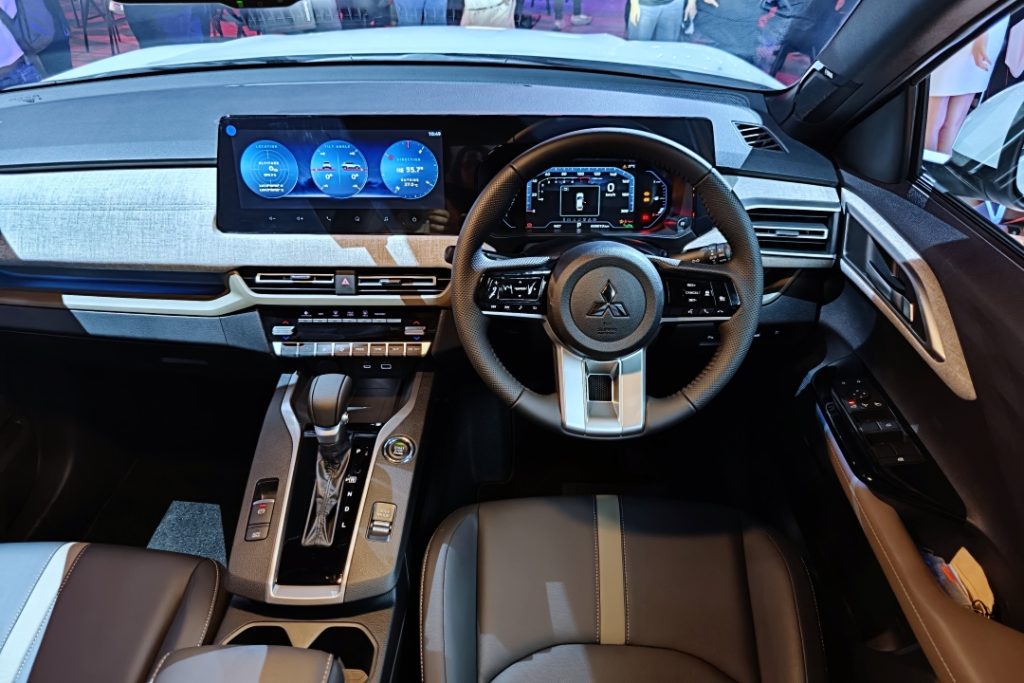
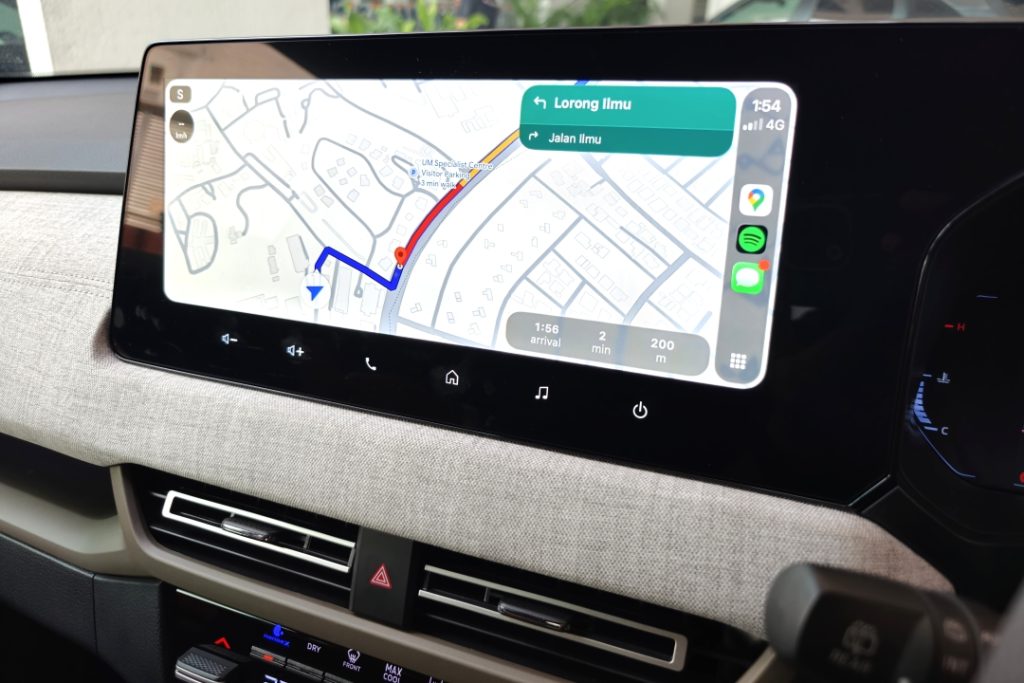
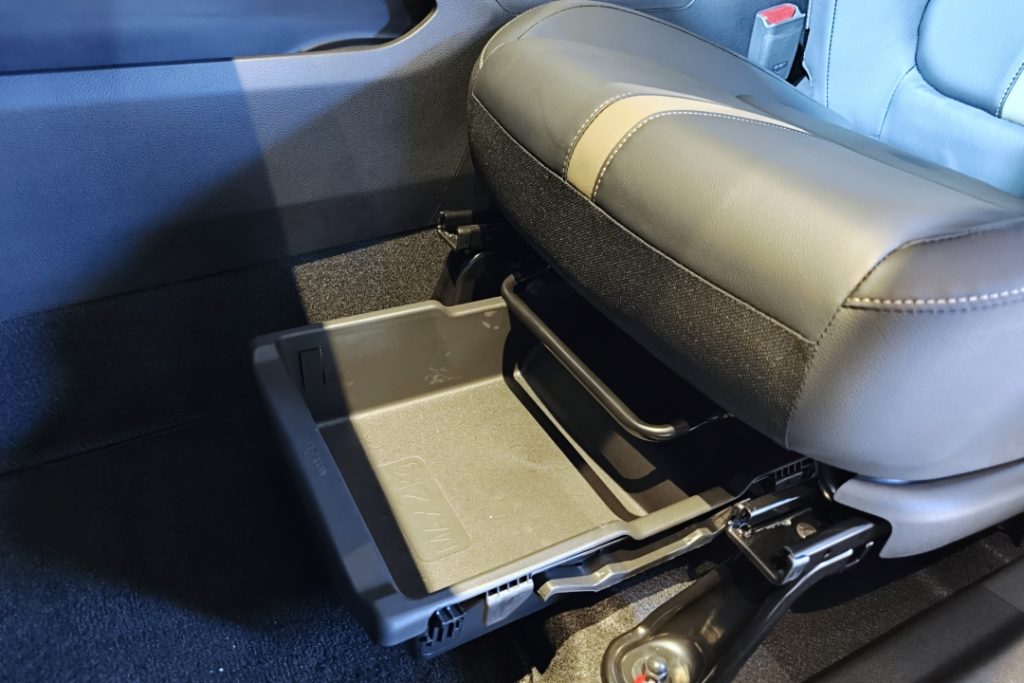
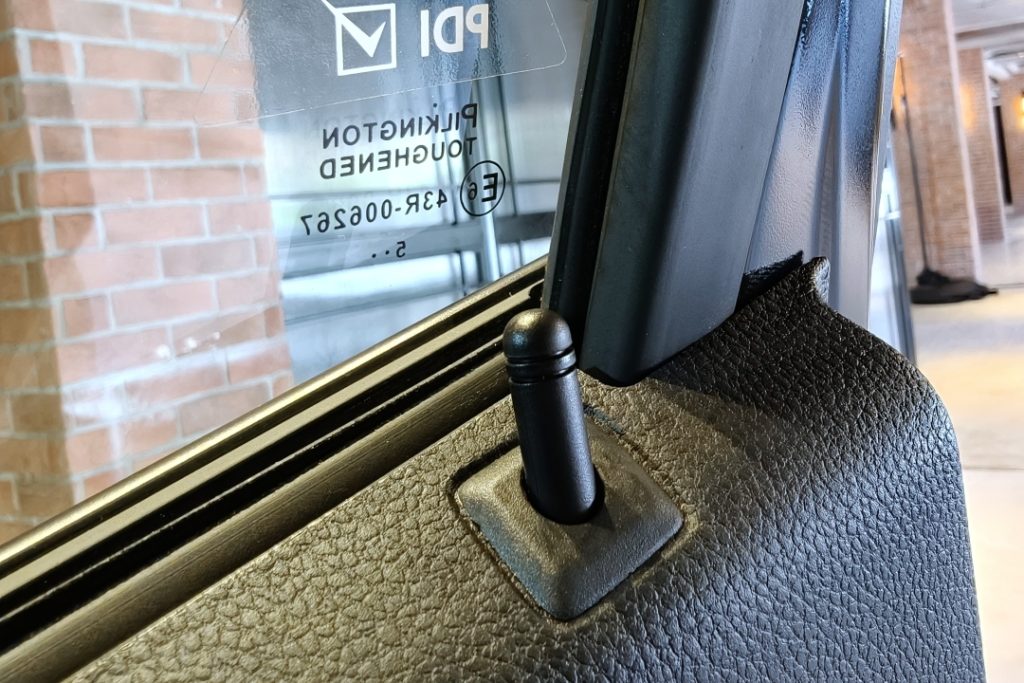
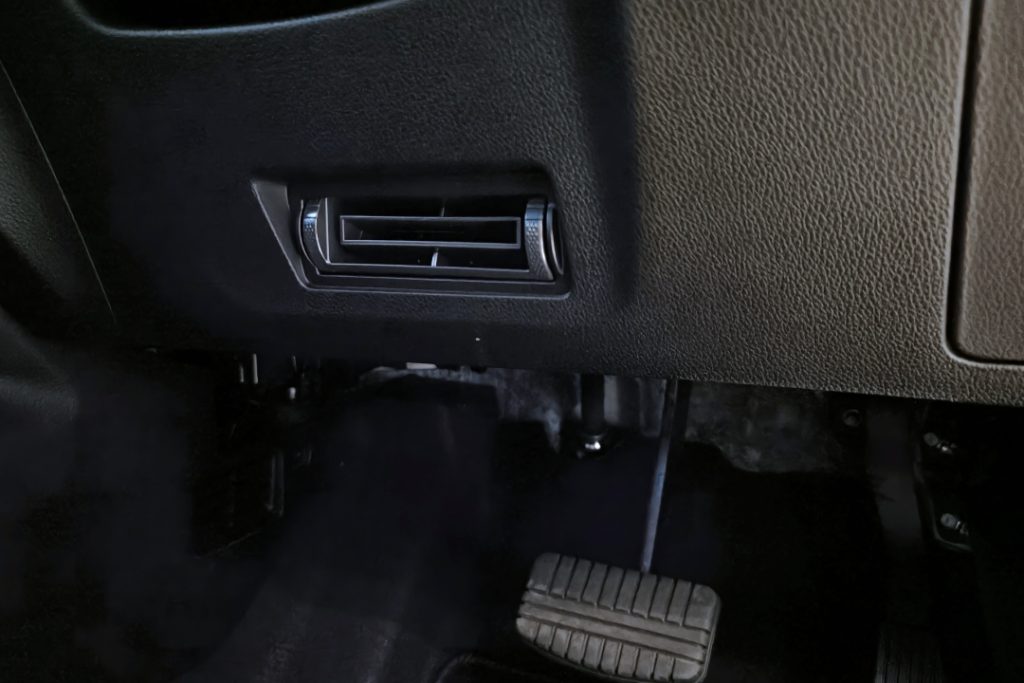
Look around the cabin and you will find retro touches such as physical buttons for climate control, door lock pins, Pajero Dials in the infotainment screen, and even a crotch knee cooler under the steering column.
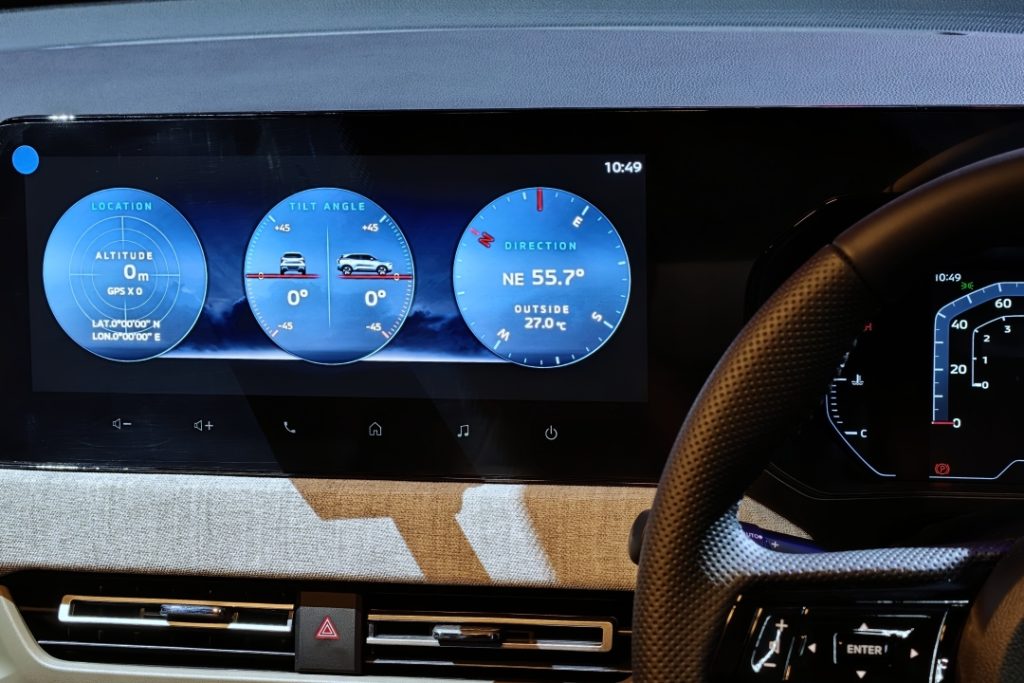
The 8-speaker Yamaha Dynamic Sound system is legitimately impressive for this price tier: four selectable tuning modes and a setup tuned for the Xforce’s cabin to deliver clear, usable sound even at highway speeds.
Powertrain & CVT — Refined, Fuel-efficient, But Not Explosive
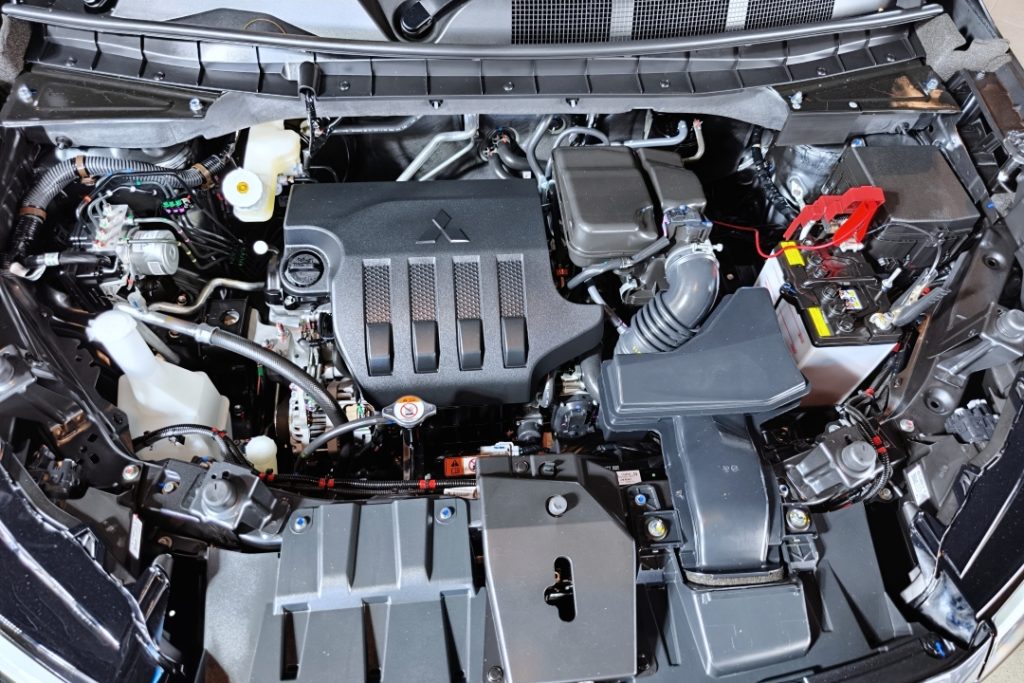
Under the bonnet is Mitsubishi’s familiar 1.5-litre MIVEC four-cylinder paired to a heavily tuned CVT. The combination is smooth and refined in town, with good low-speed responsiveness for urban driving. On the open road the Xforce is composed but not rapid — overtakes at high speed need a bit more planning, and this is when you feel the powertrain work harder. NVH is well controlled for this class, though the engine gets vocal under heavy load.
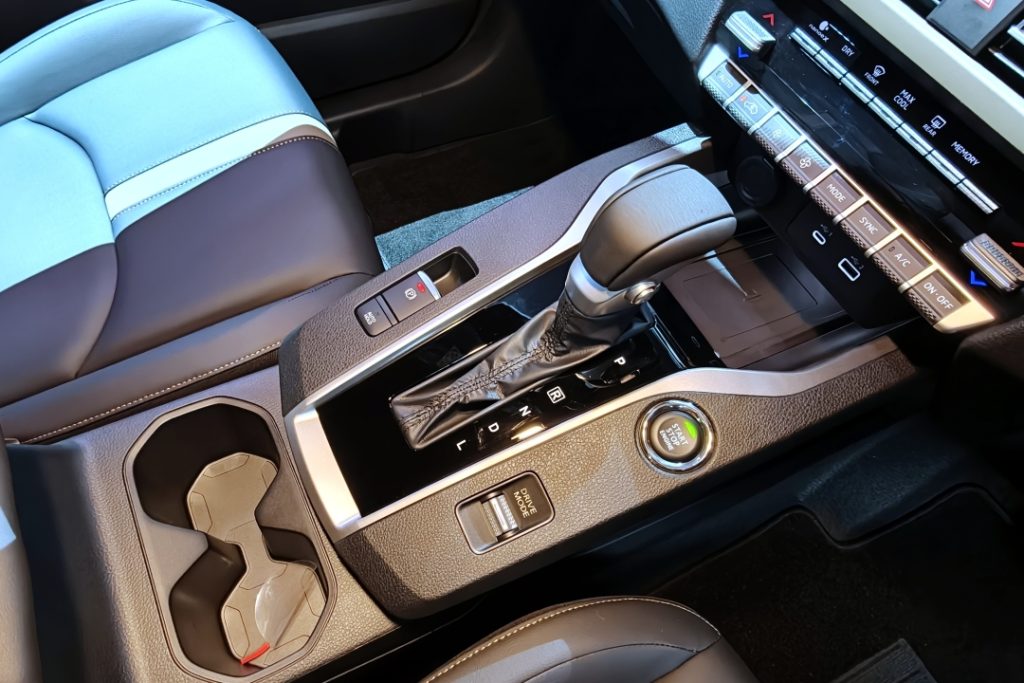
A few technical notes Mitsubishi shared that matter in everyday use: the CVT’s forward ratio has a wide spread that helps balance acceleration and economy. Software tuning includes a “step-up” shift logic to make the CVT feel more like an 8-speed automatic under heavy throttle, and specific uphill/downhill ratio schedules: Mitsubishi claims around 25% improvement in uphill driving force versus the Xpander and reduced downhill acceleration (about 10% restraint) to reduce brake usage on descents.
Fuel figures remained a strength during our longer runs — expect realistic long-run economy in the high teens (around 17–18 km/L based on Malaysian Driving Cycle) with calm driving. On a brief stint, we managed to achieve 15 km/l with 3 adults onboard and without being super careful with the throttle. Notably, the Xforce doesn’t have the typical Sport nor Eco driving modes.
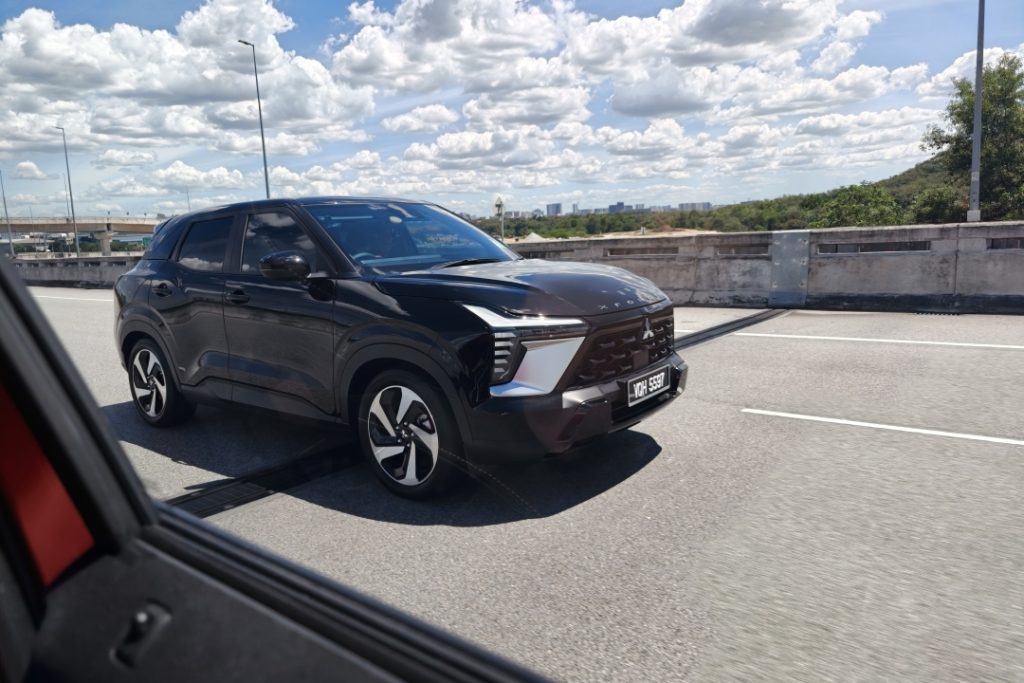
Ride, Handling And An ASEAN-tuned Chassis
Mitsubishi Motors engineered the Xforce with ASEAN road conditions in mind:
- Chassis & rigidity: engineers lengthened the use of structural adhesive substantially compared with the Xpander and added reinforcement parts in the rear quarters and underbody. This reduces flex over uneven roads and improves steering stability at speed. The net result is a noticeably stiffer feel in roll and better stability at speed without becoming harsh.
- Suspension: the car uses a strut front and torsion-beam rear layout but with key upgrades — larger shock-absorber cylinder sizes at the rear (Xforce uses a larger spec versus the Xpander’s), revised bushes and caster/trail tuning to sharpen straight-line stability while keeping ride compliance. Mitsubishi’s R&D covered over 4,000 km of ASEAN testing to achieve this balance.
- Manners: ride comfort is a highlight. Large-diameter dampers and tuned bushes soak up broken tarmac and potholes better than many rivals. Steering is quick and helps the Xforce feel agile around town (the 5.2-metre turning radius is one of the smallest in class), though feedback is on the mild side — it’s more confident than communicative.
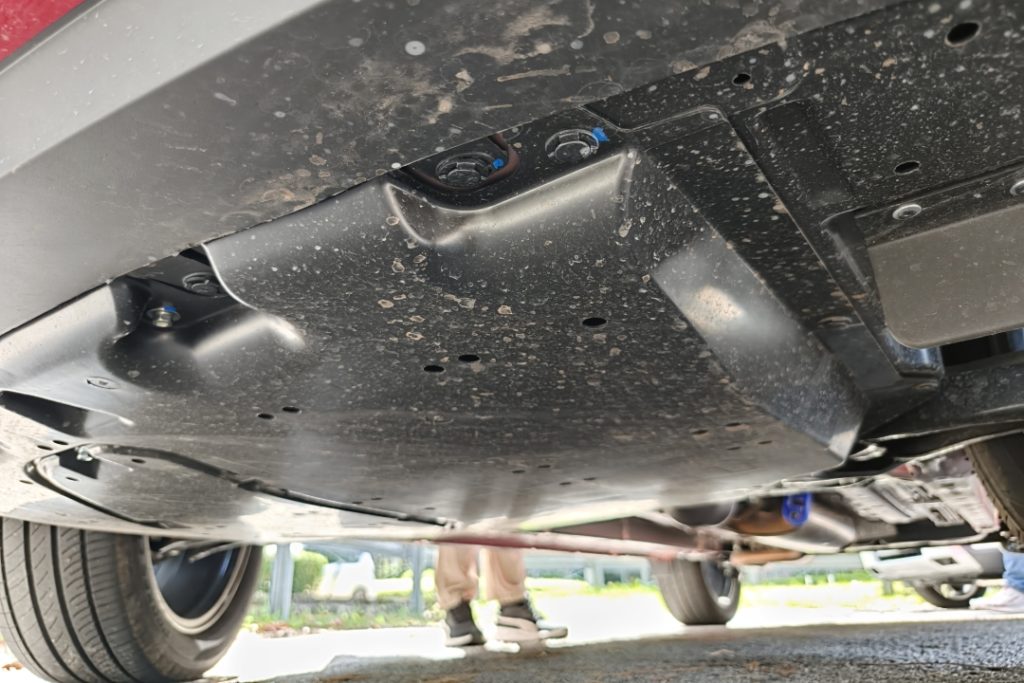
- Ride height: taking into account ASEAN weather and varying road conditions, the Xforce offers one of the highest ground clearances in its segment. The Xforce Ultimate rides on 18-inch wheels and has a 222mm clearance. With the provided engine under-cover, it still has a respectable 193mm clearance.
One of those responsible for these improvements is Lead Product Engineer Masahiro Tamura, who previously worked on the Lancer Evolution VII to X programmes — experience that clearly influences the Xforce’s focus on traction and stability.
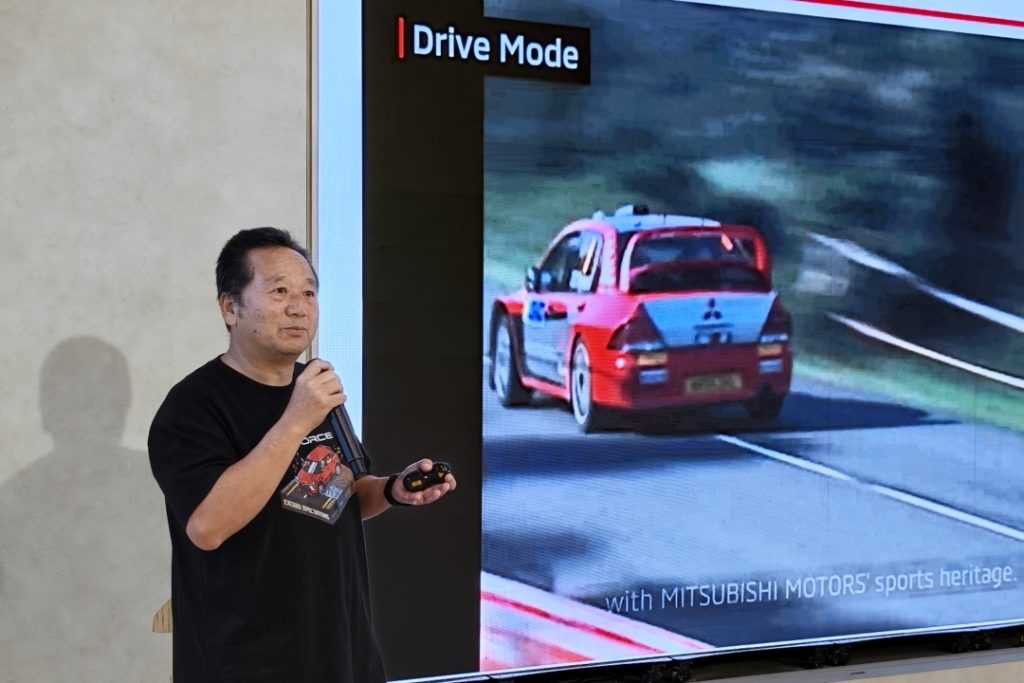
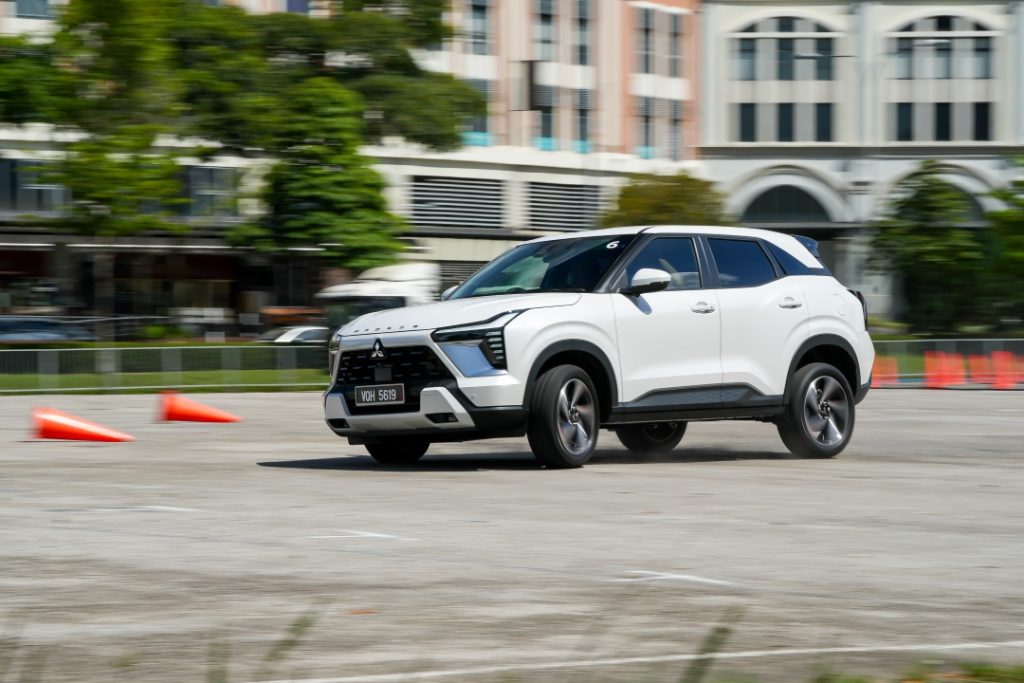
Wet Mode & Active Yaw Control — How They Work On Real, Wet Roads
A highlight of the Xforce, also within Tamura-san’s portfolio, is Wet Mode. It’s a newly developed drive mode aimed at wet or flooded paved roads and works by integrating:
- Engine management & throttle mapping — reduces abrupt drive inputs
- Traction control — stronger intervention to prevent wheelspin
- Electric Power Steering (EPS) — EPS weighting is increased so the wheel feels less light in water
- Active Yaw Control (AYC) — the system applies subtle braking to the inner front wheel during corner entry to generate a yaw moment that reduces understeer.
On our wet-surface test, Wet Mode produced noticeably more predictable steering and kept the vehicle tracking confidently through corners. The system increases AYC gain and reduces aggressive acceleration, while steering effort is slightly increased to give the driver a steadier feel. Put simply: Wet Mode reduces surprises and lowers the amount of steering and braking correction you need to make, which is exactly the reassurance drivers want when roads are flooded or slick.
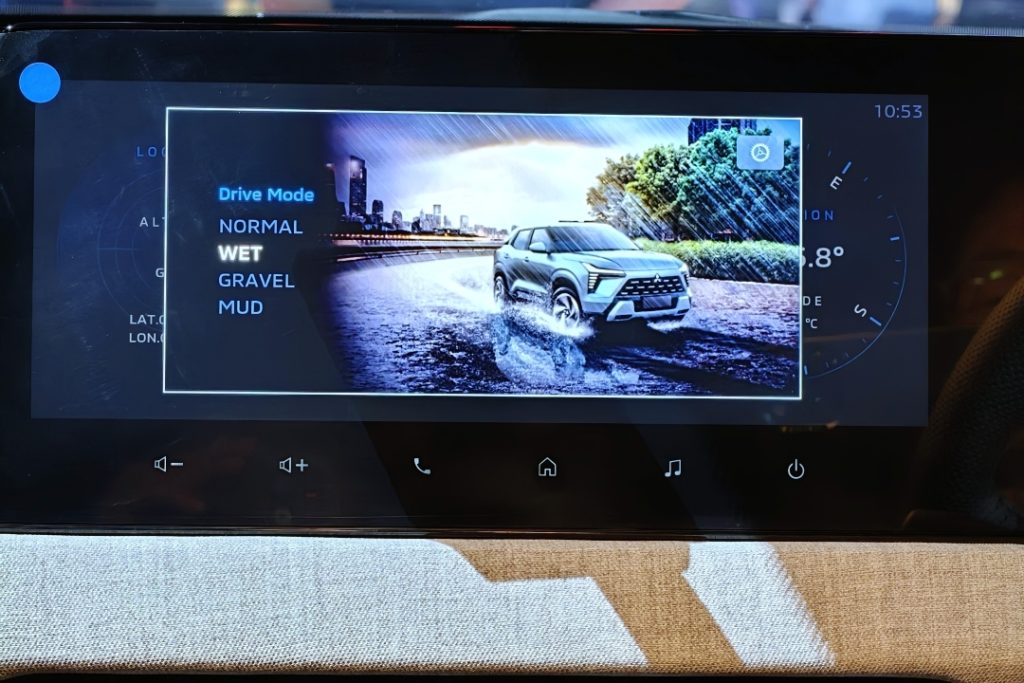
Braking, Slalom & Stability
Front and rear disc brakes provided solid, fade-resistant stopping performance during repeated hard-braking tests. In slaloms and quick direction changes the chassis tucks in well for a front-drive SUV, helped by AYC acting as a subtle turn-in assistant. The car remains confidence-weighted rather than sporty, tuned to keep occupants comfortable and secure rather than to chase lap times.
Safety And Practicality
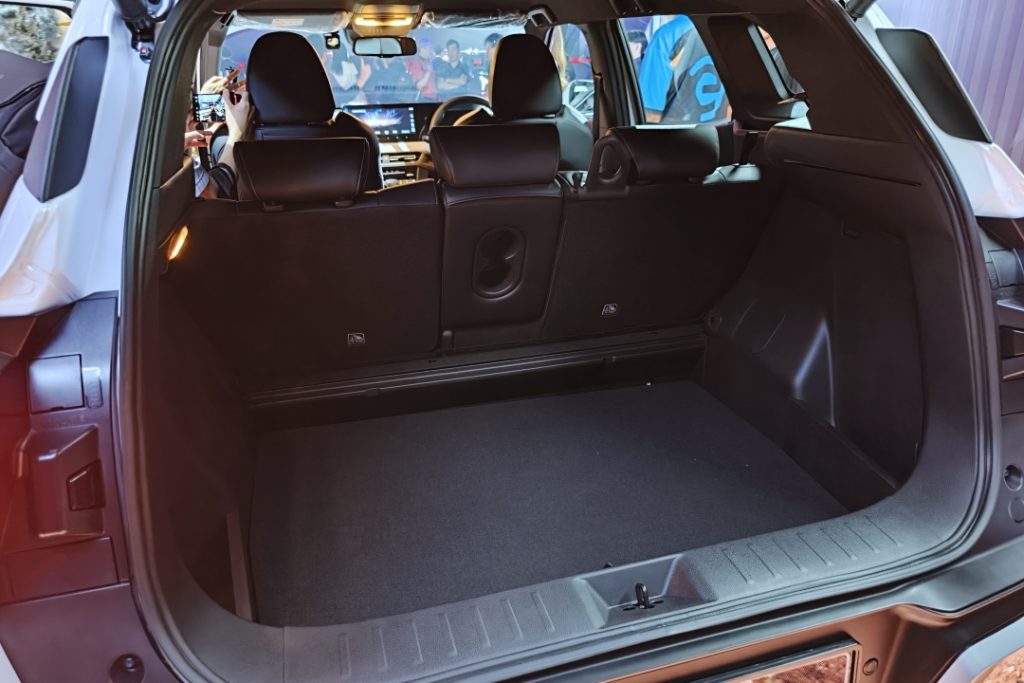
The Xforce Ultimate comes loaded with six airbags and a full set of ADAS features (Forward Collision Mitigation, Adaptive Cruise Control, Blind-Spot Warning, Rear Cross-Traffic Alert). Practical details include cooled console box, hands-free powered tailgate, 410-litre boot space (with the 40:20:40 seat layout) underline the Xforce’s everyday usability.
Aerodynamics And Why it Helps
Mitsubishi highlights the Xforce’s aerodynamic work — proper roof spoilers, D-pillar garnishes, underbody covers and an airdam — and MMC’s internal measurement suggests the Xforce’s drag characteristics are competitive in its segment. The result is a composed highway feel and a small but useful contribution to efficiency.
What We Liked
- Confident, calm ride over rough roads — well-tuned for Malaysia.
- Wet Mode + AYC actually improve confidence in heavy rain and puddles.
- Premium interior touches, Yamaha audio and lots of practical storage.
- CVT tuning gives acceptable urgency when needed and good long-run economy.
- Physical buttons for climate control means you don’t have to look away from the road to adjust.
What Could Be Better
- The 1.5L naturally aspirated engine is competent but lacks the obvious kick of turbo rivals during hard acceleration.
- Steering feedback is on the light side — more feel would please enthusiastic drivers.
- The meter cluster catches some afternoon sun reflection.
The Bottom Line
The Mitsubishi Xforce Ultimate is a mature, well-engineered B-SUV that picks its battles intelligently: comfort, all-weather confidence and a premium cabin — not sportscar performance. For Malaysian drivers who value everyday usability, wet-weather composure and a tech-rich interior, the Xforce is one of the most convincing new entrants in the class.
Mitsubishi didn’t just shorten an Xpander — the Xforce gets distinct chassis, suspension and CVT tuning that give it its own character. In a crowded B-SUV segment, engineering depth still matters. And considering Malaysia’s rain, potholes and sometimes unpredictable roads, composure matters more than outright power — and that’s where the Xforce makes its case.