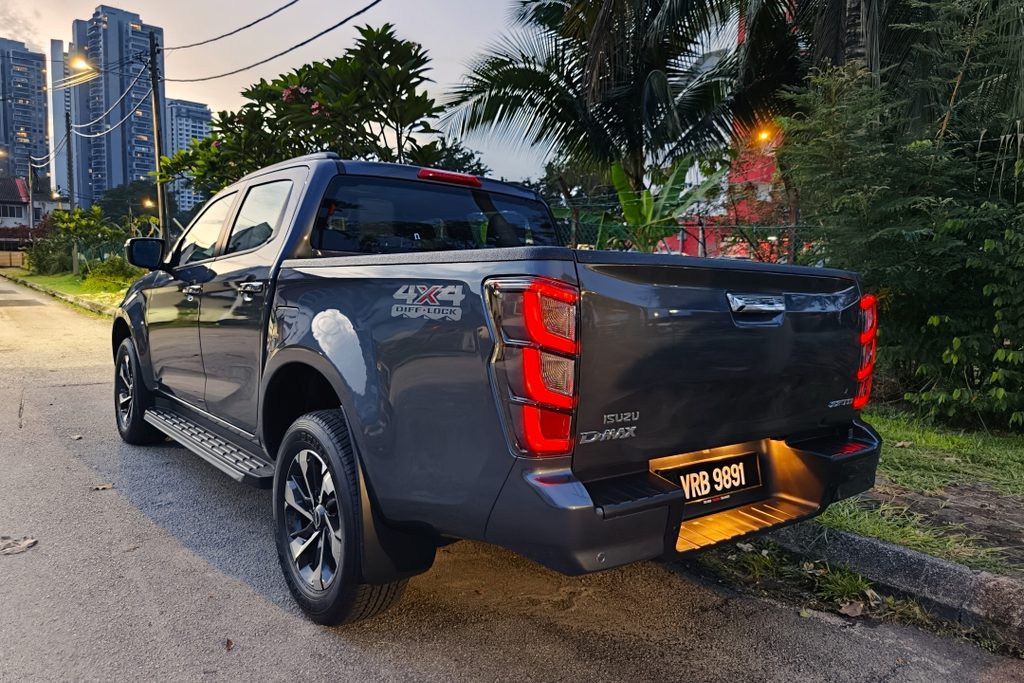
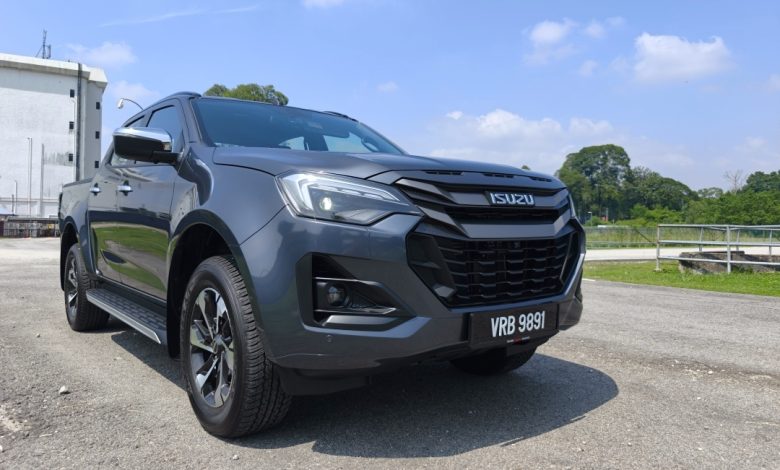
The Isuzu D-Max has always had a strong reputation for durability and working ability, but the arrival of a new 2.2-litre turbodiesel engine makes its latest iteration a more compelling proposition for buyers who want a pickup truck that is comfortable and capable.
Replacing the previous 1.9-litre engine, the new RZ4F-TC powerplant brings more power and torque, a new eight-speed automatic transmission and improved fuel efficiency. More importantly, it retains the practical advantages of a smaller-displacement engine, including considerably lower road tax than its 3.0-litre version.

A More Capable 2.2-Litre Engine
The biggest change is found under the bonnet.
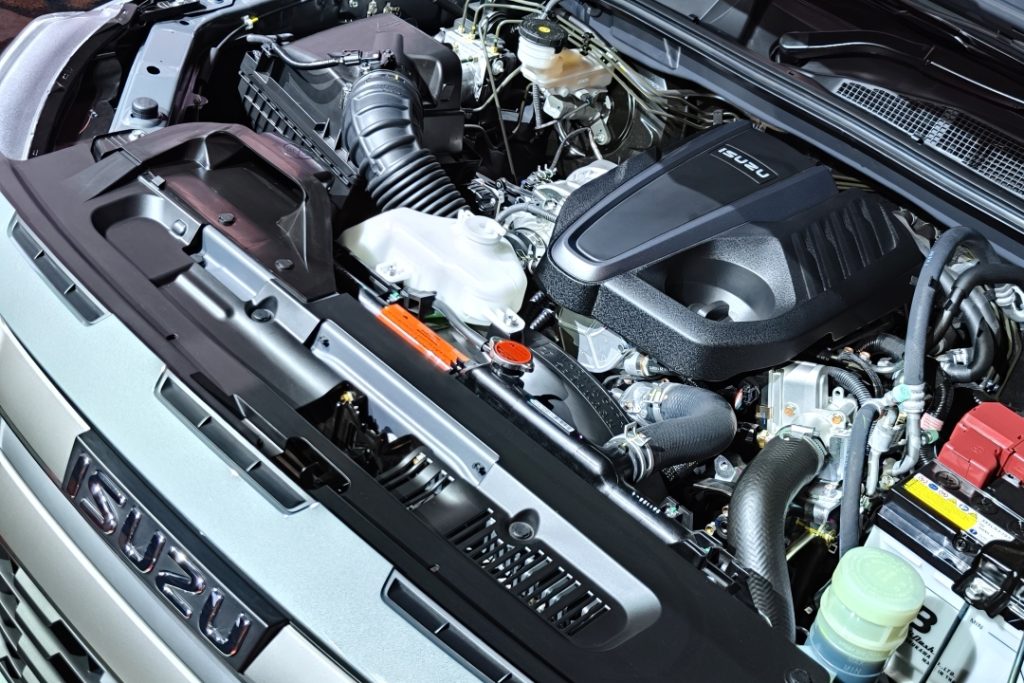
The new 2,164cc RZ4F-TC four-cylinder turbodiesel produces 163PS at 3,600rpm and 400Nm of torque between 1,600rpm and 2,400rpm.
This is an increase of 13PS and 50Nm over the superseded 1.9-litre engine. But it is the improvement at the lower end of the rev range that impresses.
With 255Nm available from just 1,000rpm, the engine delivers much stronger initial response, making the D-Max feel more eager moving off from standstill.
This improvement is noticeable in urban driving as there is little hesitation that one might associate with a large pickup truck because acceleration feels more car-like.
The engine itself has also undergone significant changes, including a new block, cylinder head, crankshaft, pistons, connecting rods and turbocharger. A high-pressure 250MPa fuel injection system further contributes to its performance.
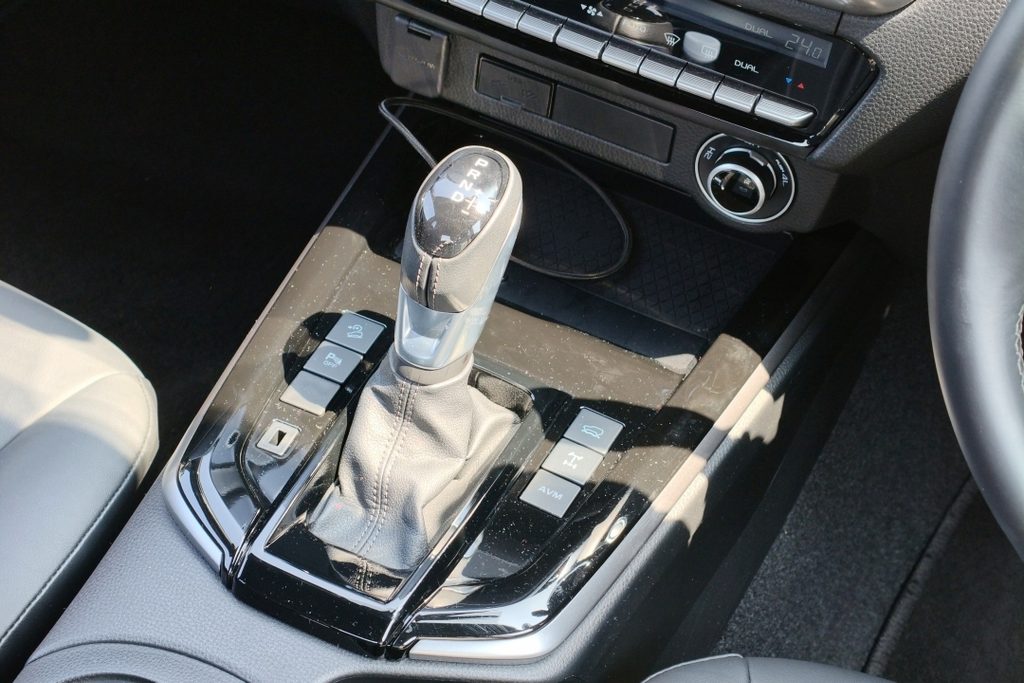
Power is channelled through a new eight-speed automatic transmission co-developed with Aisin. The first six ratios are designed to provide acceleration and pulling power, while seventh and eighth serve as overdrive gears to reduce engine speed during highway cruising.
In normal driving, gear changes are generally smooth and seamless. The additional ratios help keep the engine within its effective operating range, although the transmission can feel a little busy in slow-moving traffic.
There are occasional minor shunts when crawling in congested conditions, and more demanding acceleration situations can expose the less-than-perfect shift behaviour. But these feel like relatively minor shortcomings in the overall impression.
Relaxed Highway Driving
On the highway, the eight-speed transmission makes a difference. Cruising at the highway speed limit of 110km/h, the engine settles at slightly above 1,800rpm in eighth gear. The result is an engine that isn’t overly noisy which makes long-distance journeys less tiring.
The 2.2-litre engine also feels more refined than the previous 1.9-litre unit. At idle and steady cruising speeds, it produces a quiet, low-pitched rumble instead of the more pronounced mechanical clatter of its predecessor.
But step harder on the accelerator and the familiar diesel character returns. The engine becomes more vocal on hard acceleration or kicking down for overtaking, particularly at higher engine speeds.
Another upside is the relatively light steering which makes the D-Max easier to manoeuvre despite its size. This is useful when navigating urban streets or squeezing into parking spaces.
At highway speeds, however, the steering could offer better precision. Minor corrections are sometimes needed to maintain a straight line.
Fuel Efficiency
Fuel economy is an important part of the new engine’s appeal. Isuzu claims a combined-cycle consumption figure of 6.3 litres per 100km, equivalent to approximately 15.87km per litre (actual consumption will depend on driving conditions, speed, payload and driving style).
In a mix of highway and mostly urban driving test covering 150km, consumption averaged around 8.2km per litre without making any particular effort to drive economically.
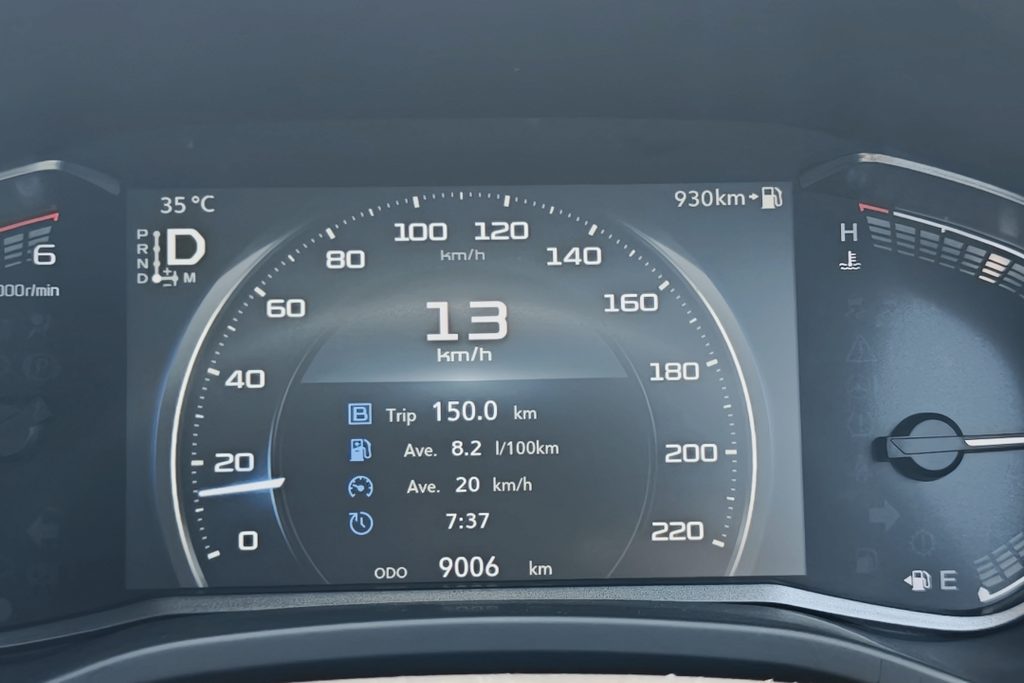
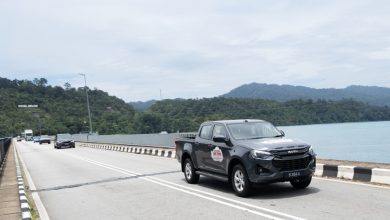
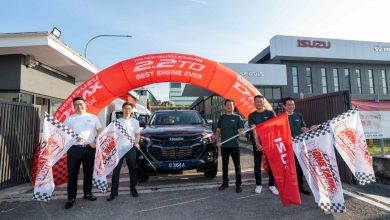
Highway driving should deliver considerably better figures with the overdrive gears engaged. In fact, Isuzu Malaysia managed to cover 1,756km on the D-Max’s 76-litre fuel tank through its ‘One Tank. One Nation challenge in Peninsular Malaysia, and 1,605km through the more challenging East Malaysian terrain.
Of course, such achievement involved careful management of driving style, but it still demonstrates the potential of the new powertrain. The 2.2-litre engine is Euro 5 compliant and can run on biodiesel blends of up to B20.
Comfortable And Functional Cabin
The D-Max’s cabin is designed around functionality, and the Premium variant offers enough comfort and convenience to make it suitable for everyday family use, while serving as a workhorse when required.
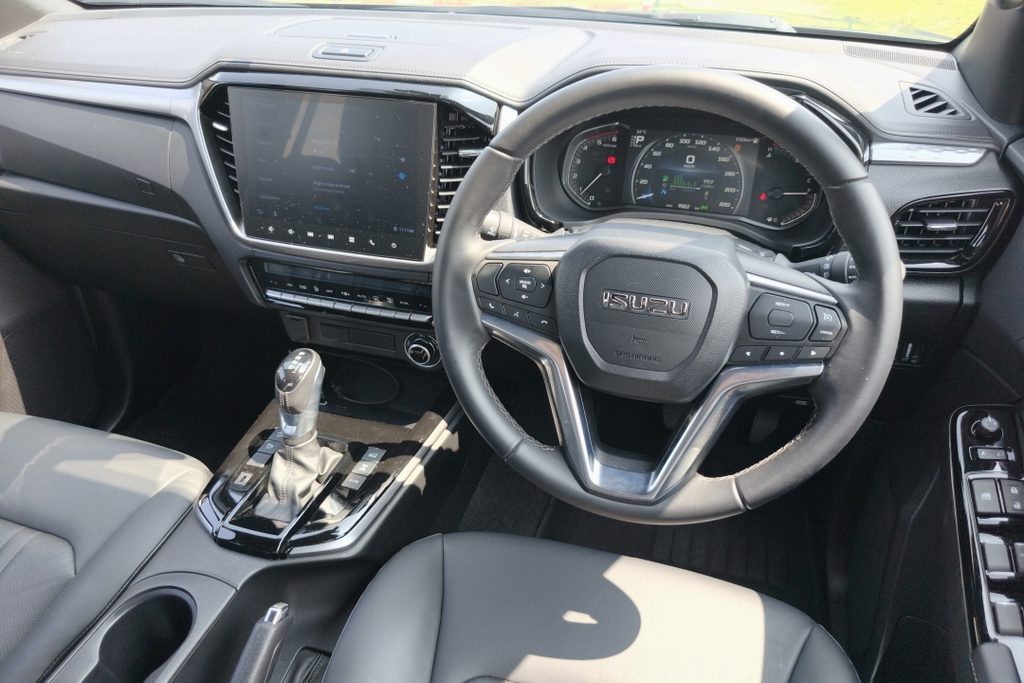
The black combination leather seats feature anti-vibration elastic comfort foam, and the driver’s seat offers eight-way power adjustment and lumbar support. These are useful features, particularly for owners who regularly drive long-distance journeys whether for work, or to the next triathlon meet.
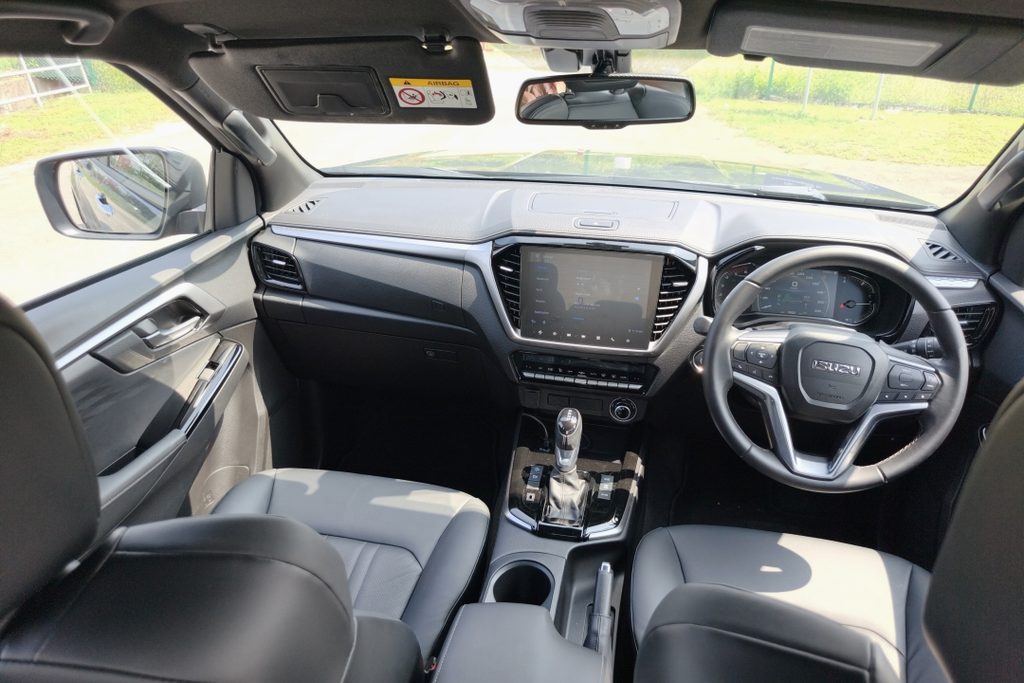
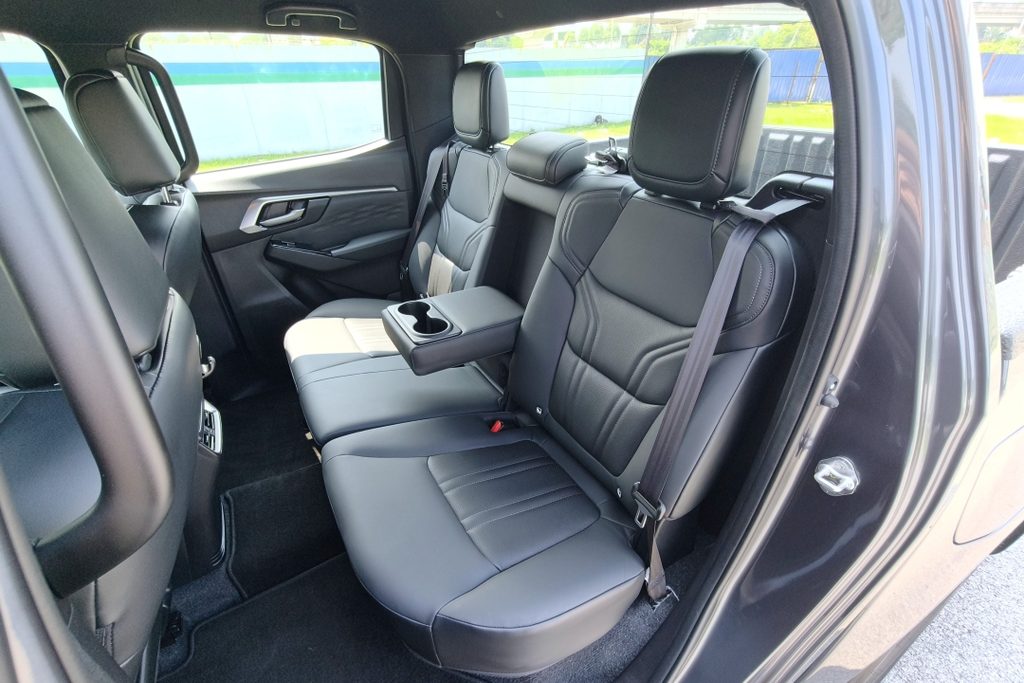
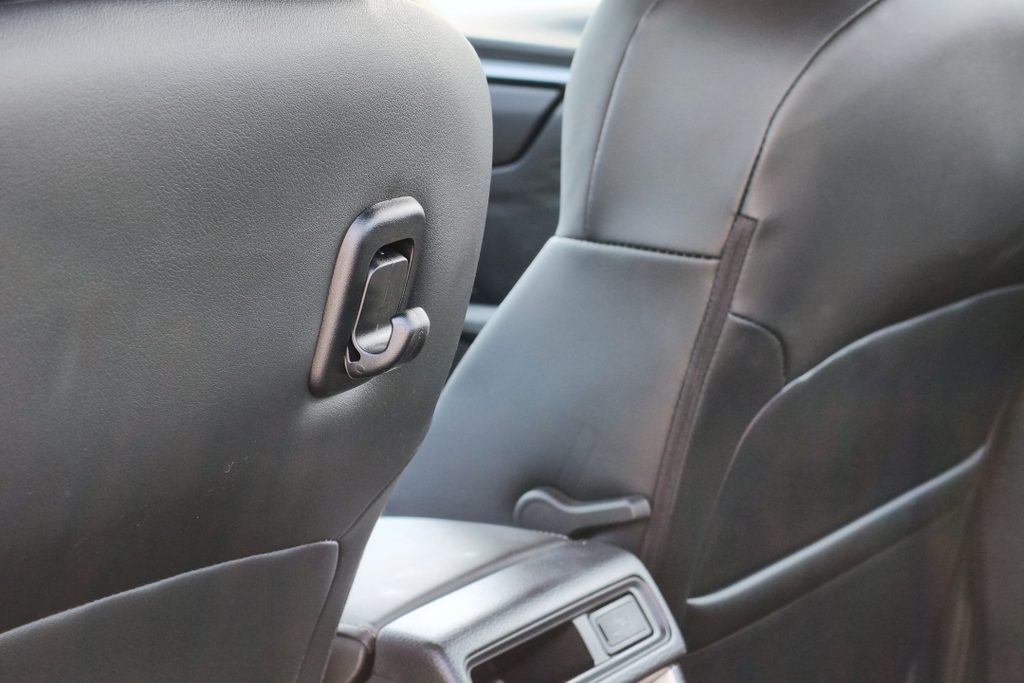
The steering wheel is leather-wrapped and adjustable for both tilt and reach. Other convenience features include automatic dual-zone climate control, rear air-conditioning vents, a wireless smartphone charger and USB Type-C charging ports for front and rear passengers.
Infotainment duties are handled by a 10-inch touchscreen with wireless Apple CarPlay and Android Auto support. The system is reasonably straightforward to operate, while an eight-speaker sound system provides sufficient aural experience.
The driver also gets a 7-inch colour multi-information display, presenting relevant vehicle information.
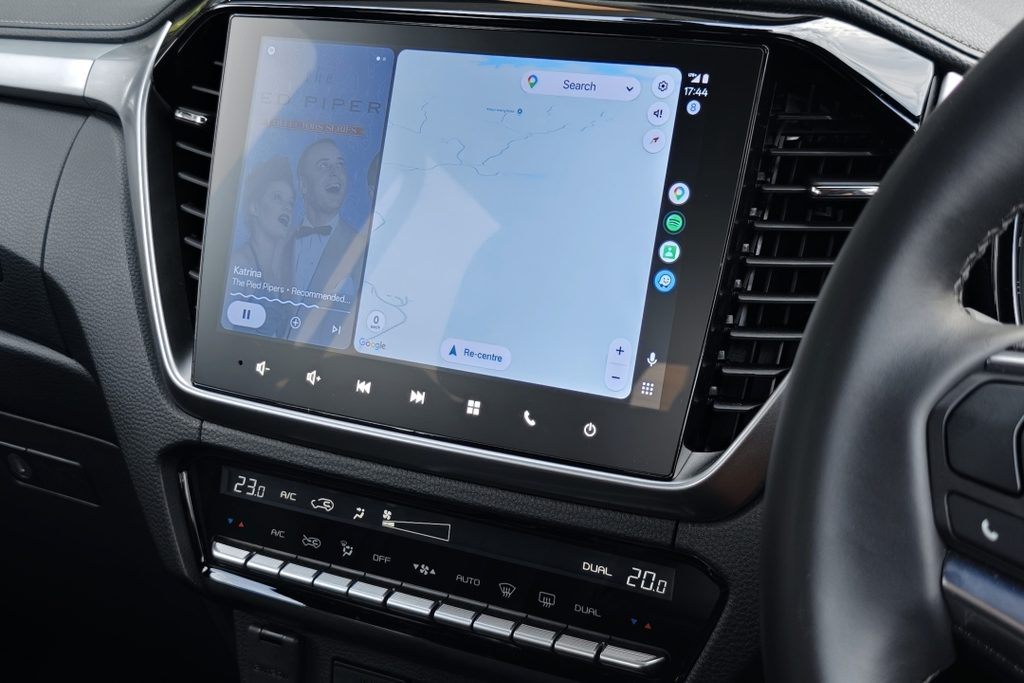
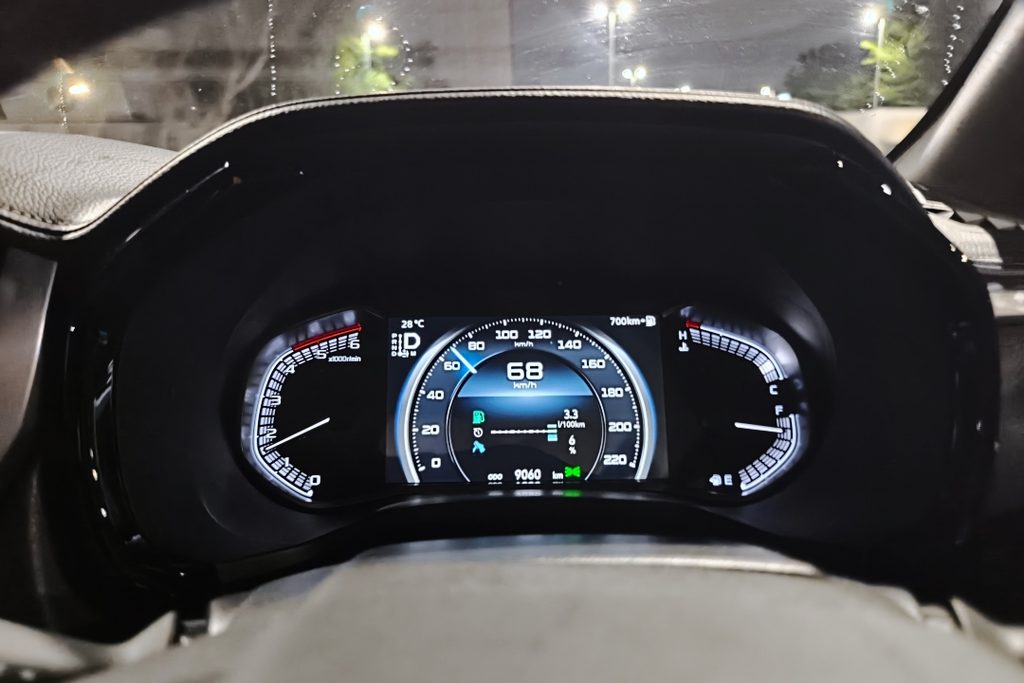
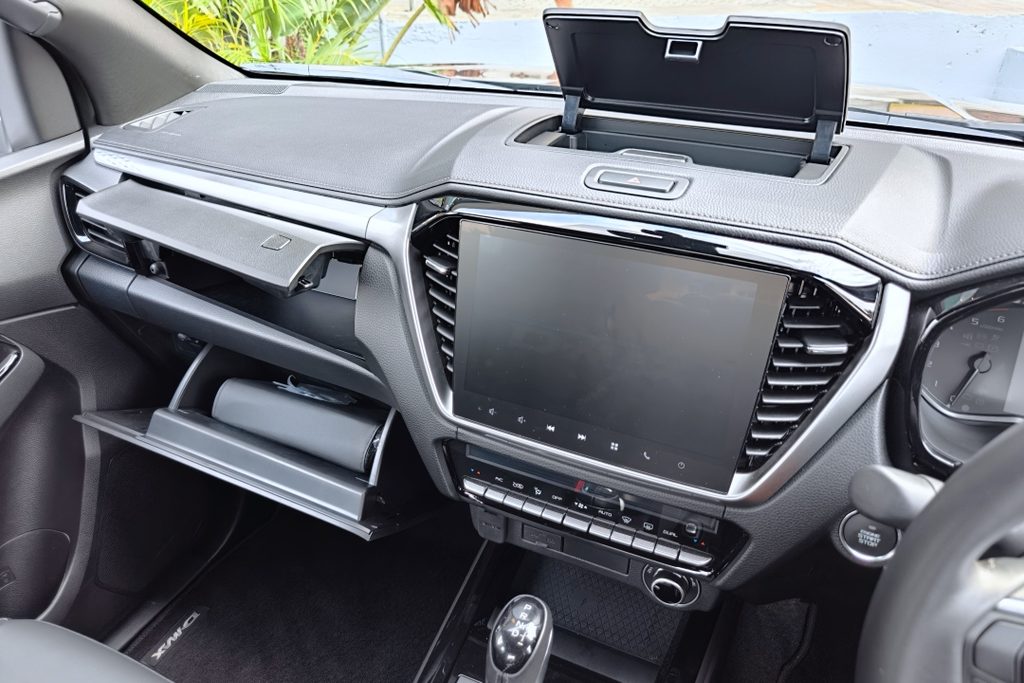
Interior materials are predominantly hard-wearing plastics, which are appropriate for a vehicle expected to handle demanding work environments. Leather-wrapped contact points on the steering wheel, door inserts and armrests provide a more comfortable touch.
Other useful equipment includes a front digital video recorder, auto-dimming rear-view mirror, passive entry and push-button start, walk-away door locking and a tailgate assist system.
Pickup Truck Credentials Remain
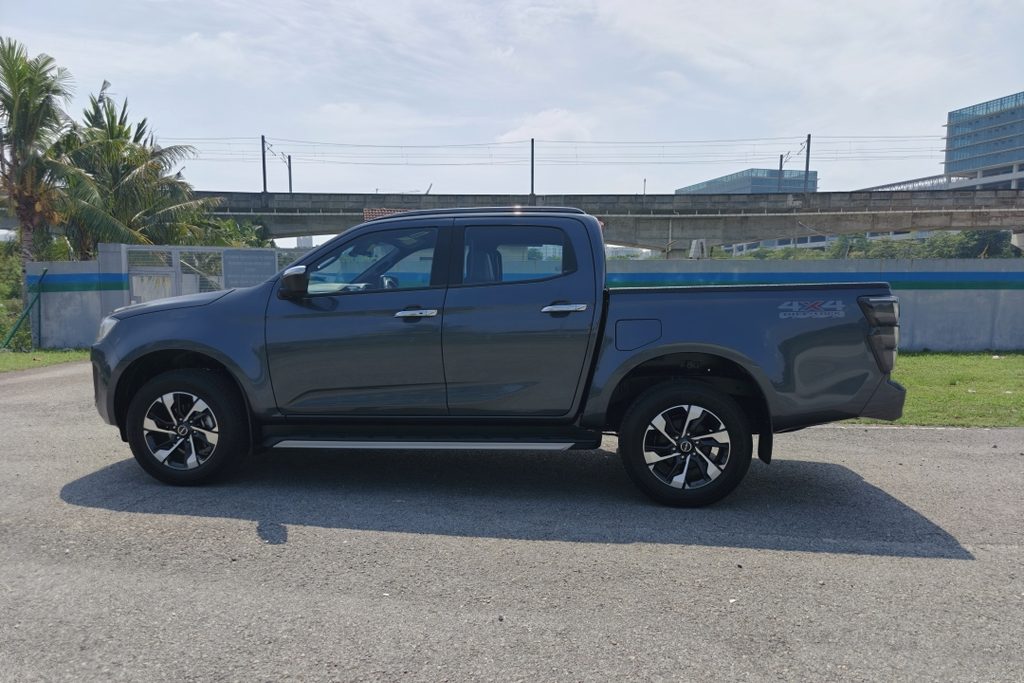
Despite its improved road manners, the D-Max has not sacrificed its working and off-road capabilities.
The part-time four-wheel-drive system, operated through Isuzu’s Terrain Command, offers 2H, 4H and 4L modes. An electronic rear differential lock and Rough Terrain Mode provide additional traction when the going gets difficult.
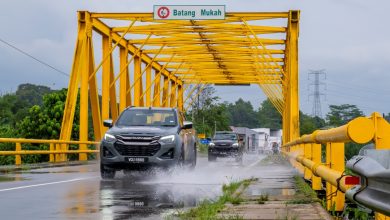
Ground clearance is 240mm, while the claimed water-wading depth is 800mm. The truck also retains a maximum braked towing capacity of 3,500kg, making it suitable for owners who need to tow trailers or recreational equipment.
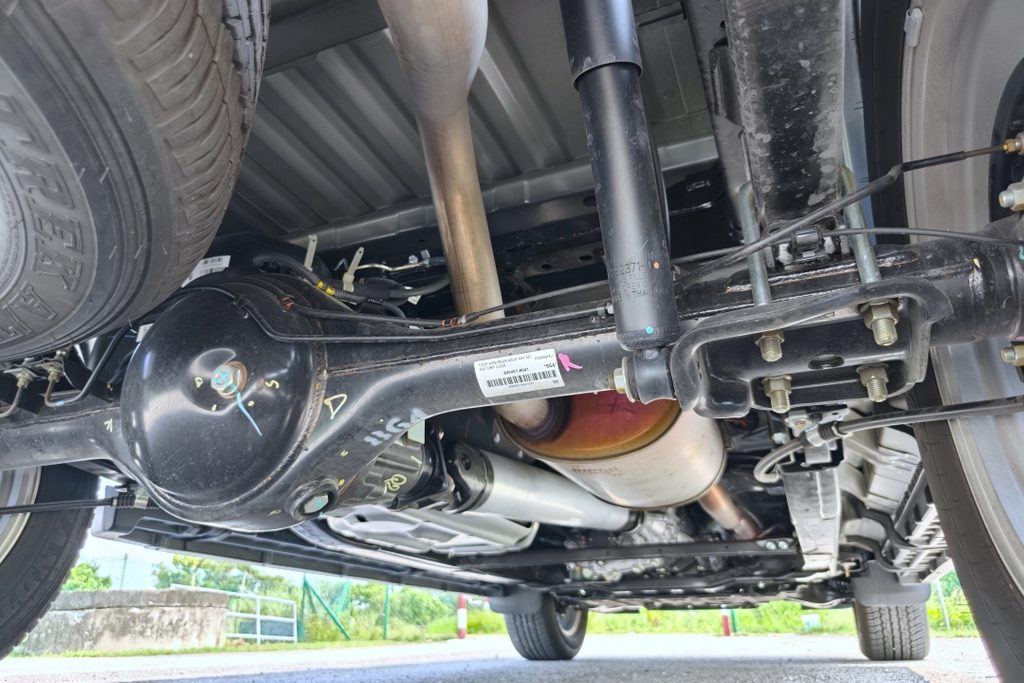
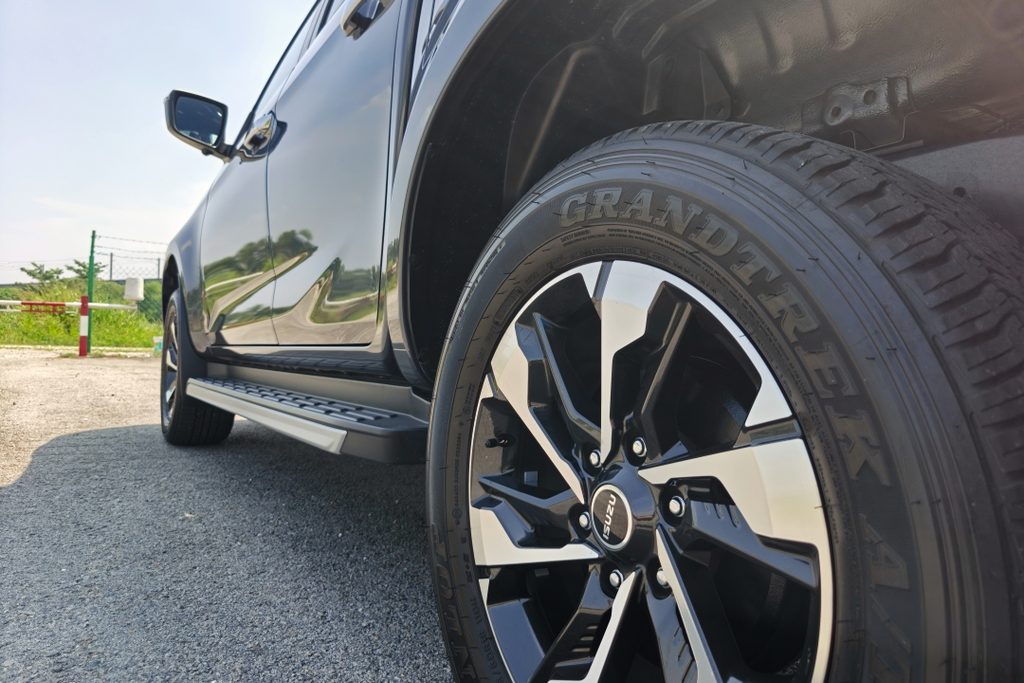
Underbody steel protection adds another layer of reassurance when travelling over rough terrain. The suspension comprises independent double-wishbones with coil springs at the front and semi-elliptical leaf springs at the rear.
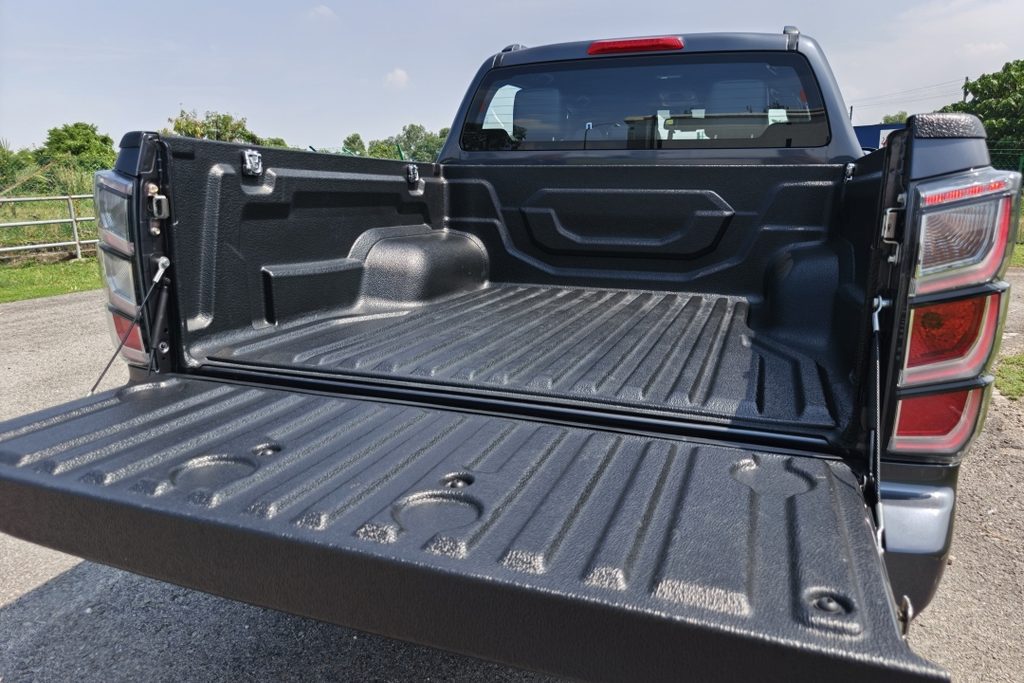
As expected of a ladder-frame pickup, the ride is relatively firm when the cargo bed is empty. Driving over sharp road imperfections and uneven surfaces produce noticeable movement, particularly at the rear.
This is an inherent compromise in a vehicle designed to carry heavy loads. The ride becomes more well-mannered when the truck is loaded, and highway cruising is generally comfortable.
Safety And Equipment
The Premium variant comes with six airbags, ABS, EBD, Brake Assist, Electronic Stability Control and Traction Control. Hill Start Assist and Hill Descent Control are also included, along with front and rear parking sensors.
One of its more useful features is the 360-degree Around View Monitor, which provides a view around the vehicle to assist with parking and manoeuvring in tight spaces.
Blind Spot Monitor and Rear Cross Traffic Alert provide additional assistance when changing lanes or reversing out of parking spaces.
However, buyers should be aware that the Premium does not receive the full advanced driver assistance systems available on the flagship 3.0L X-Terrain. Features such as Autonomous Emergency Braking, Adaptive Cruise Control and Lane Keep Assist are unfortunately not included most likely to preserve product differentiation.
But for a vehicle costing more than RM140,000, their absence is worth considering, particularly for buyers who spend a lot of time on expressways. On the flip side, not everyone is in favour of these features and preserve more control over their vehicle.
The Value Of A Smaller Engine
Priced at RM141,821.20 (on-the-road without insurance in Peninsular Malaysia), the D-Max 2.2L 4×4 Premium AT sits in an interesting position in Isuzu’s pick-up range.
Its 2,164cc engine displacement attracts approximately RM600 in annual road tax for private registration in Peninsular Malaysia, considerably less than the more than RM1,600 payable for the 3.0-litre version.
That is a recurring ownership advantage, rather than a one-off saving at the time of purchase. Combined with the improved fuel efficiency of the new engine, it makes the 2.2-litre an appealing proposition for owners who clock substantial mileage.
Isuzu also provides a five-year or 150,000km warranty (whichever comes first), and two years or 20,000km of free periodic maintenance.
The Premium AT is reasonably well equipped, with leather combination seats, a power-adjustable driver’s seat, wireless smartphone connectivity, a 360-degree camera and a comprehensive selection of safety features. Its working credentials are also convincing, with a 3.5-tonne towing capacity, 800mm water-wading depth and electronic rear differential lock.
But there are undoubtly compromises. The unladen rear suspension can feel unsettled over uneven surfaces, the transmission can sometimes feel less refined in slow traffic, and the absence of more advanced driver assistance systems is noticeable at this price point.
Nonetheless, the new 2.2-litre powertrain has made the D-Max a more convincing all-rounder. It combines the pulling power expected of a working pick-up with the refinement and efficiency needed for everyday use.
For buyers who do not require the additional performance of the 3.0-litre engine, it offers an attractive combination of capability and ownership economy.
CarTok Editor’s Note
There is a potential dilemma for buyers choosing between the two Premium variants. The 2.2L 4×4 Premium AT costs RM141,821.20, while the 3.0L 4×4 Premium AT is RM145,138.40. The difference is just over RM3,000.
For someone spending more than RM140,000 on a pickup, this is not a particularly large premium for the additional displacement and performance of the 3.0-litre engine. When spread over a longer financing tenure, the difference in monthly instalments is relatively insignificant. Based on purchase price alone, the bigger engine could be tempting.
But showroom price is only one part of the ownership equation. The 2.2-litre’s lower road tax and potentially lower fuel cost become more significant over several years, especially for owners who use their pickup primarily for commuting, family duties and occasional work.
This is where the smaller engine makes its strongest case: it offers more than adequate performance for everyday use without carrying the higher running costs of the 3.0-litre.
This does not make the 2.2-litre a lesser workhorse. It retains a 3.5-tonne towing capacity, 800mm water-wading depth and an electronic rear differential lock. But for buyers who regularly tow heavy loads, travel over demanding terrain or simply want stronger performance in reserve, the 3.0-litre is the choice to pick.