ASEAN NCAP 2026–2030 Protocol Puts Motorcycle AEB And Child Safety In Focus

ASEAN NCAP has introduced a new vehicle safety assessment protocol for 2026–2030, bringing greater attention to accident prevention, motorcycle safety and the protection of children left inside parked vehicles.
The revised programme introduces several new tests and changes to the scoring system, reflecting road safety challenges in Southeast Asia, where motorcycles are a common sight and share roads with cars and other vehicles.

Motorcycle Safety Gets Greater Emphasis
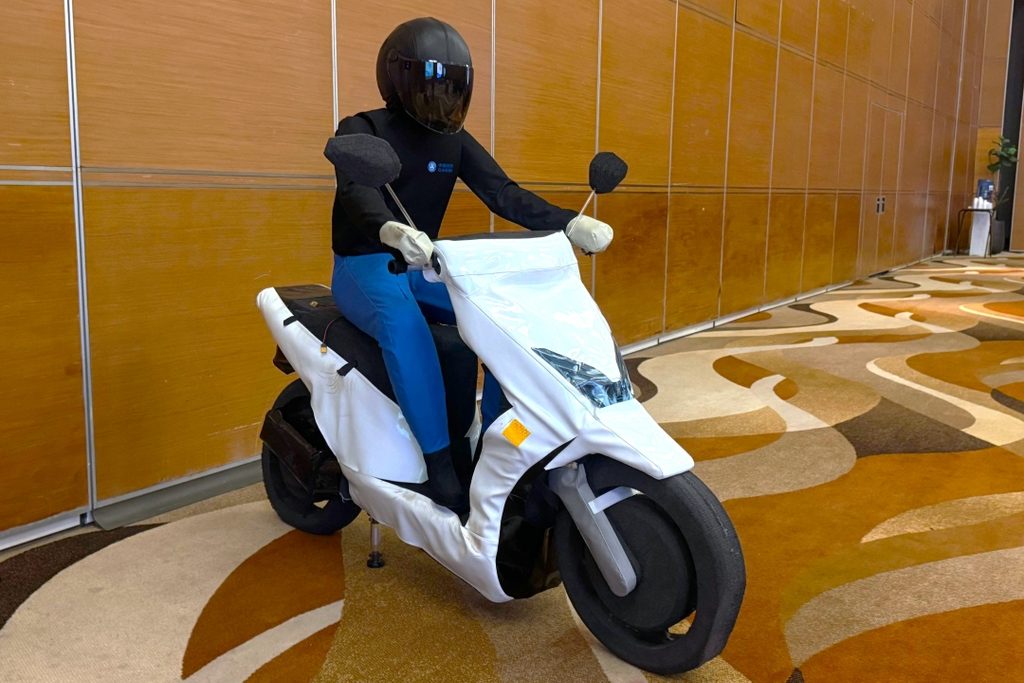
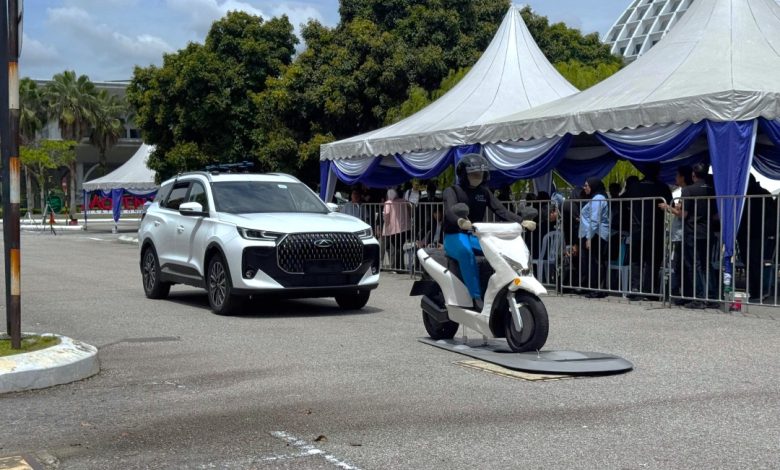
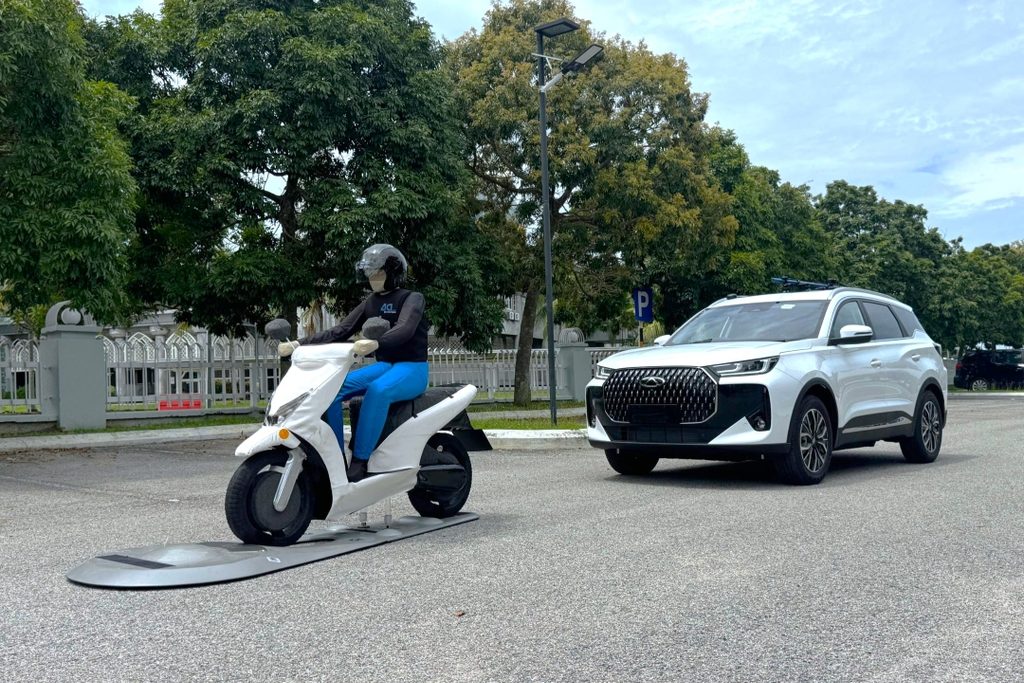
One of the most significant additions is the assessment of Autonomous Emergency Braking (AEB) systems designed to detect motorcycles.
The tests will examine four scenarios, including a car approaching a moving motorcycle, turning across an oncoming motorcycle’s path, encountering one at a junction and veering into the path of an oncoming motorcycle.
The objective is to determine whether a vehicle can detect an impending collision and automatically brake to avoid or reduce its severity if the driver fails to react.
This is particularly relevant to Malaysia, where motorcycle-related accidents remain a major road safety concern.
Better Protection For Children
Child safety gets greater attention under the new protocol.
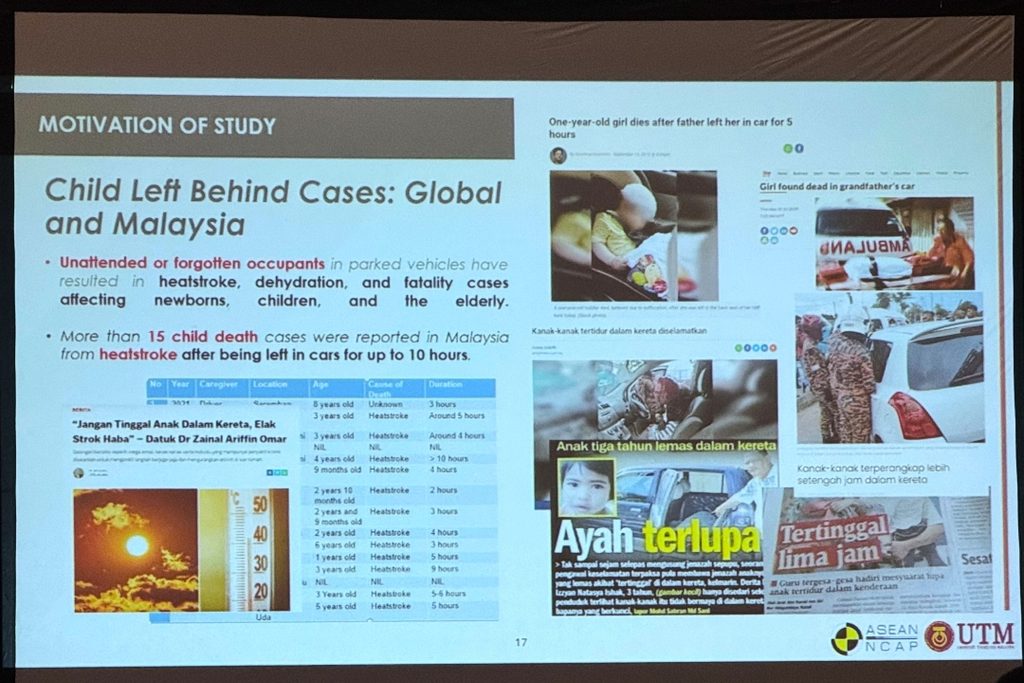
ASEAN NCAP has increased the maximum points available for Child Presence Detection (CPD) from the previous two points for rear seat reminder systems to five points for systems capable of detecting a child left inside a vehicle.
Unlike a conventional rear seat reminder, which prompts drivers to check the back seats, CPD technology uses sensors to detect the presence of a child and alert the driver.
To evaluate these systems, ASEAN NCAP has developed a specialised test subject called the kiDS Child Presence Detection Subject (CPD-DS3). It simulates the breathing patterns and temperature of a baby up to 12 months old.
The programme also introduces Q6 and Q10 child crash-test dummies, representing six-year-old and 10-year-old children, replacing the previous 18-month-old and three-year-old dummies in the relevant crash assessments.
Tougher Crash And Safety Assist Assessments
The side-impact crash test will use an Advanced European Mobile Deformable Barrier (AE-MDB) and a WorldSID dummy, with the test speed increased from 50km/h to 60km/h.
The Safety Assist category will also assess lane support technologies, including lane-keeping and lane-centring assistance.
Meanwhile, the maximum points for AEB in higher-speed, inter-urban driving conditions increase from 3.5 to five.
Motorcyclist Safety receives a larger allocation, increasing from 16 to 24 points, reflecting the new motorcycle AEB assessment and other safety technologies.
How The Five-Star Rating Is Calculated
ASEAN NCAP continues to assess vehicles under four categories, with the following weightings:
- Adult Occupant Protection (AOP): 40%
- Child Occupant Protection (COP): 20%
- Safety Assist (SA): 20%
- Motorcyclist Safety (MS): 20%
A high overall score alone does not guarantee a five-star rating. Vehicles must also meet minimum performance requirements in individual categories, preventing strong results in one area from compensating for significant weaknesses in another.
For buyers, the new protocol means a vehicle’s safety performance will be judged against a wider range of real-world risks, rather than focusing predominantly on occupant protection during a crash.
CarTok Editor’s Note
The inclusion of motorcycle AEB is one of the most important updates for Southeast Asia. Cars and motorcycles share the road, but the consequences of a collision are not equal. Technology that helps a car detect and avoid a motorcycle could make a difference.
The increased emphasis on child presence detection is equally welcome. A reminder to check the rear seats depends on the driver responding to it. A system that can actually detect a child left inside offers another layer of protection.
The challenge is of course to get manufacturers to adopt these technologies and make them widely available in mass market models. A safety feature is most useful when ordinary car buyers can benefit from it.