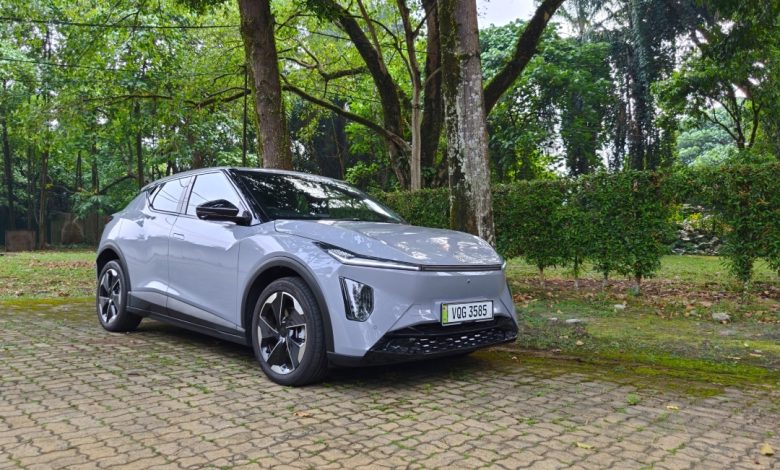
The Perodua QV-E is unlike anything the Malaysian automaker has produced before. Hence the dilemma in writing this review. Since this is its first EV and vehicle designed and developed from the ground up without its long-time technical partner, should I go easy on it, or be more critical?
And because it is basically a standalone model within the brand’s product portfolio, there is nothing remotely familiar about it. No shared parts, no familiar quality. Nothing.

But the fact remains that the QV-E (the company doesn’t pronounce the ‘E’) takes the crown as Malaysia’s first homegrown electric vehicle. And it represents an important engineering milestone for the company as well as the industry.
Developed on a dedicated EV platform co-developed with Magna Steyr, it brings together local engineering ambitions, new technology and a more engaging driving experience.
However, while the QV-E gets several fundamentals right, some shortcomings prevent it from being a more convincing all-round package.
A Distinctive Design That Stands Out
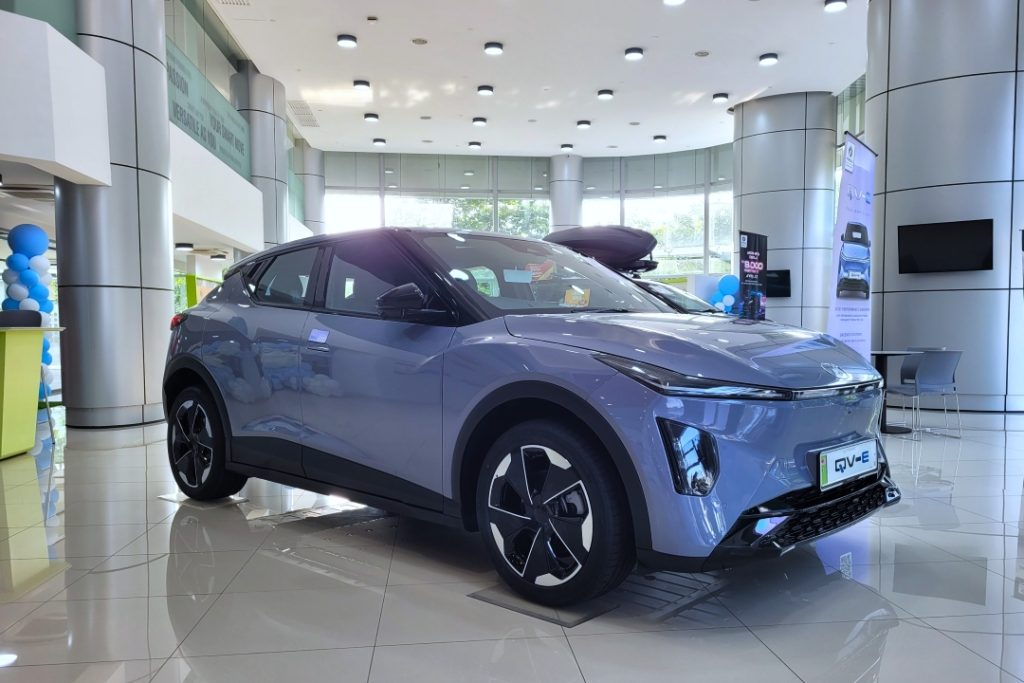
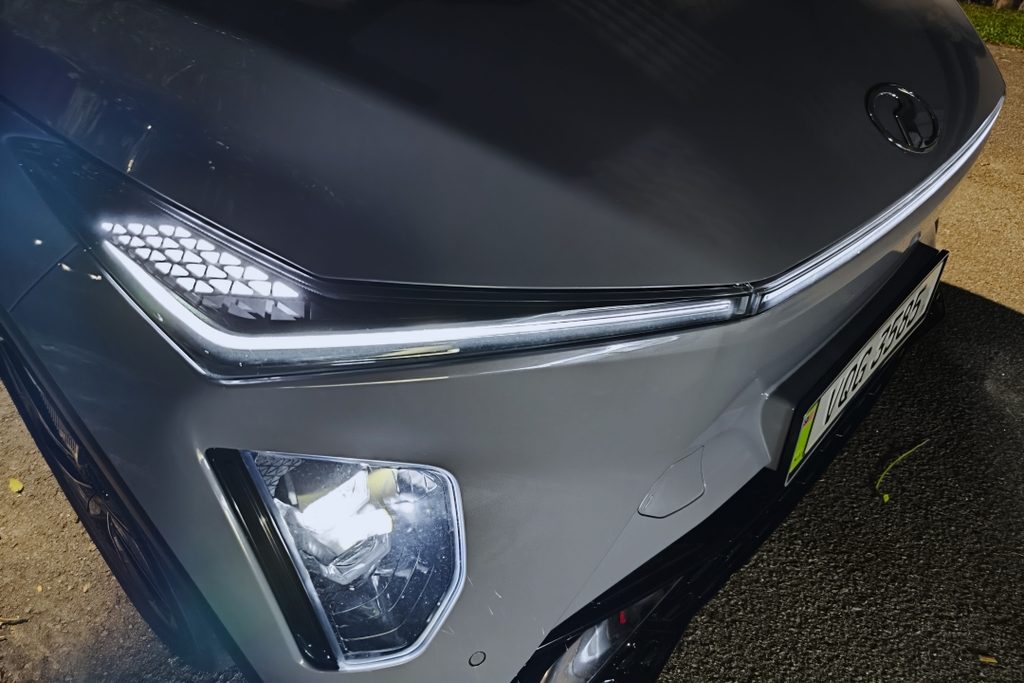
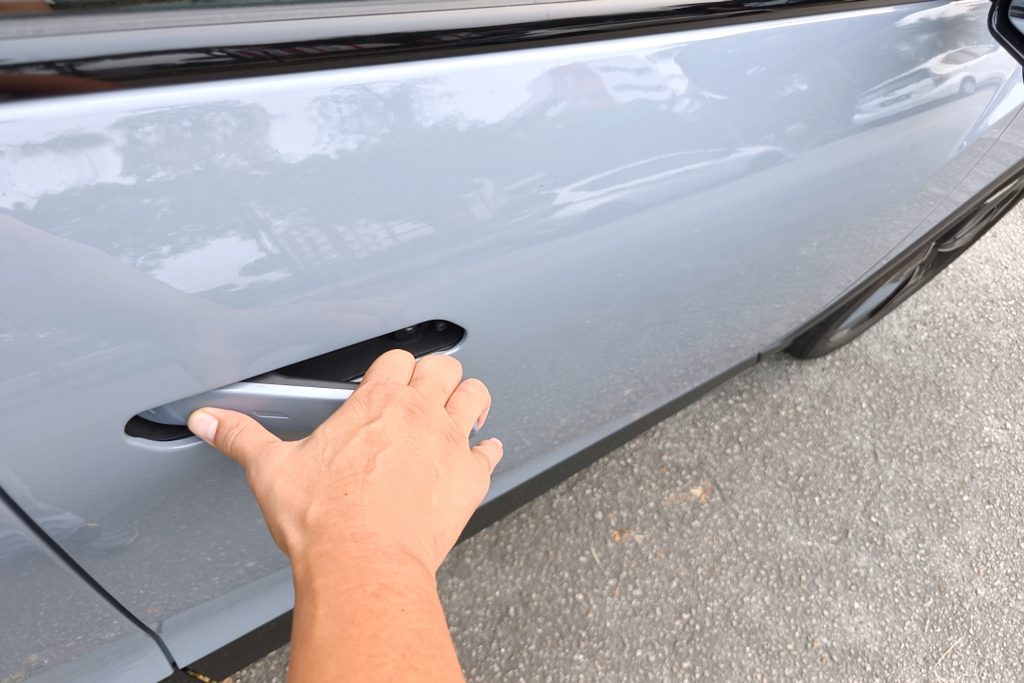
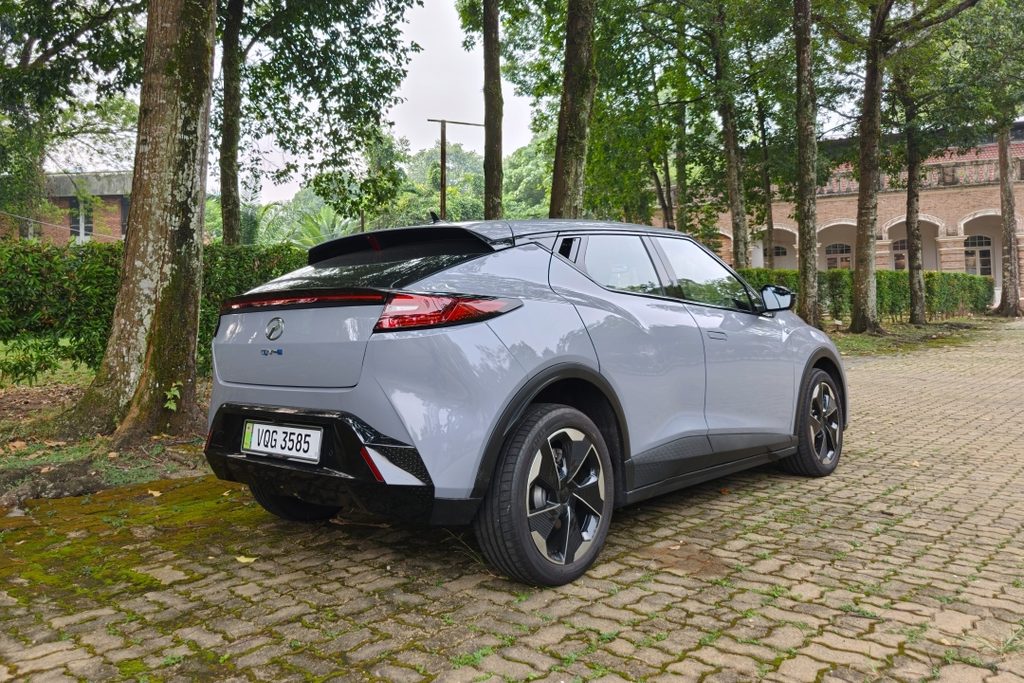
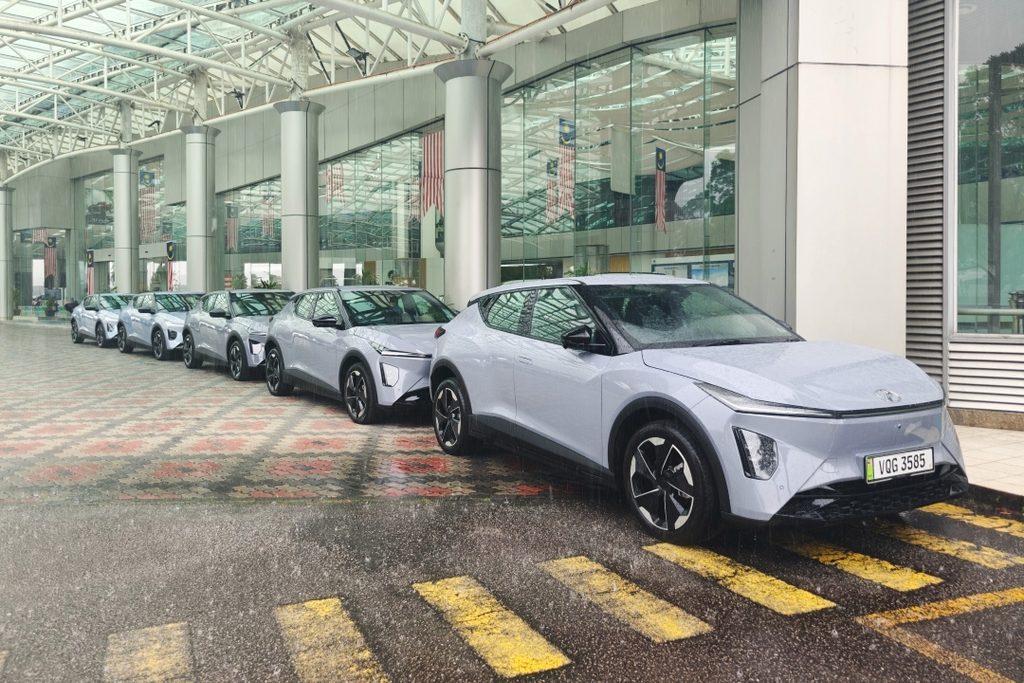
The QV-E looks nothing like a conventional Perodua. Its low-slung fastback silhouette, sharp sculpted lines, full-width LED lightbars, flush front door handles and concealed rear door handles give it a distinctly sporty appearance.
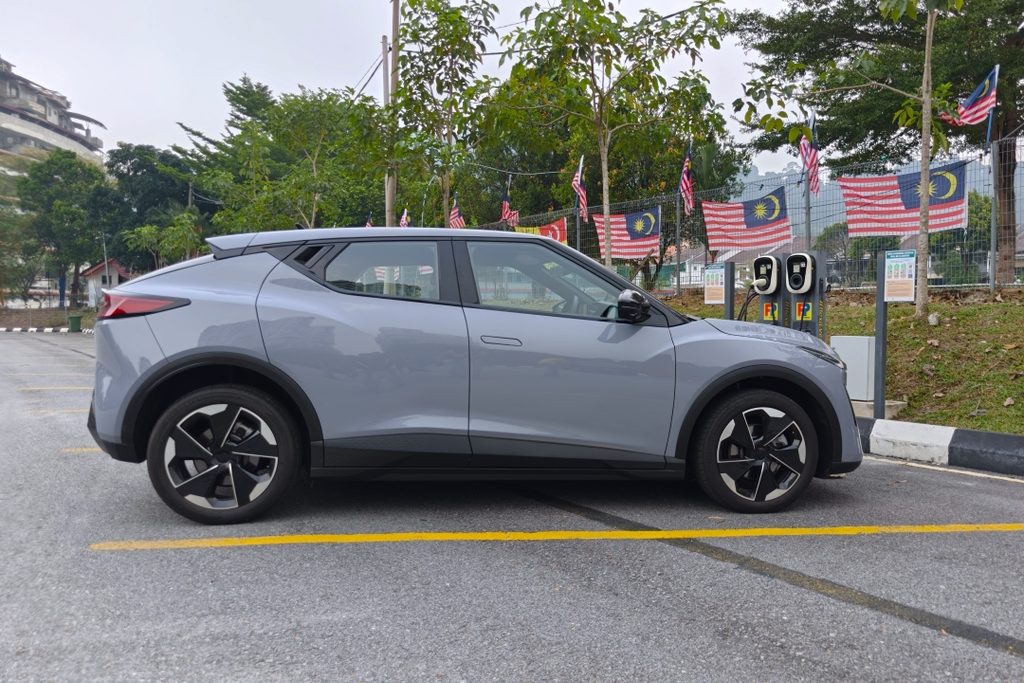
Measuring 4,170mm long, 1,800mm wide and 1,502mm tall, its a relatively low stance looks more hatchback than crossover. The 2,680mm wheelbase is notable, but the benefits of this packaging are not fully realised in the rear cabin.
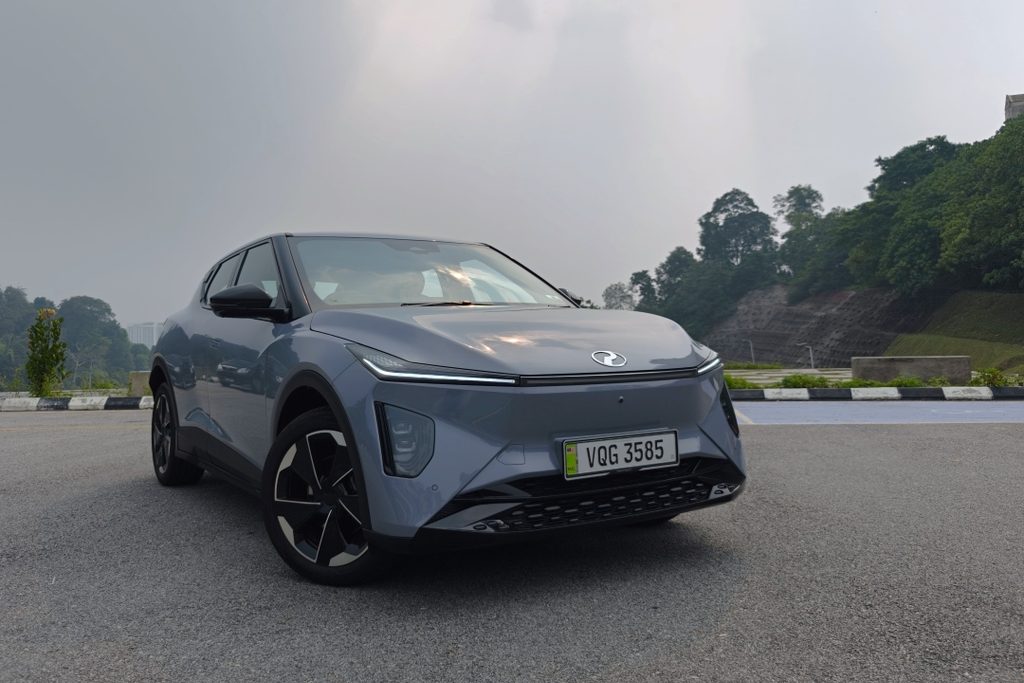
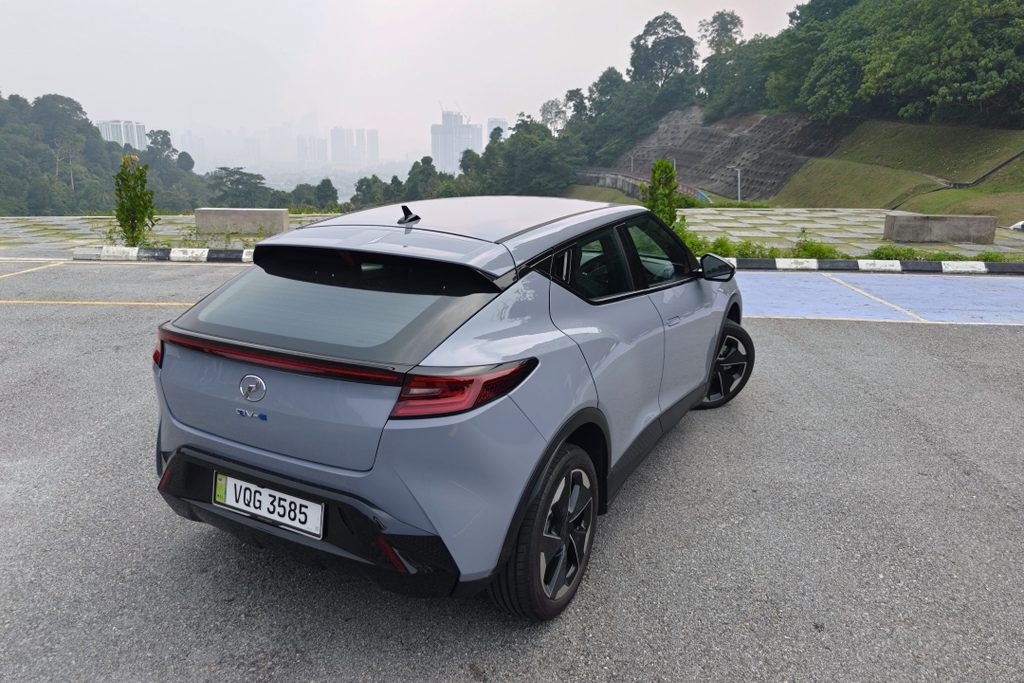
The 18-inch dual-tone alloy wheels fill the arches nicely, while the sloping roofline and sculpted bodywork help the QV-E establish an identity of its own. Look closer and finer details stand out, like the aero fin over the rear wheel arch which looks very similar to one in the Zeekr X.
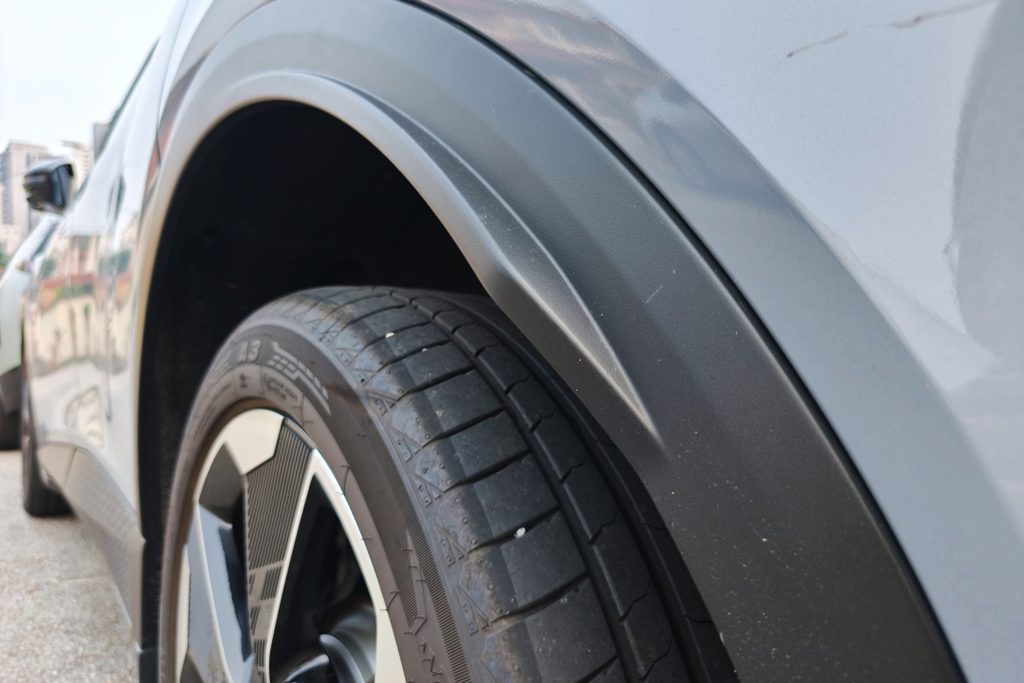
Overall, it is an ambitious design for Perodua, and one that gives the QV-E considerably more road presence than its modest footprint suggests.
But the trade-off becomes apparent inside. The thick C-pillars and small rear windows create a more enclosed atmosphere, while the sloping coupe-style roofline limits headroom compared with a more upright crossover.
The styling works well from the outside, but tall passengers in the rear pay the price.
Credit goes to Perodua for the way it places the pivot point of the flushed front door handles where it is convenient for the thumb to create leverage for a natural hand grip over the door handle.
Cabin With Good Ideas, Uneven Execution
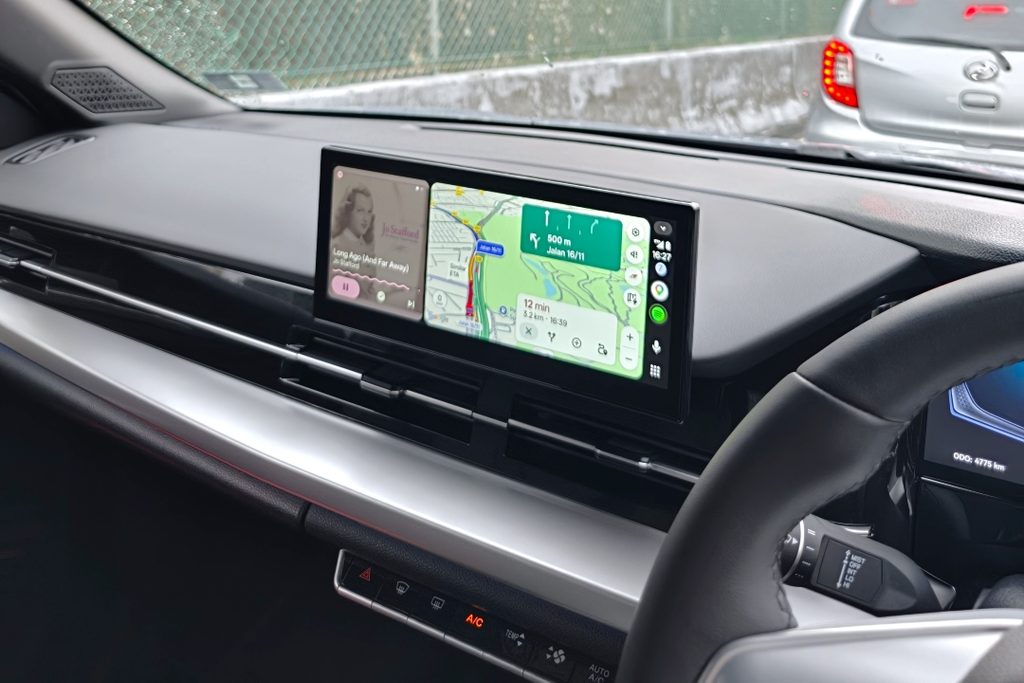
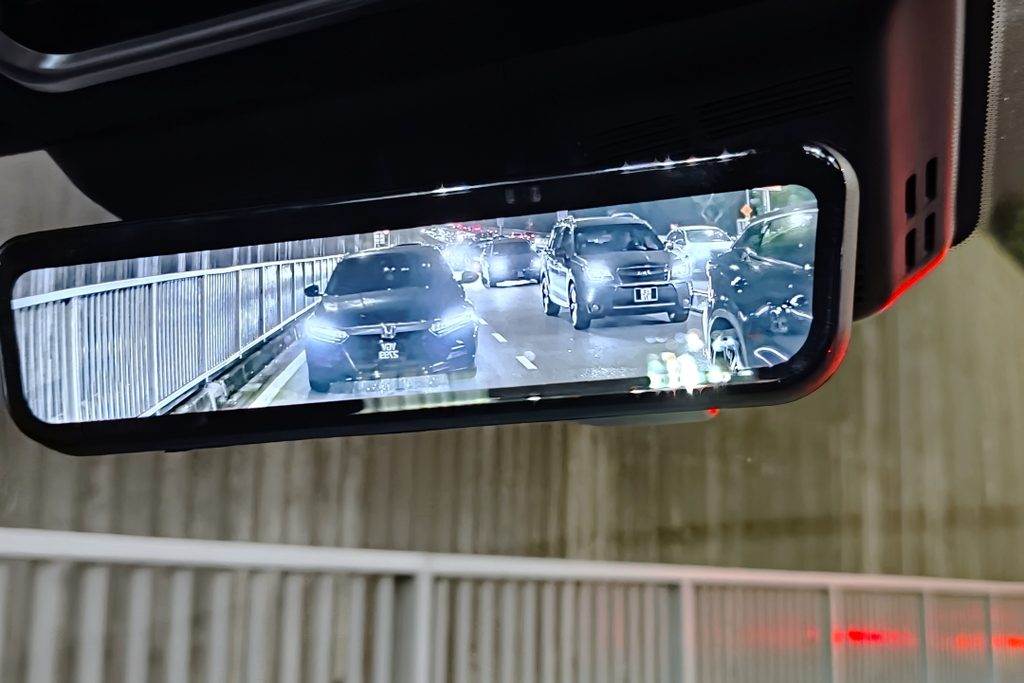
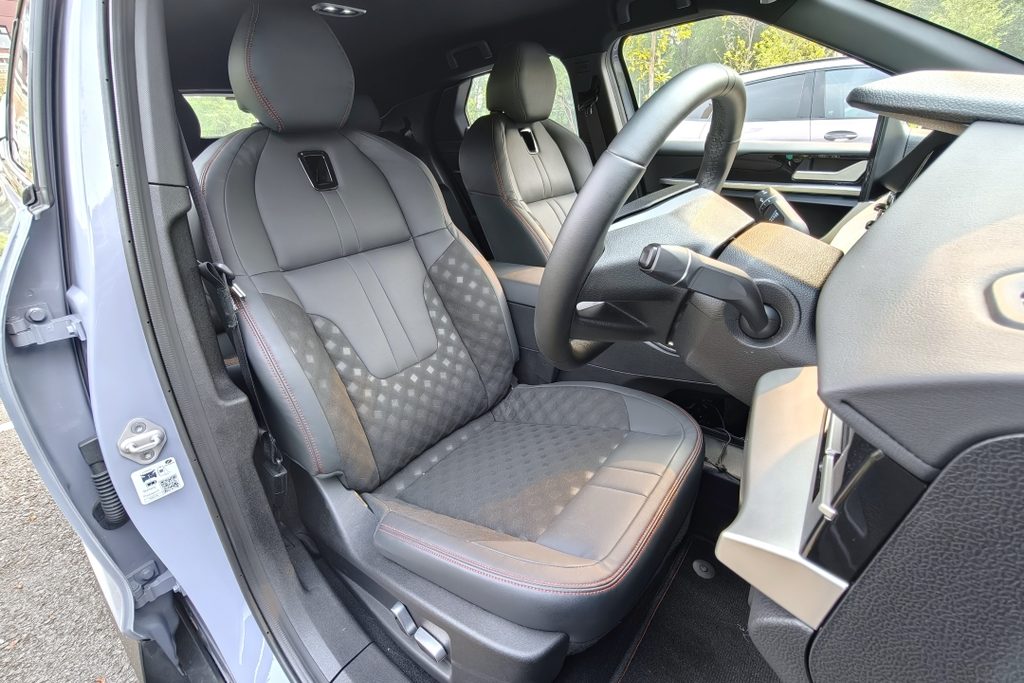
The QV-E’s cabin introduces several features previously unavailable in a Perodua, including a powered driver’s seat, reach and tilt steering-wheel adjustment, wireless Apple CarPlay and Android Auto, seven-colour ambient lighting and a digital rear-view mirror.
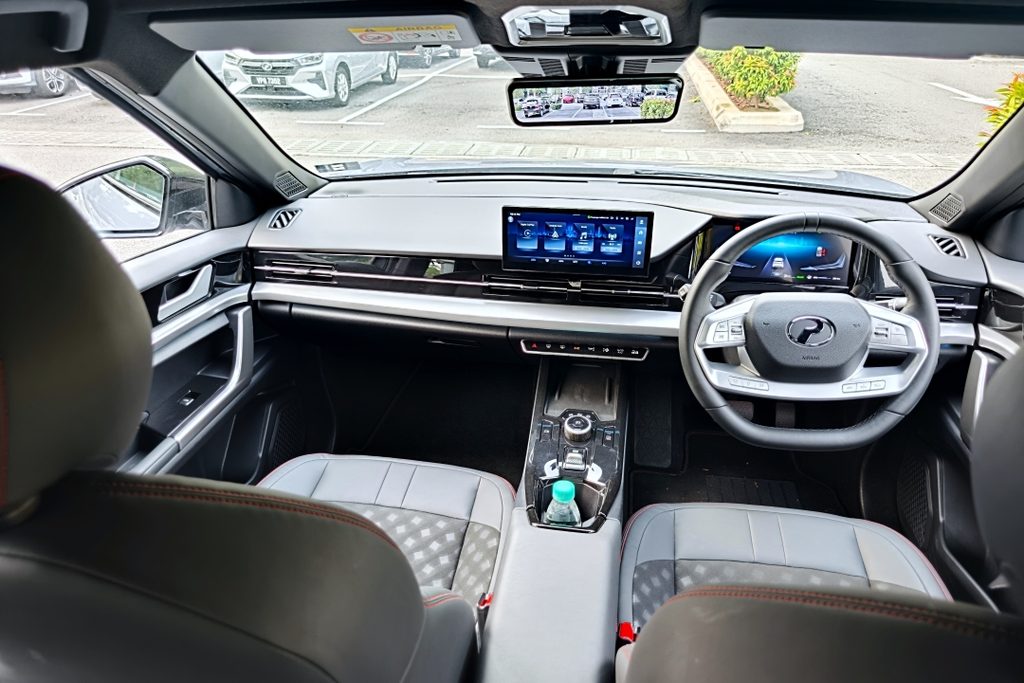
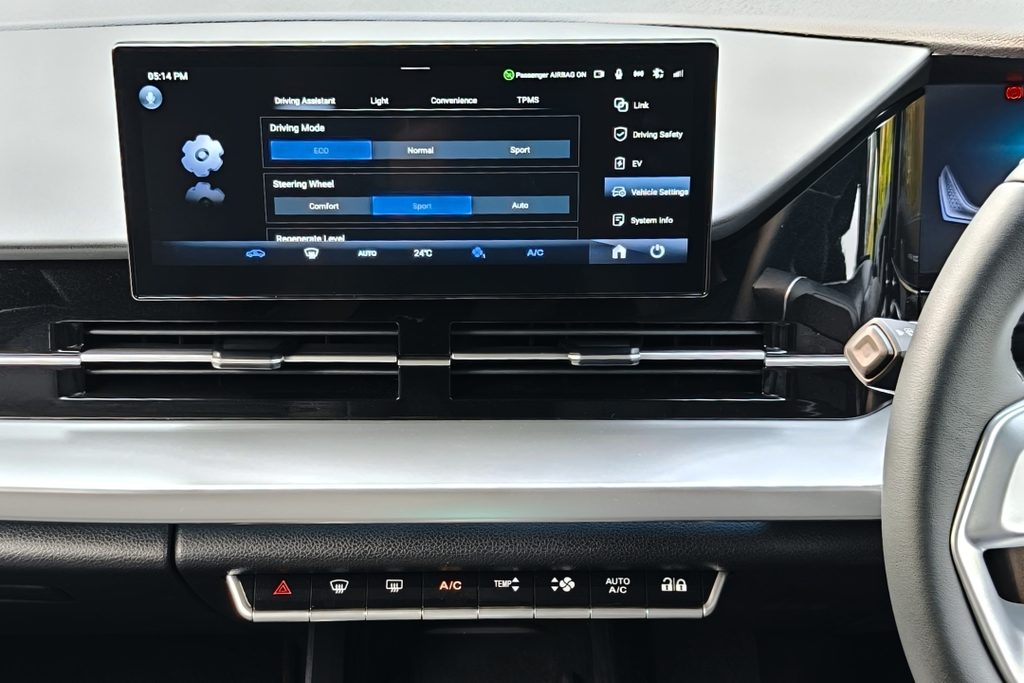
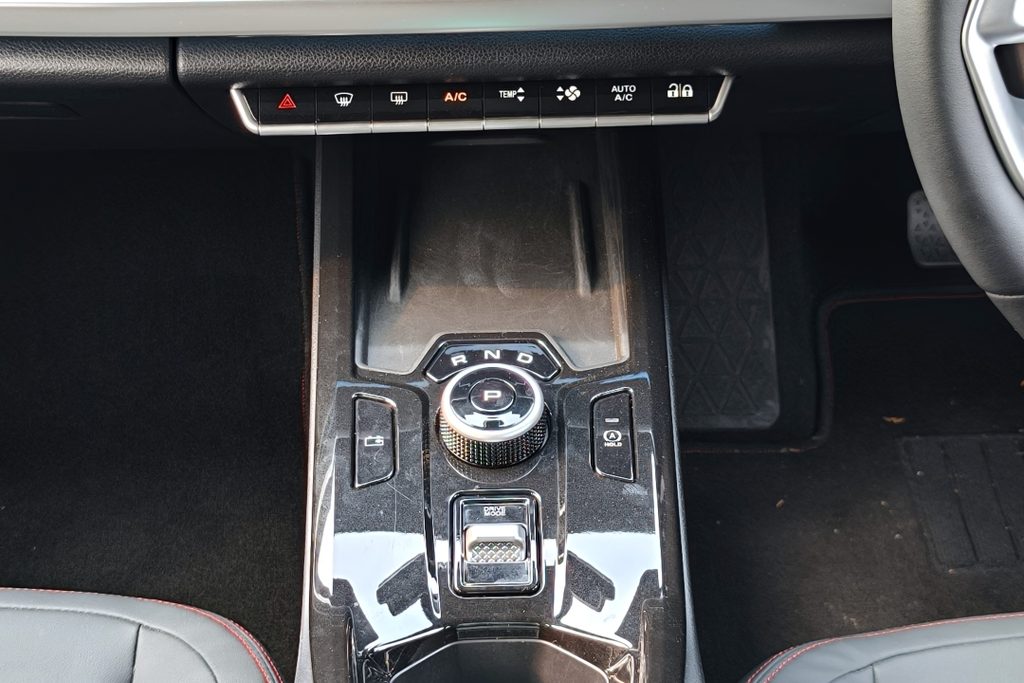
The physical buttons for climate control and regenerative braking add practical usability and are very welcome, especially when so many new cars have moved basic functions into touchscreen menus. Retaining direct controls makes everyday operation much more intuitive, and convenient.
The central 10.25-inch touchscreen, however, is tiny by modern standards. Small enough that there isn’t enough space to accomodate climate control information when you activate Android Auto or Apple CarPlay so it’s a guessing game with the fan speed and temperature. On the bright side, the infotainment unit is close to the driver’s sightline, but doesn’t interfere with driving view. More importantly, just about every necessary function is easily found in the menu, proving that Perodua did consider user-friendliness.
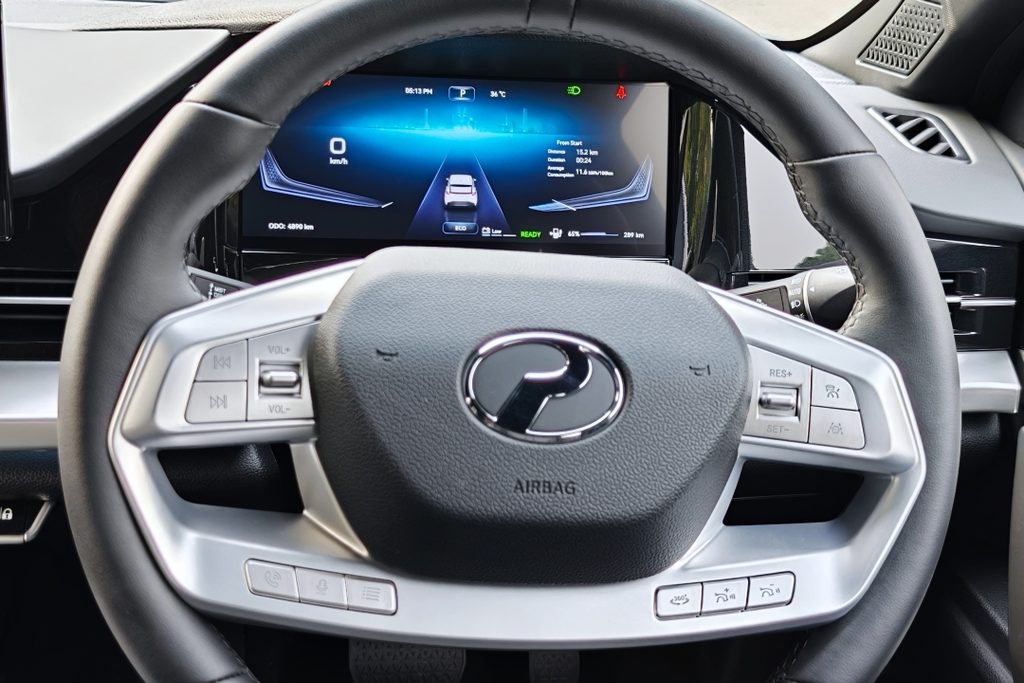
More immediate driving information can be accessed from the steering wheel buttons and seen on the similarly sized digital meter display. And on that note, the silver finish and the symbols on the steering buttons need more contrast to make them easier to see in bright daylight. Since the buttons are backlit, there is no issue at night.
Other details are less convincing, however. There is liberal use of hard plastics in the cabin with some moulded edges feeling insufficiently finished. Additionally, the chrome strip on the air vents running across the dashboard isn’t friendly to those with OCD.
However, the digital rear-view mirror is useful given the restricted rearward visibility, but glare at night can be distracting. You can switch to the actual mirror but the button takes some effort to detect and press.
None of these issues fundamentally undermines the car’s functionality. Collectively, however, they suggest that if Perodua was given more than the 28-months development time, it could have delivered a more refined product.
Rear Passengers Get The Short End Of The Deal
The QV-E’s front cabin is undoubtedly the better place to spend time. The front seats are supportive, and the driving position benefits from powered adjustment and a steering column that adjusts for both reach and rake.
Rear-seat comfort however, is less than stellar.
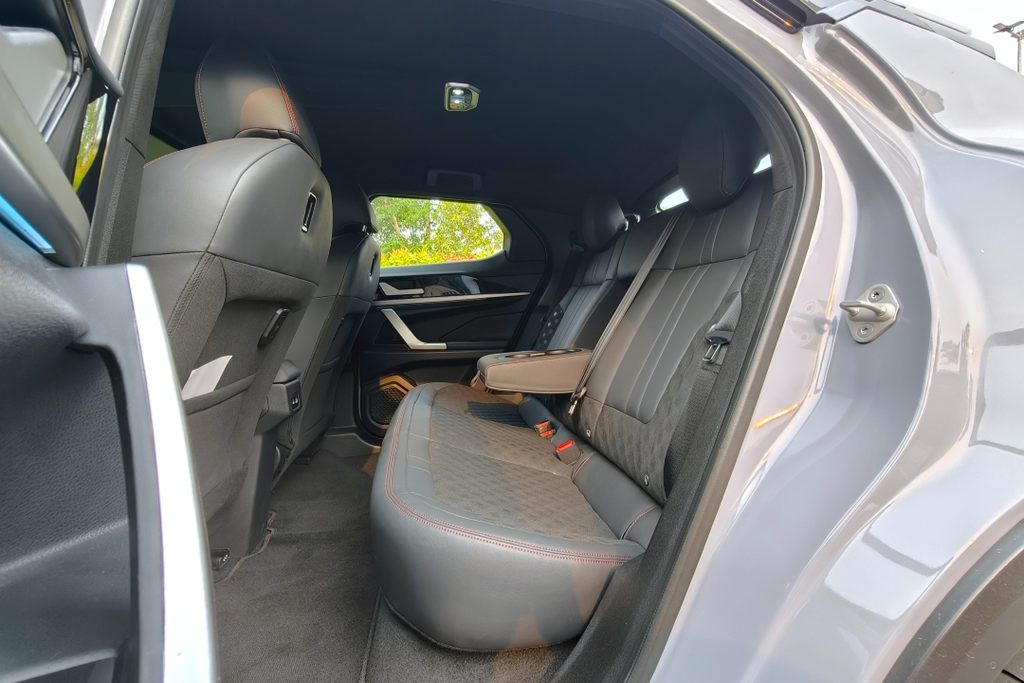
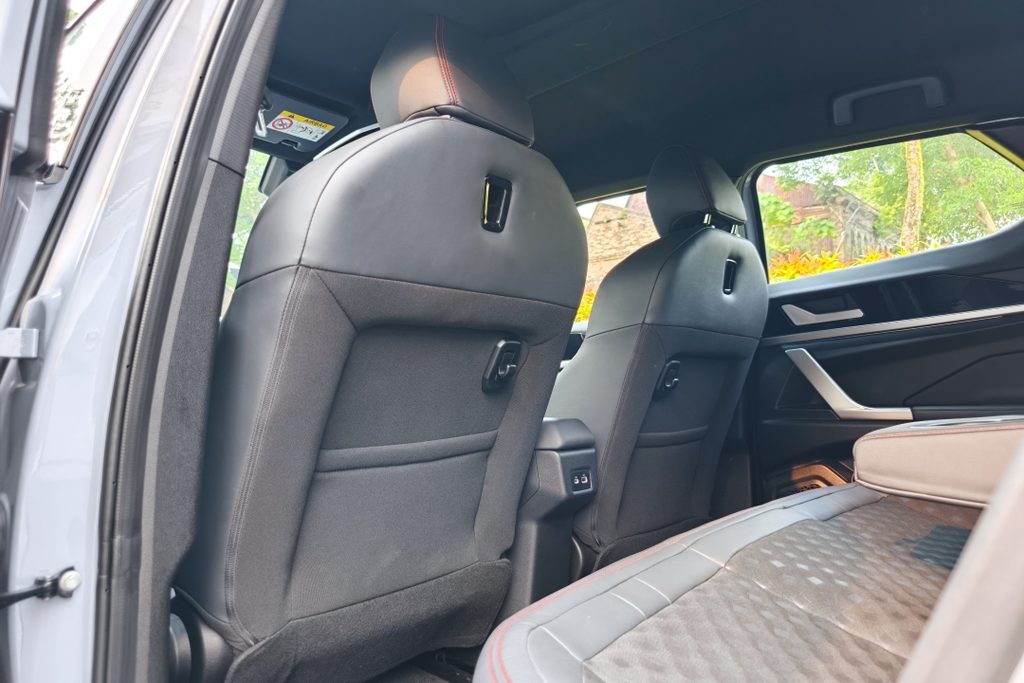
The rear bench lacks thigh support for tall passengers, putting them in a knees-up seating position. Paired with the sloping roofline, black ceiling, thick C-pillars and small windows, they reduce the sense of space.
There are also no dedicated rear air-conditioning vents either. In Malaysia’s tropical climate, this can be a noticeable omission.
For children or adults making short trips, the compromises may be manageable. For families regularly carrying adults in the back on longer journeys, the QV-E feels like it didn’t fully capitalise on its wheelbase potential.
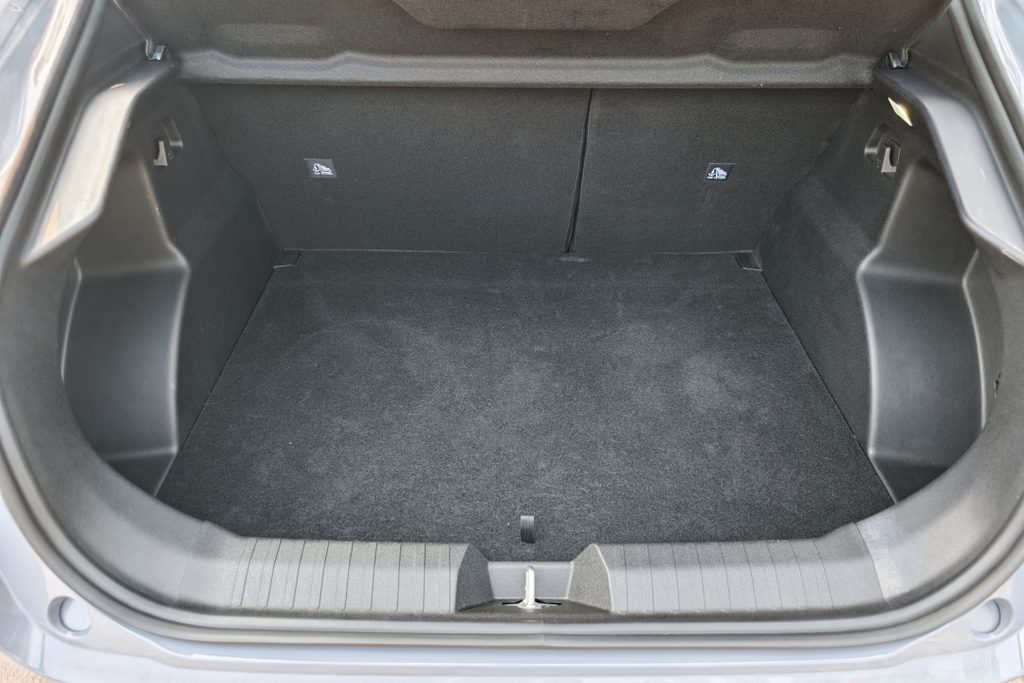
Practicality is further affected by the absence of a front storage compartment (frunk) and spare tyre. The omissions are not unusual individually, but they reinforce the need to evaluate the QV-E as a complete ownership proposition. But one item Perodua did adopt is the teh tarik hook.
Performance That Changes The Perodua Formula
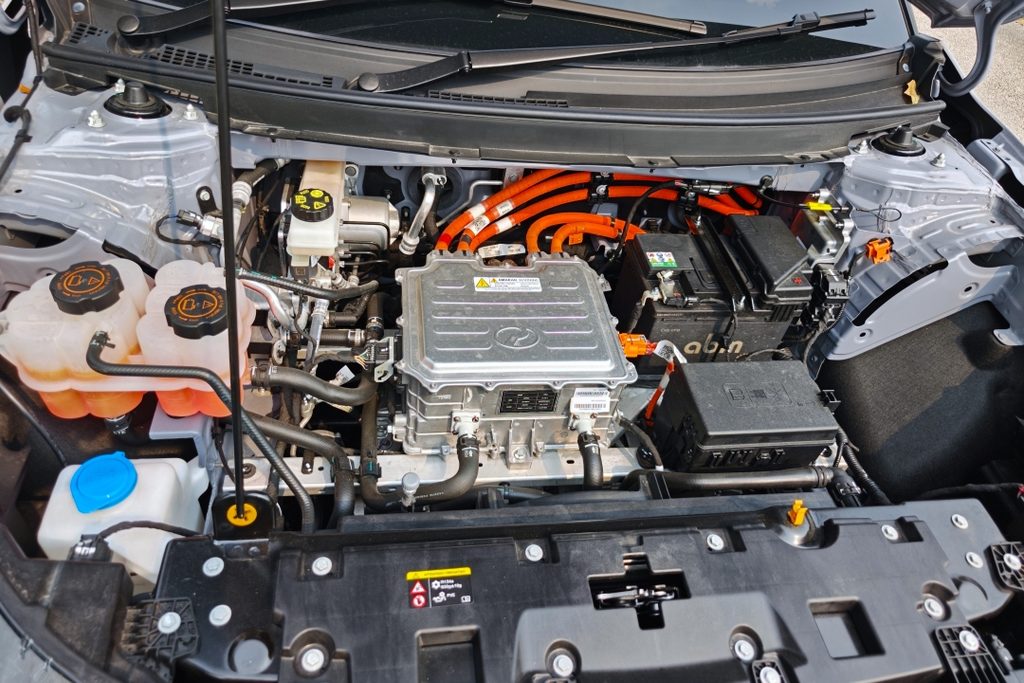
Power comes from a single front-mounted electric motor producing 150kW (204PS) and 285Nm. Drive goes to the front wheels, with 0–100km/h taking a claimed 7.5 seconds in Sport mode. The electronically limited top speed is 165km/h.
These figures thus, make the QV-E the most powerful production Perodua to-date.
The immediate torque gives it brisk acceleration, particularly when joining traffic or overtaking. Sport mode sharpens the response further, although the front tyres can struggle to put all that torque onto the road.
Wheelspin under hard acceleration is almost always guaranteed, and the factory-fitted Atlas A3 tyres do not inspire sufficient confidence when the road is wet. A switch to better tyres will definitely improve handling.
The underlying chassis, however, is a different story.
The steering is direct and light. Three steering profiles — Comfort, Sport and Auto — allow you to adjust the assistance, with Sport providing a more reassuring level of weight for enthusiastic driving.
The hot press-formed steel structure also gives the QV-E a reassuring sense of rigidity. Through corners, body roll is well controlled, and the car responds readily to changes in direction.
Push harder and the chassis can feel playful, with some rotation available when lifting off the accelerator. This is not a reason to treat a front-wheel-drive EV as a track car, but it does demonstrate that Perodua has put serious thought into its handling characteristics.
The suspension is just as impressive. Despite the 18-inch wheels, it rounds off potholes, speed humps and expansion joints without becoming excessively harsh. It feels controlled over uneven surfaces rather than bouncing or floating after an impact.
That balance between ride comfort and body control is one of the QV-E’s greatest strengths. It is entertaining on a winding road yet remains civilised enough for daily commuting.
At urban speeds, the cabin is also quiet. Road noise from the tyres and wind noise around the mirrors and door seals become more noticeable only at highway speeds, while the electric motor produces a mild whine under full acceleration.
The braking system offers three regenerative braking settings: Low, Standard and High. High provides substantial deceleration and can reduce the need to use the brake pedal in city traffic. The convenience of having a dedicated button is the ability to manipulate regenerative braking strength on the fly — High when approaching a junction, Low when cruising in smooth traffic.
Battery Range And Charging
The QV-E uses a 52.5kWh liquid-cooled lithium iron phosphate (LFP) battery supplied by CATL.
Perodua quotes a driving range of up to 445km under the NEDC test cycle, or 370km under the more representative WLTP cycle.
For everyday use, a range of 330km is a more practical expectation, but this depends on driving style, traffic and highway speeds. Sustained high-speed driving and frequent hard acceleration will naturally reduce that figure.
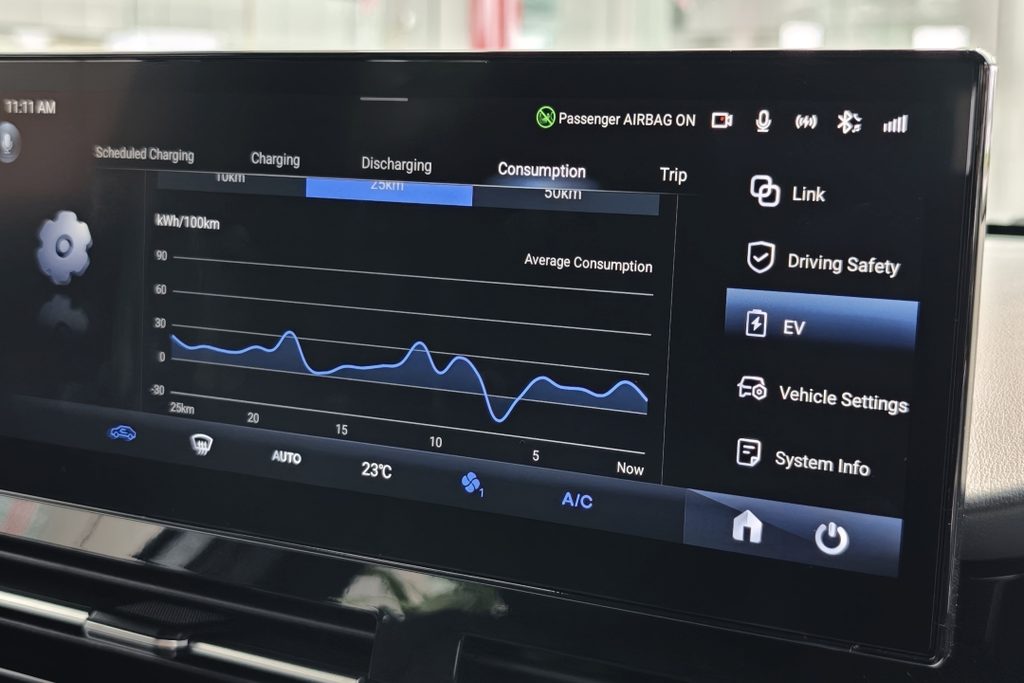
On a nearly 70km stint, I managed to achieve an average consumption of 11.6kWh/100km. In theory, this would give me a total driving distance of 453km if all variables remained constant.
The battery supports AC charging at up to 6.6kW, with a full charge taking approximately eight hours under suitable conditions. DC fast charging peaks at 60kW, with a 30% to 80% charge taking around 30 minutes.
These rates are adequate for overnight home charging and occasional top-ups during longer journeys, but they are not particularly impressive for drivers who rely heavily on public DC chargers.
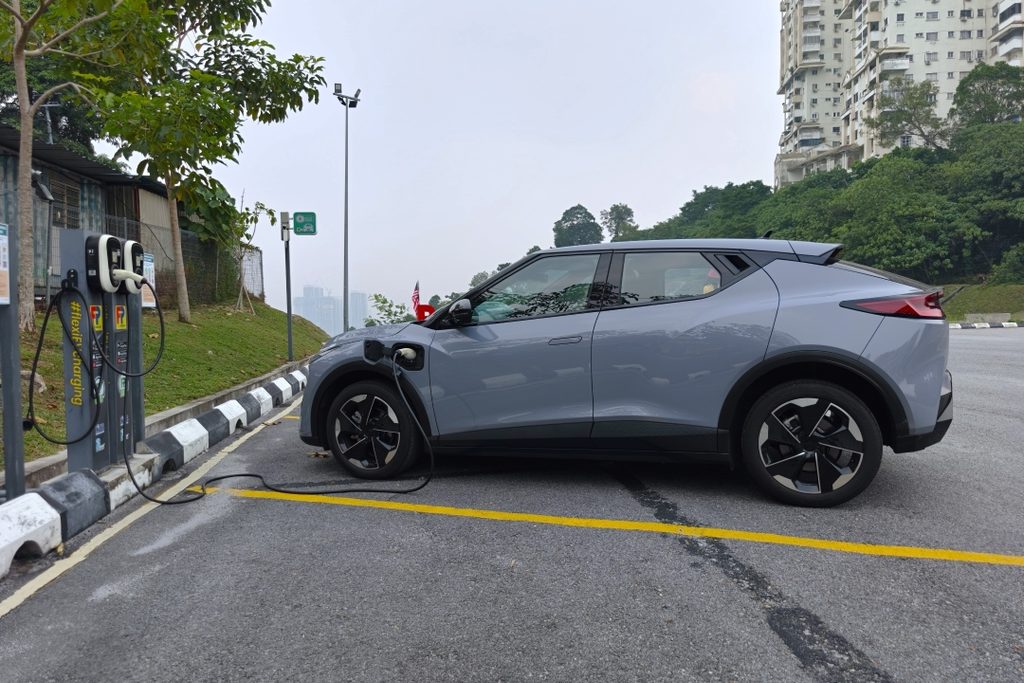
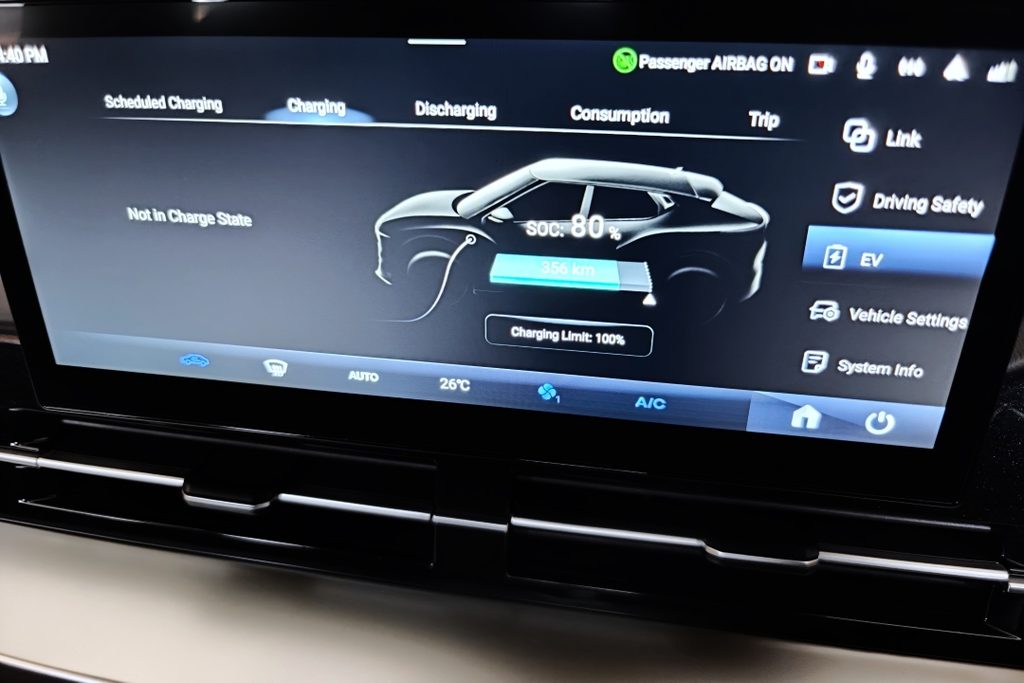
Vehicle-to-Load (V2L) functionality is another useful addition, allowing the battery to supply power to compatible external equipment through an adapter.
The QV-E is therefore best suited to buyers who can charge regularly at home or work. Those who frequently undertake long-distance journeys will need to plan charging stops more carefully.
App Integration
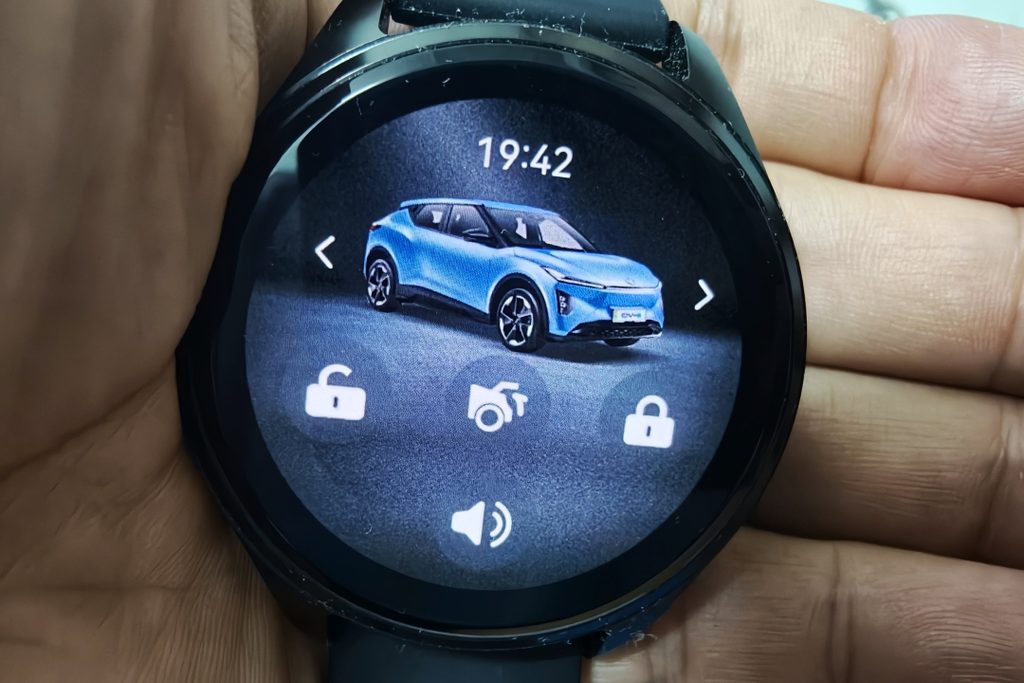
The Perodua QV-E’s connected features extend beyond the car itself through the P-Circle super app and P-Go smartwatch, integrating selected vehicle functions into everyday digital life.
The QV-E’s P2 OneGo connected-services system allows owners to use P-Circle or the compatible P-Go smartwatch to remotely lock and unlock the car, switch on the air-conditioning, check its status and battery health, monitor live location and driving history, and schedule charging.
Other functions include geofencing, smart hazard alerts and remote start prohibition, adding convenience and security without requiring owners to be inside the vehicle.
The P-Go smartwatch supports selected functions rather than the full range available through the app, while access to connected services is complimentary for a limited period, with subscription fees potentially applying thereafter.
Two Ways To Own The QV-E
Perodua’s revised pricing gives buyers a choice between purchasing the battery outright and leasing it through its Battery-as-a-Service (BaaS) arrangement.
The outright purchase option is priced at RM93,999, including the battery and applicable rebates. Under BaaS, the initial vehicle price ranges at RM69,999, with a separate battery lease of RM215 per month over nine years.
The BaaS arrangement includes a lifetime battery performance guarantee, with replacement if battery state of health falls below 70%, subject to the programme’s terms.
The lower initial price makes the QV-E more accessible, but buyers should compare the total cost over their intended ownership period rather than focusing only on the monthly payment.
Over nine years, RM215 a month adds up to RM23,220 in battery lease payments, before considering any applicable changes to the contract or other ownership expenses. You should also understand the implications for resale, contract transfer and ownership at the end of the tenure.
Battery ownership, meanwhile, means paying more upfront but avoiding the recurring lease payment. However, your loan, insurance coverage, and depreciation will all factor in the battery.
Neither arrangement is automatically right for everyone. The choice will depend on available cash, expected ownership duration and how comfortable you are with a long-term battery service contract.
CarTok Editor’s Note
The Perodua QV-E is an encouraging sign that the company can move beyond building affordable, practical cars to produce an EV with genuine driving character. Its steering, chassis balance and ride comfort show engineering ambition, making it surprisingly enjoyable to drive.
But a good chassis cannot compensate for everything else. Rear-seat ergonomics, factory tyre grip, interior finishing and charging performance still need attention. These are not merely shortcomings on a specification sheet; they affect the ownership experience every day.
At RM93,999 with the battery included, the QV-E also faces a more demanding value proposition than its lower entry price under the Battery-as-a-Service scheme. Buyers need to weigh the upfront savings against RM215 monthly over nine years, alongside their charging habits, passenger needs and intended ownership period.
Perodua deserves credit for taking this first step, particularly with a dedicated EV platform. But its not about the achievement of building its first EV. It is whether Perodua can learn from all the feedback and refine the details to turn an ambitious first attempt into a genuinely well-rounded product. Thus, any criticism highlighted here is done in the hopes of seeing a more refined product in the future.
For drivers who value handling, performance and distinctive styling, the QV-E has plenty going for it. Families who regularly carry adults in the rear, or buyers who depend on public fast charging, should consider its compromises carefully. The foundation is promising; the next step is to make the whole car as convincing as the way it drives.