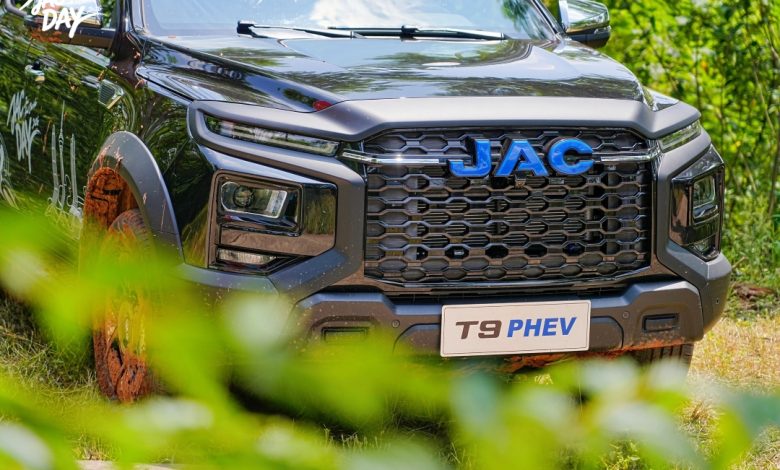
There are plenty of ways to describe a plug-in hybrid pickup.
Efficient. Practical. Electrified. Better suited to urban driving.

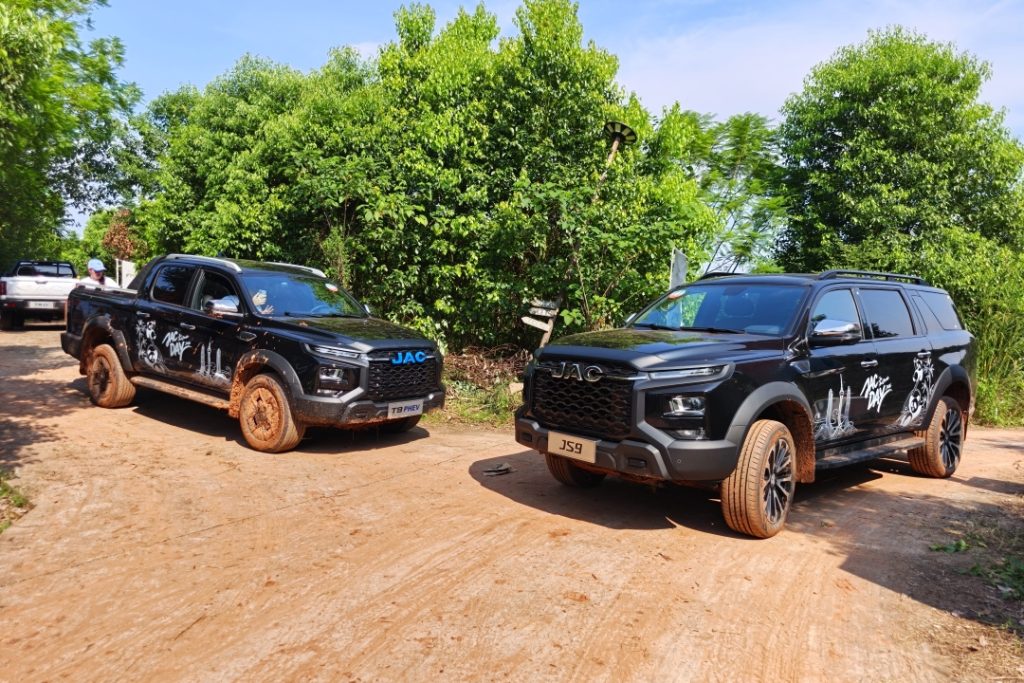
The JAC T9 PHEV is all of those things, but after driving it at a private testing session in Chengdu, China, in conjunction with the JAC Day gathering, one description comes to mind first: very quick.
For Malaysia, where the pickup market is still dominated by diesel-powered workhorses, the T9 PHEV represents a very different approach. The T9 is already sold in Malaysia in diesel and battery-electric forms, making the PHEV the third powertrain approach for JAC’s pickup here.
Also known as the JAC Hunter or Hunter PHEV in some overseas markets, the T9 PHEV combines a 2.0-litre turbocharged petrol engine with two electric motors and a 31.2 kWh LFP battery. The result is a claimed 523PS (385kW) and 1,000 Nm of combined torque, making this a very different proposition from the conventional diesel pickup.
JAC claims the system can deliver up to 100 km of pure-electric driving range and more than 1,000 km of total range.
Three Motors, One Fast Pickup
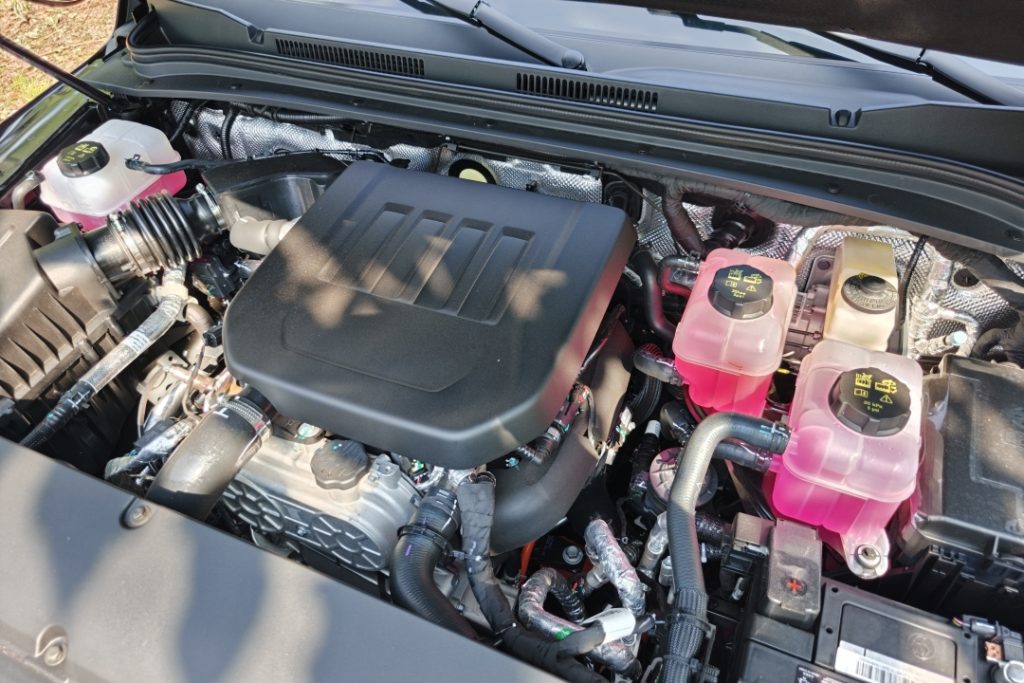
The T9 PHEV’s powertrain is built around a 2.0-litre turbocharged four-cylinder petrol engine, a four-speed Dedicated Hybrid Transmission (DHT), and two electric motors.
One electric motor drives the front axle while another drives the rear, providing all-wheel drive without a conventional mechanical driveshaft connecting the two axles. Torque to each axle can therefore be controlled electronically. This is effectively an electronically controlled four-wheel-drive system, with each axle powered by its own electric motor.
It may sound complicated, but from the driver’s seat, it is pretty straightforward.
The electric motors provide immediate response when the accelerator is pressed, while the petrol engine and DHT join the party as required. JAC quotes a 0–100 km/h time of around 5.9 seconds for the roughly 2.4-tonne pickup though we never got to test this claim.
It however, does not feel quite as dramatic as the 523PS might suggest.
There is a slight hesitation when pulling away hard as the powertrain decides how best to deploy the available electric and petrol power. But this sort of aggressive acceleration comes with eventual realisation that you are doing it with a large double-cab pickup.
Electric Power Changes The Way The T9 Works Off-Road
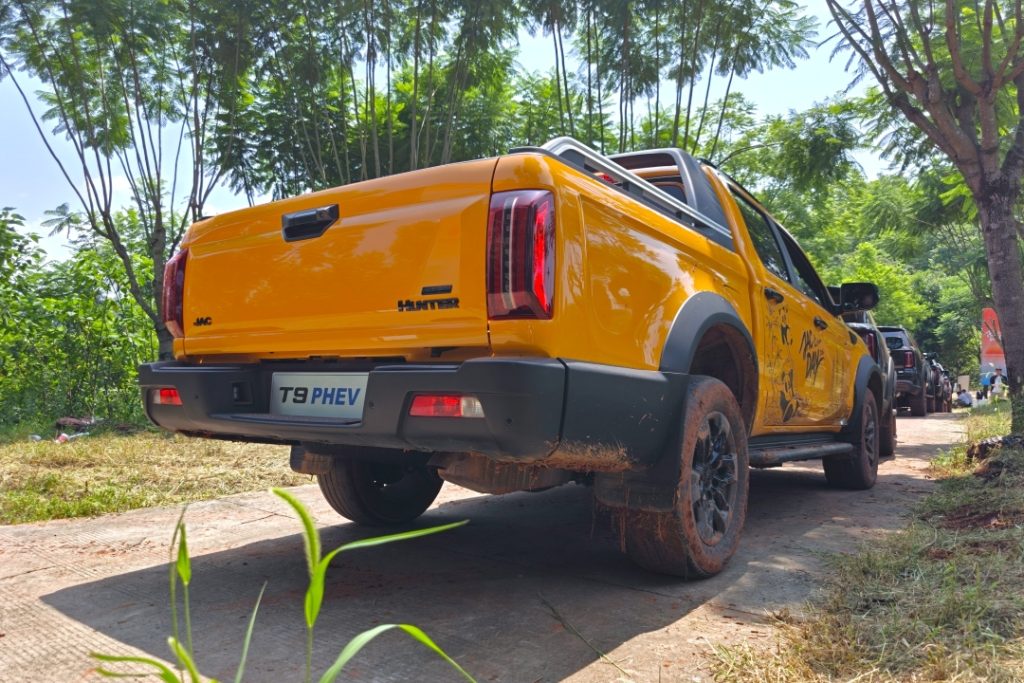
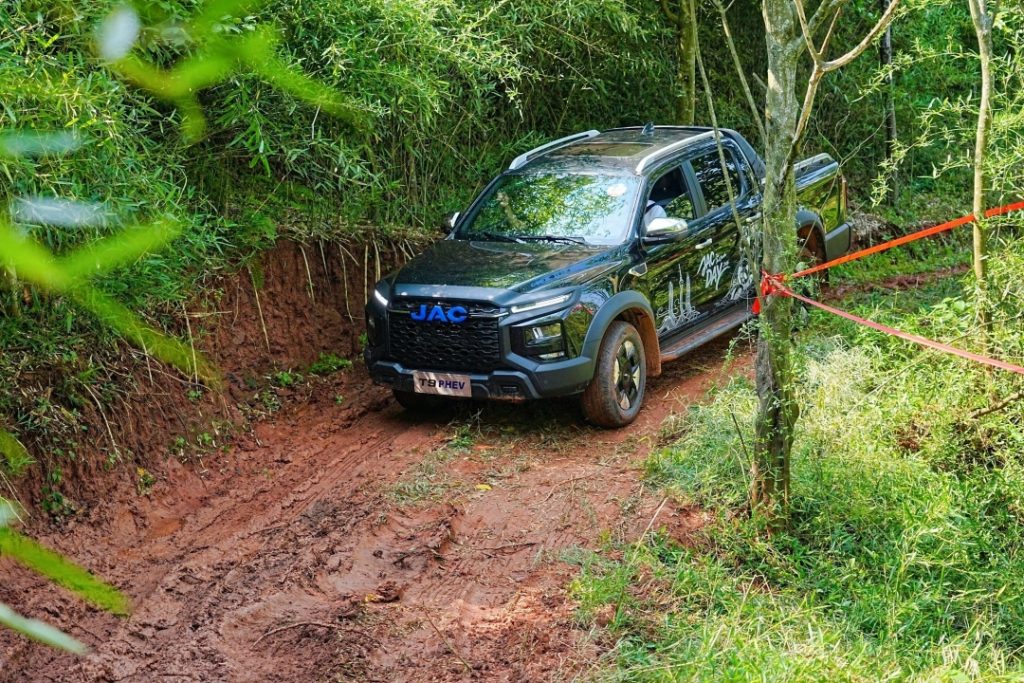
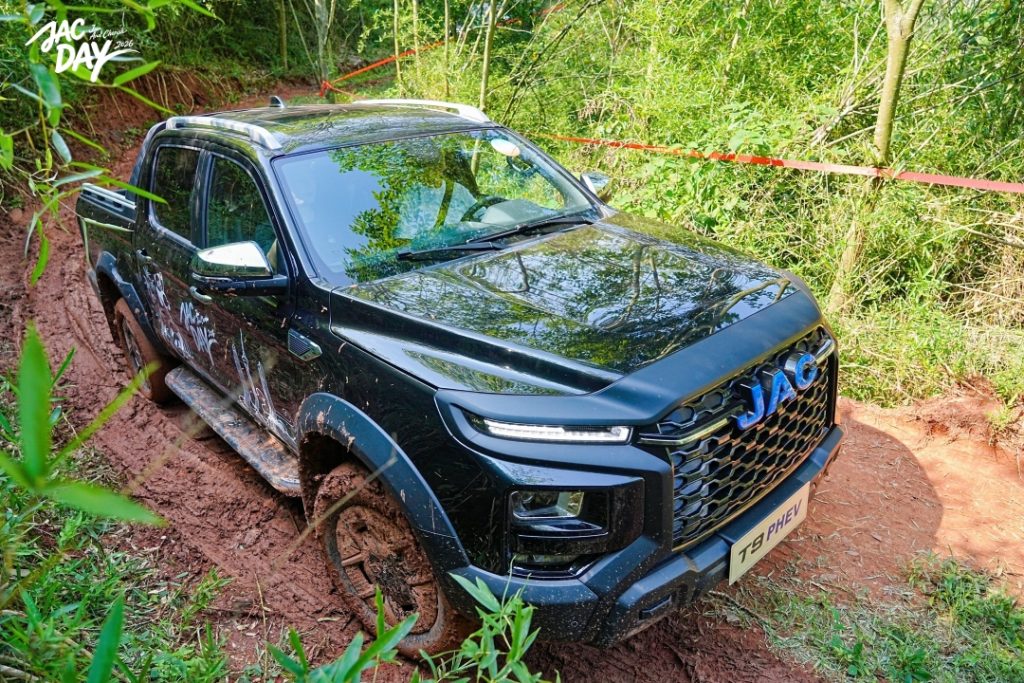
The Chengdu test session provided an opportunity to take the T9 PHEV onto an off-road course.
This is where the benefits of the hybrid system start to show.
The T9 PHEV does not rely on a conventional transfer case and mechanical four-wheel-drive system to distribute torque between its axles. Instead, the two electric motors can deliver torque independently, allowing the system to react quickly when grip becomes limited.
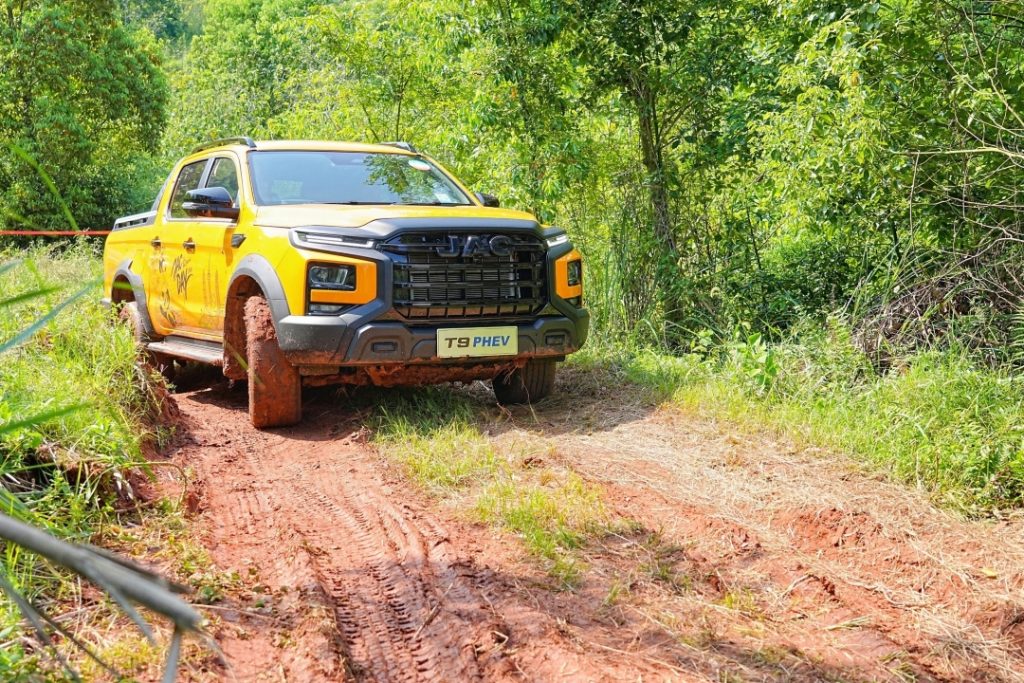
There are also locking differentials and dedicated off-road functions, including a crawl function and tank-turn mode.
On loose, uneven surfaces, the immediate response of the electric motors is particularly useful. Rather than waiting for an engine to build revs or for a conventional drivetrain to redistribute torque, the system can make very fine adjustments to the power reaching each axle.
The result is a pickup that feels more controlled than its size and weight might suggest. Driving up a muddy slope already deeply carved by other drivers proved to be nearly effortless. You feel a slight slip at first, but the T9 is quick to redistribute torque and gain grip.
The point is that this is not simply a road-going pickup with a large battery added underneath.
Electrified, But With Pickup Credentials
This point matters.
The T9 PHEV still retains the fundamental qualities expected from a workhorse, including a double-cab layout and a useful cargo bed. The payload capacity is reportedly in the region of 700 kg.
Further, with a claimed 100 km of electric range, short daily trips can potentially be completed with little or no petrol consumption if the vehicle is regularly charged.
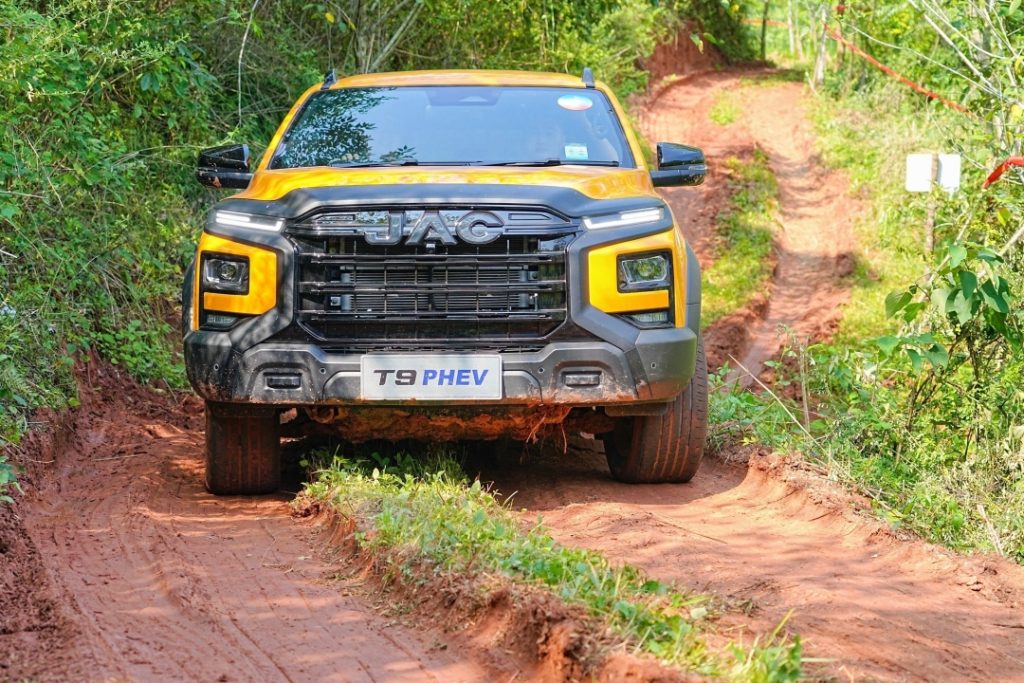
For longer journeys, the petrol engine means the T9 does not have to depend on public charging infrastructure to complete the trip.
A diesel pickup remains very difficult to beat for certain working applications. But the T9 PHEV offers an alternative: electric power for everyday driving, petrol range for longer trips, and dual-motor all-wheel drive when the road disappears.
There is also 3.3 kW V2L, allowing the T9 PHEV to supply electricity to external equipment. For owners using a pickup for camping, outdoor activities or remote work, this is a useful feature.
The Cabin Is More SUV Than Work Truck
Inside, the T9 PHEV continues the move towards making modern pickups feel more like passenger vehicles.
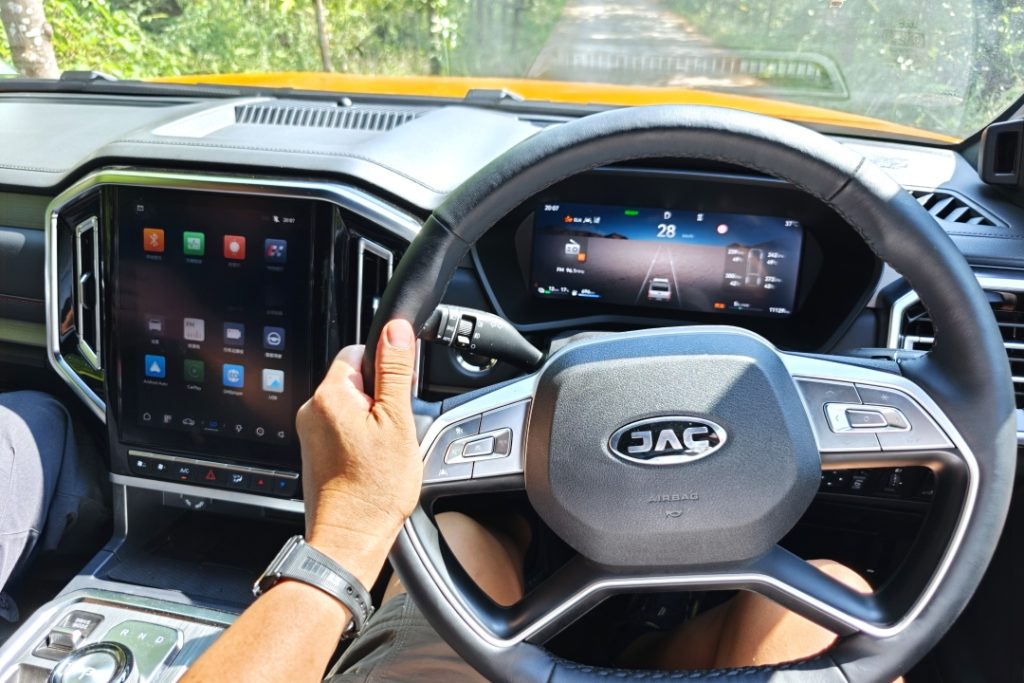
The driving position is improved with reach and rake adjustment for the steering wheel, while the rotary gear selector frees up space around the centre console.
A 10.4-inch portrait touchscreen dominates the dashboard, with smartphone connectivity and a 360-degree camera system.
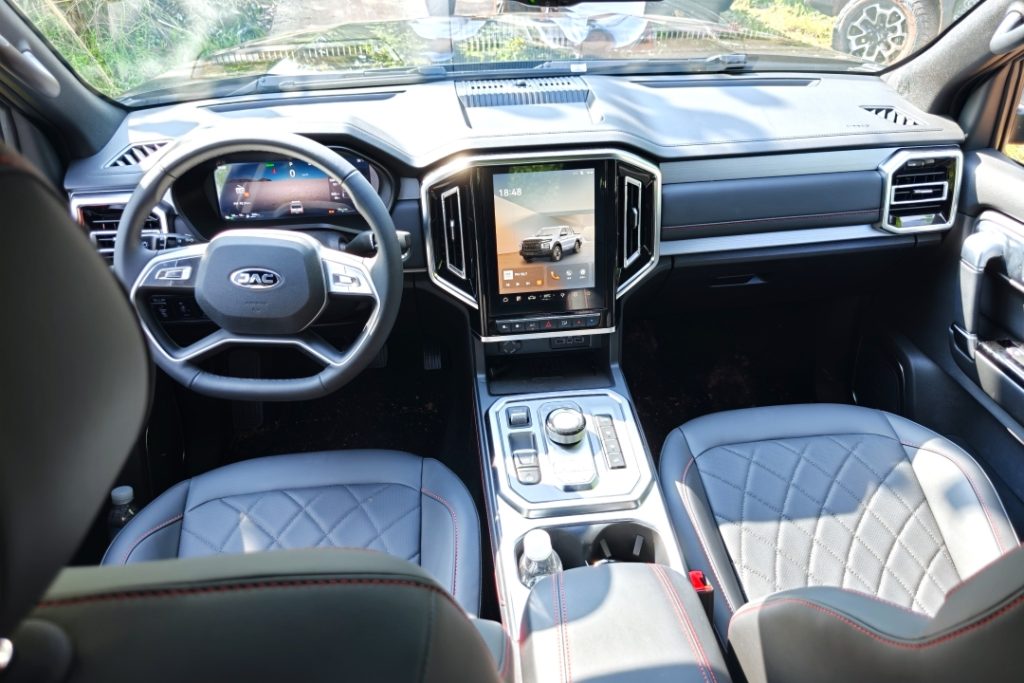
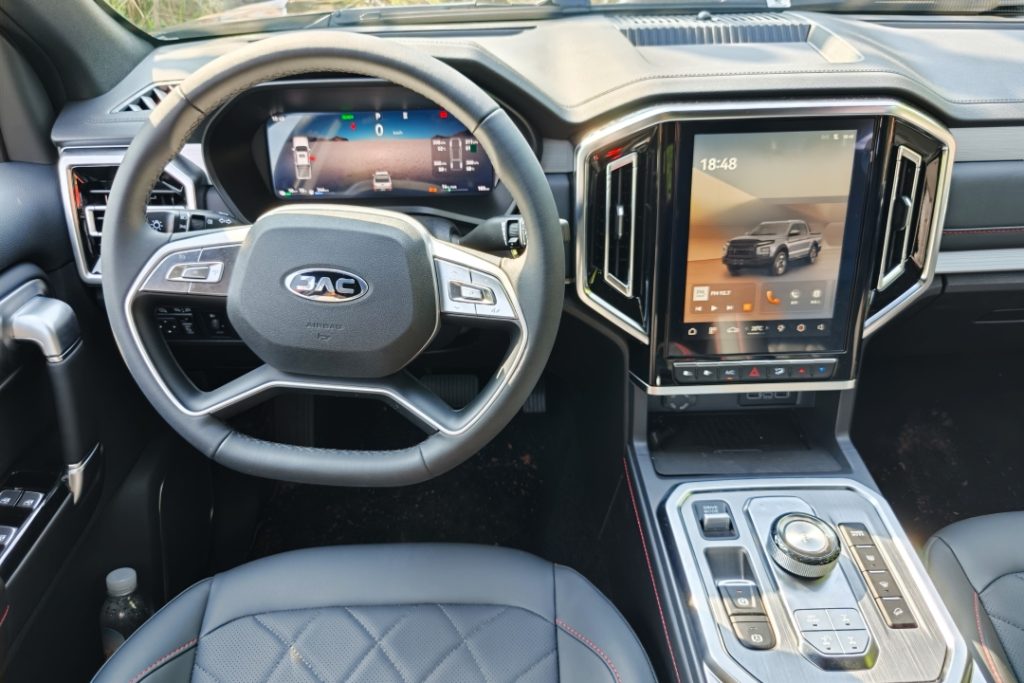
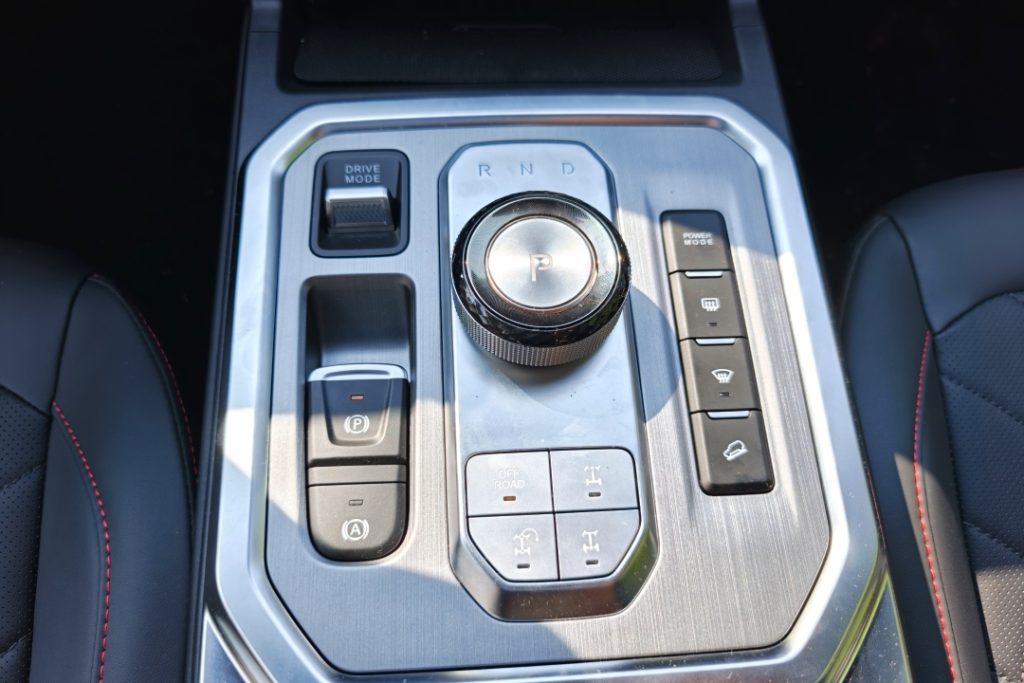
The PHEV also gets additional controls for its hybrid and off-road functions, including the locking differentials and even a tank-turn system.
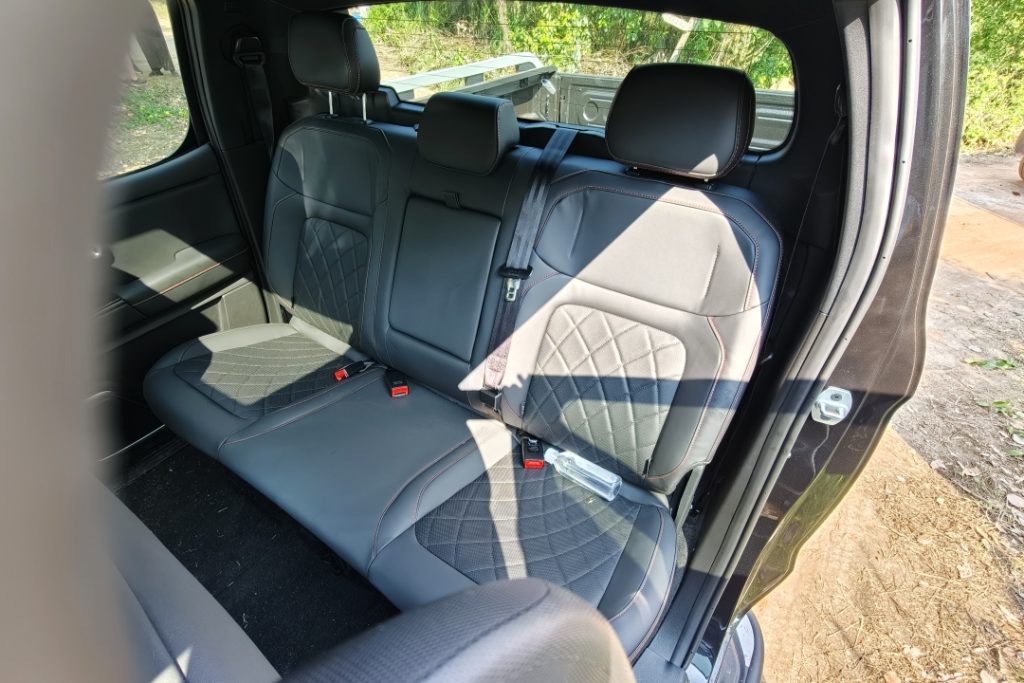
The cabin seems quite substantial, and the overall impression is closer to a modern SUV than a commercial workhorse, making it suitable for two jobs: work during the week, recreation on the weekend.
The off-road exercise was naturally focused more on the driving than cabin comfort, but throughout the session, the mirrors, seating position and visibility helped make the winding, muddy trail between the trees feel surprisingly stress-free.
CarTok Editor’s Note:
The JAC T9 PHEV has the hardware to get attention. More so when Malaysians benefit from the BUDI95 subsidy.
BUDI95 doesn’t automatically make a PHEV pickup a better financial proposition. But it does change the calculation.
The T9 PHEV’s advantage is potentially about using electricity for shorter journeys while retaining petrol for long-distance and heavy-duty use.
The high torque (similar to a diesel, but more instant) makes manoeuvring on loose surfaces more controllable. And the ability to run quietly and smoothly on electric power is also a marked contrast to a typical diesel pickup, particularly during ordinary urban driving. There is also less need to think about how a large turbocharged engine is going to respond when you are crawling over an obstacle.
For JAC in Malaysia, the challenge will ultimately come down to pricing, payload, local specification, charging support and aftersales confidence.
After a few runs on the road and through the mud, the T9 PHEV leaves a distinct impression: its biggest strength is not the output, but how naturally the electric motors make a large pickup respond. The real test for Malaysia is whether JAC can build brand awareness effectively enough to pair with the right price and package for the T9 PHEV to gain traction.