
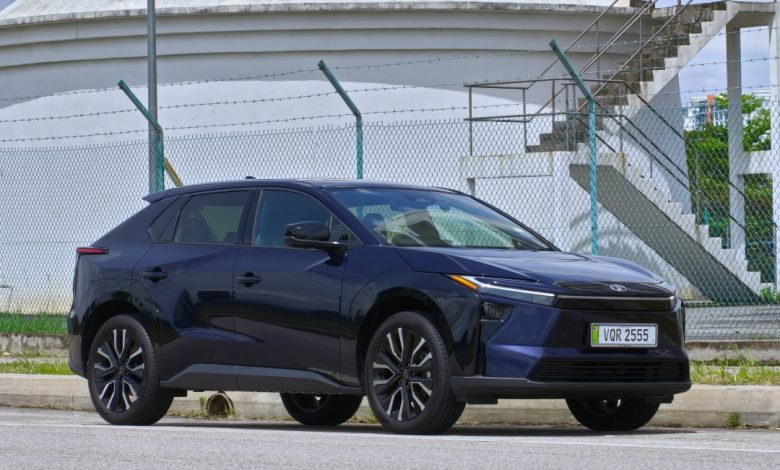
Toyota certainly took its time getting into the mass market battery-electric vehicle game.
The bZ4X was previewed in Malaysia back in 2023, but it took another three years before Toyota finally put its first dedicated BEV on sale here. And in that time, the market had changed considerably, with Chinese EV makers bringing increasingly sophisticated products to Malaysia at competitive prices.

So when the facelifted Toyota bZ4X finally arrived with a RM220,000 price tag as a fully imported model from Japan, the question wasn’t whether Toyota can build an EV.
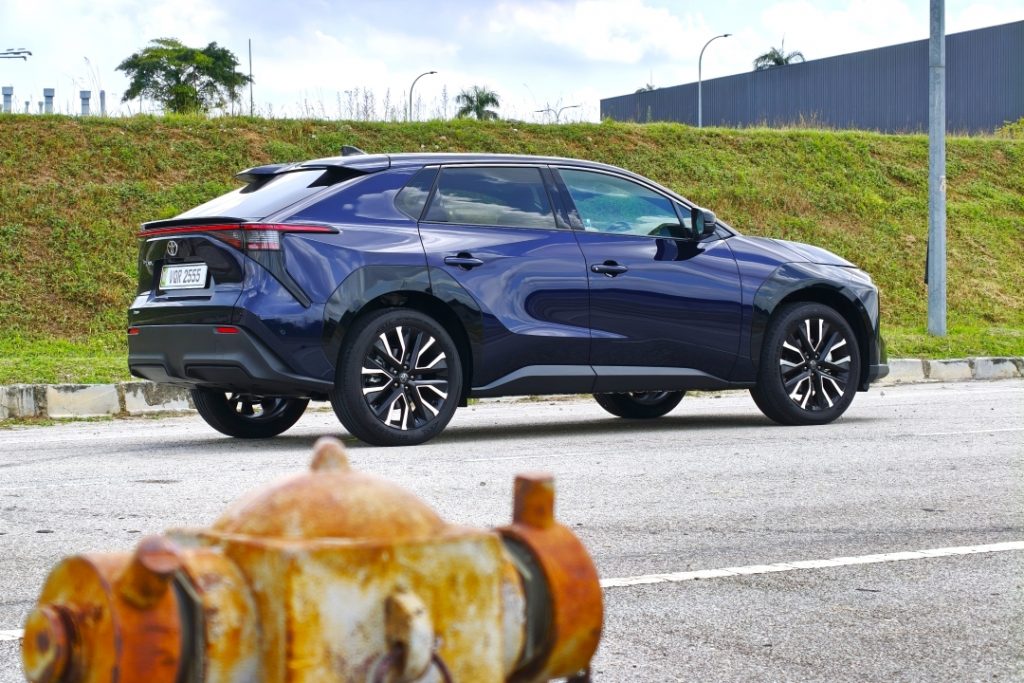
It is whether Toyota’s wait-and-see approach has resulted in a better EV.
After spending time with the bZ4X, the answer is more complicated than a simple Yes or No.
Much Better Looking
The facelift has done the bZ4X plenty of favours.
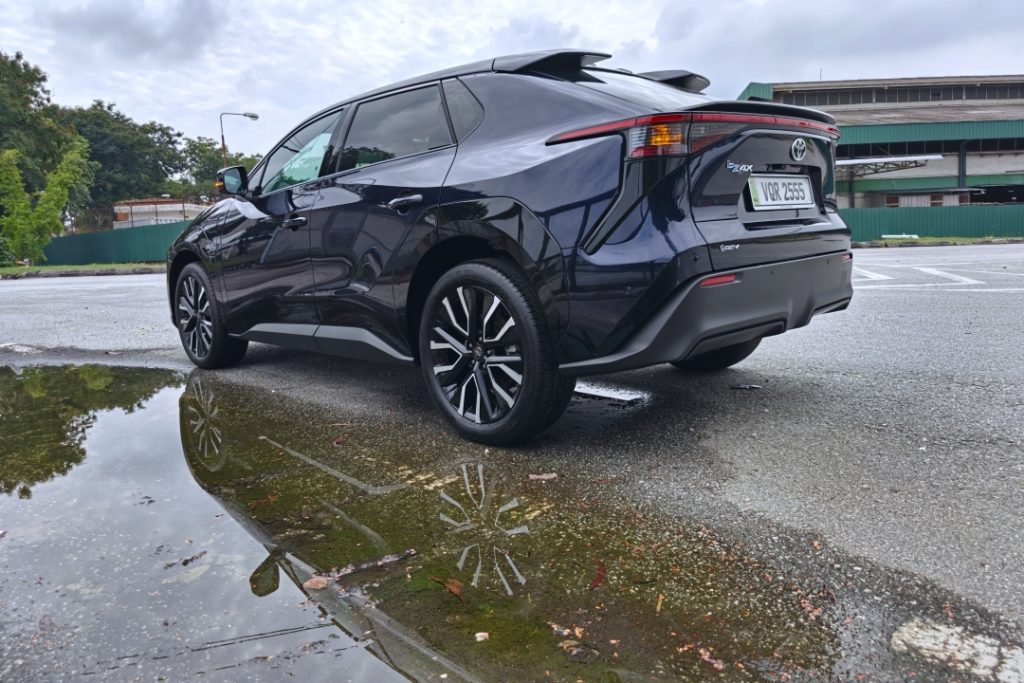
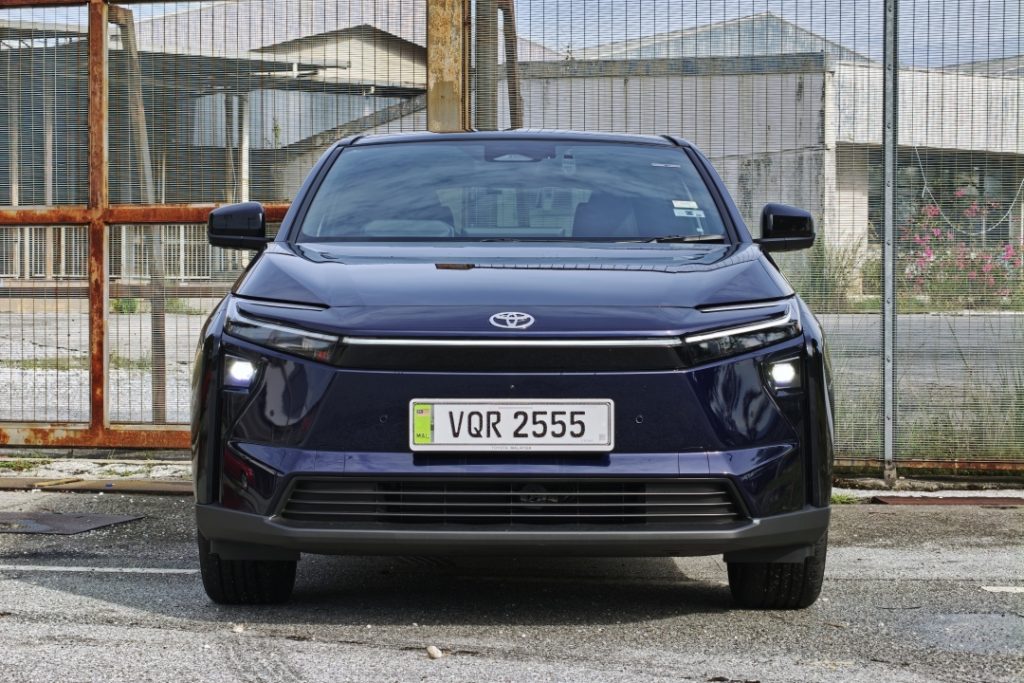
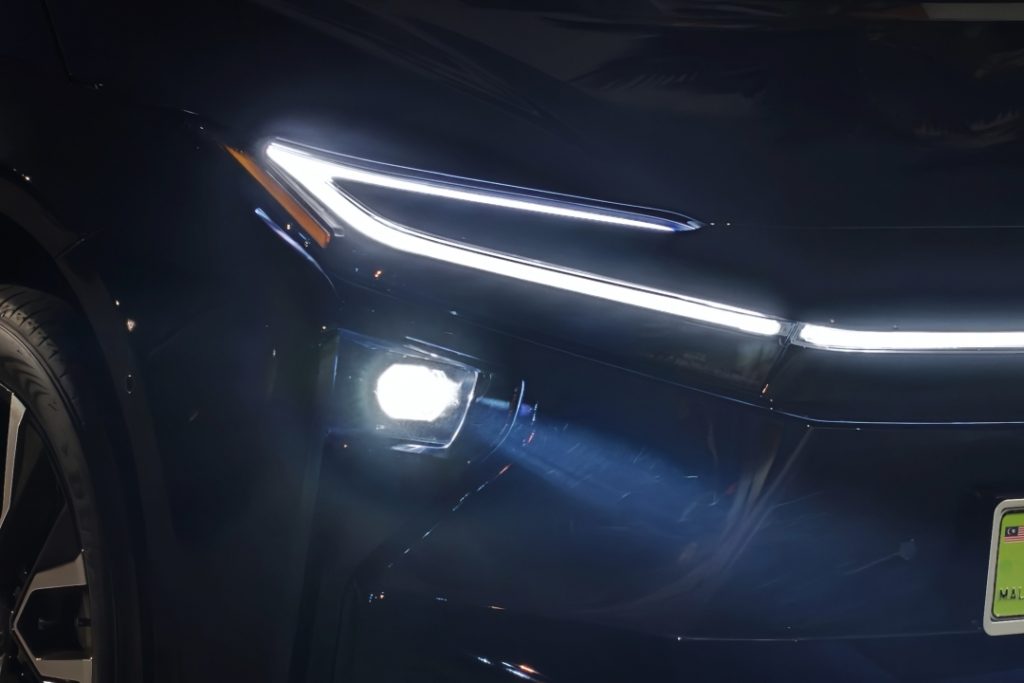
The biggest visual change is the adoption of Toyota’s latest “hammerhead” design, giving the front end a much sharper and more cohesive appearance. The slim signature lighting and cleaner nose also make it look more contemporary than the earlier version.
Furthermore, the switch from the matte plastic wheel arch treatment to gloss black trim is another small change that makes a big difference, especially paired with dark body colours. It gives the car a more finished appearance and justifies its premium positioning.
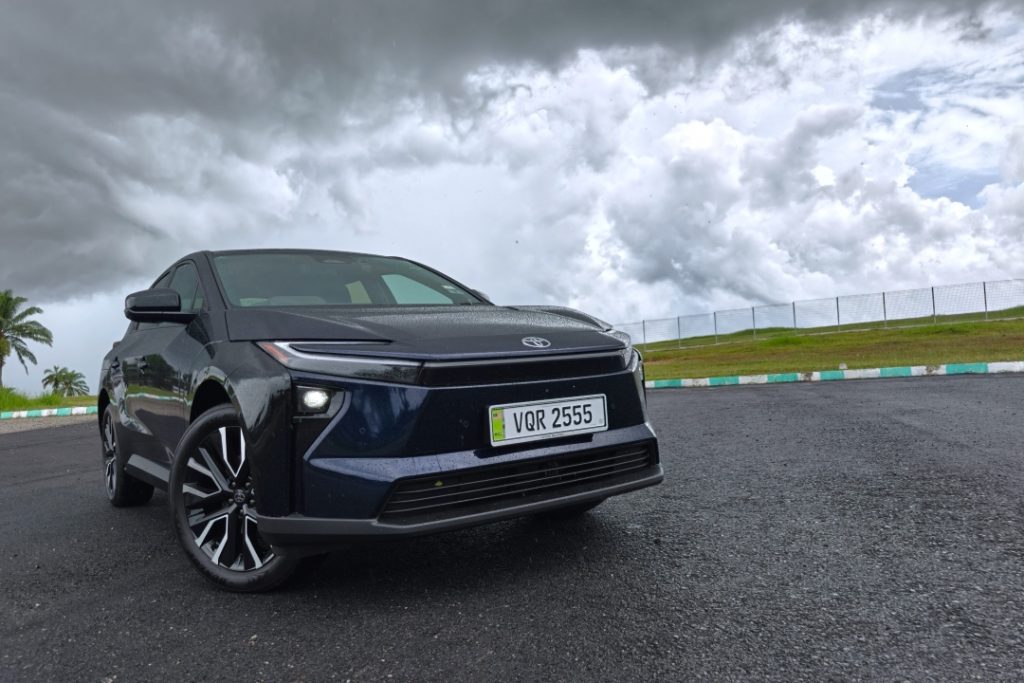
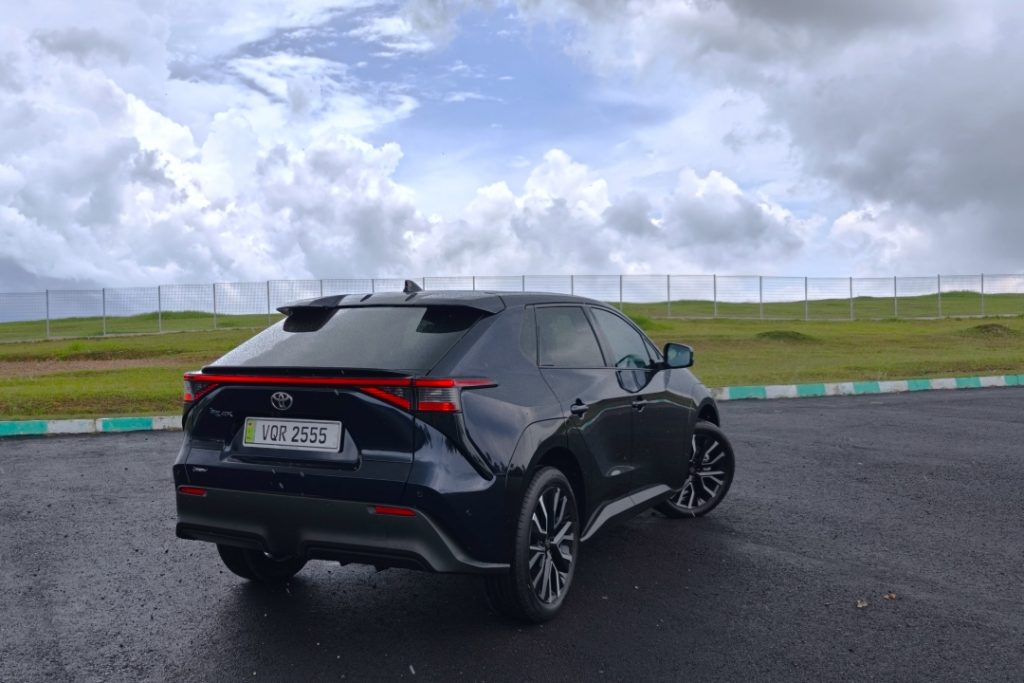
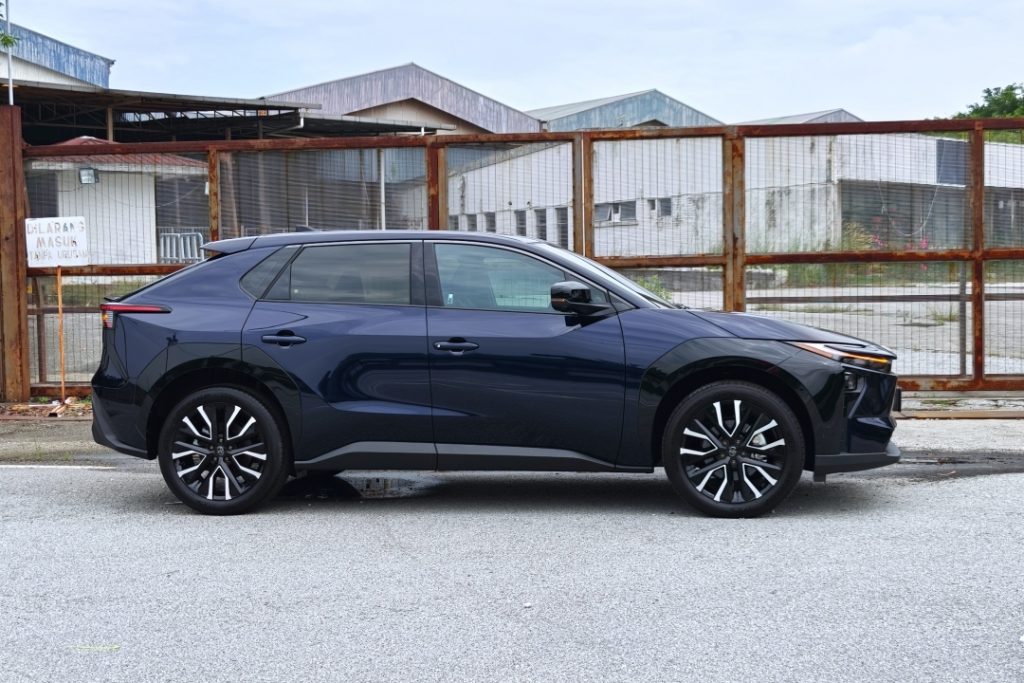
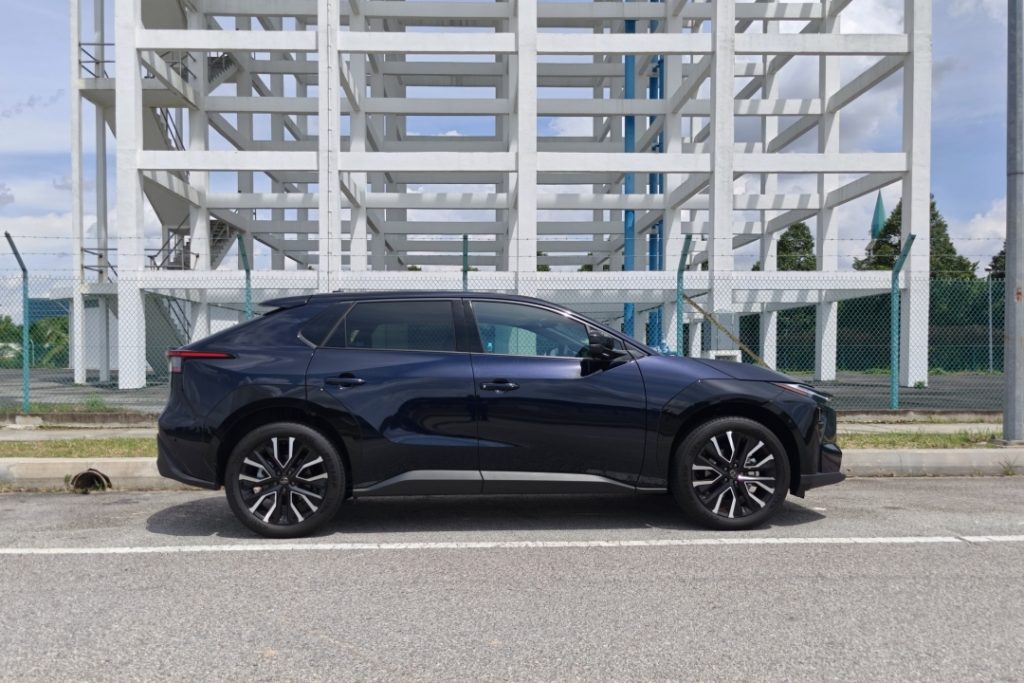
The 20-inch alloy wheels also fill the arches nicely and give the bZ4X a planted stance.
It is not a pretty SUV by conventional standards, but that seems to be part of its appeal. It at least looks well proportioned, with an athletic stance.
Unlike some EVs that lean heavily into futuristic styling, the bZ4X looks like Toyota’s interpretation of what an electric SUV should be.
And it has aged better than expected.
An EV That Doesn’t Ask You To Relearn Everything
If the exterior is a significant departure from Toyota’s traditional SUVs, the cabin is the opposite.
Climb inside and the bZ4X feels familiar. That is probably deliberate.
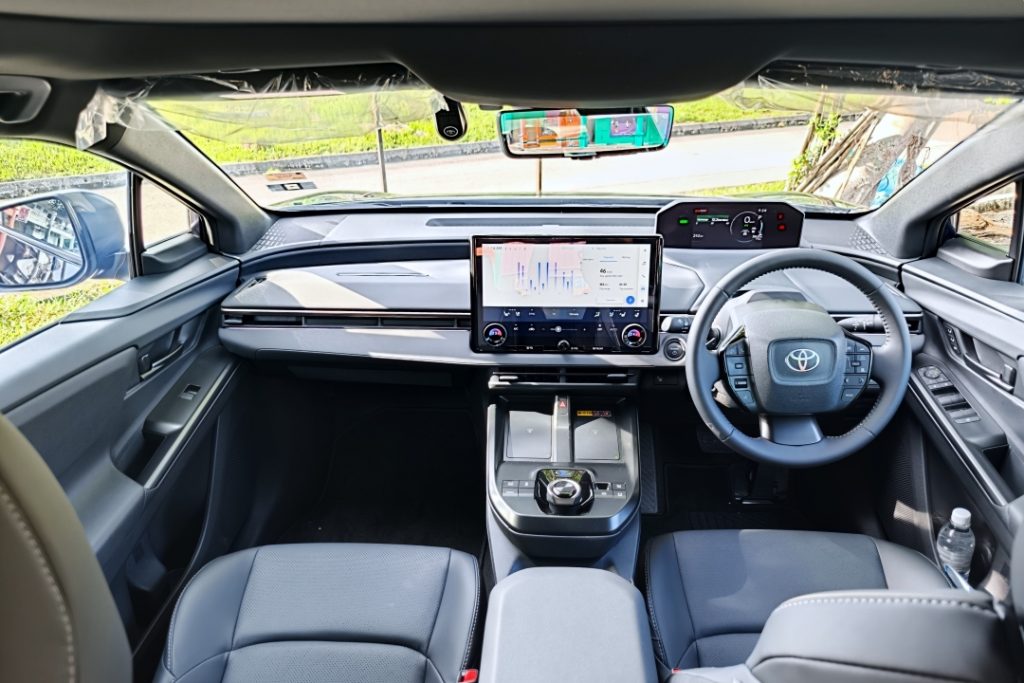
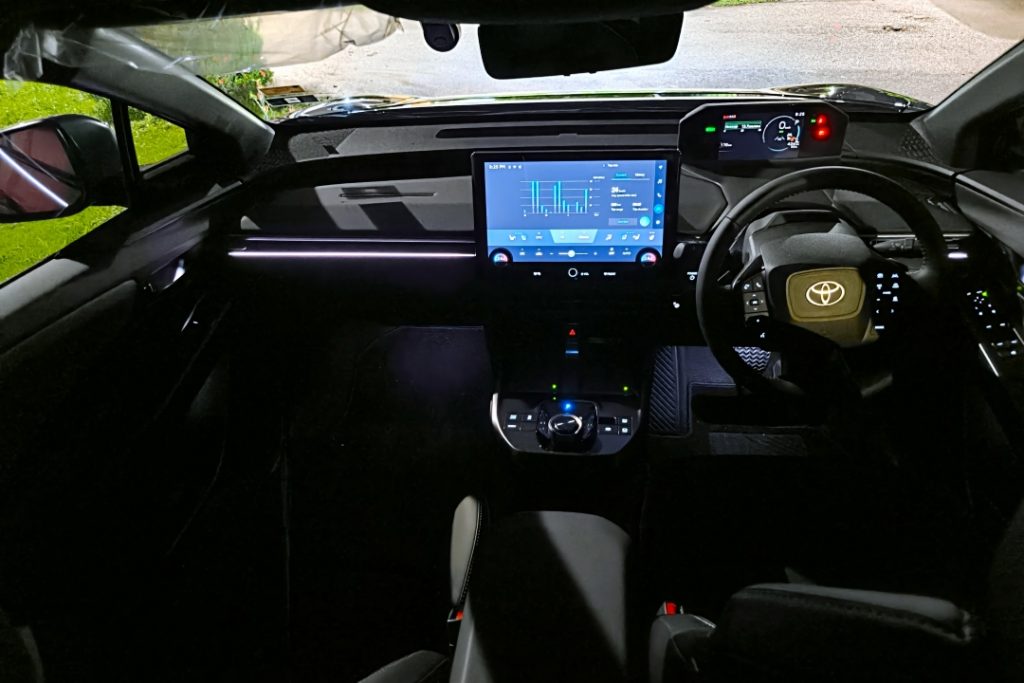
Where some EV manufacturers have stripped away physical controls in favour of massive screens, Toyota has retained a conventional layout. The 14-inch touchscreen (a familiar item in higher end Toyotas) is prominent, but more crucially, important functions remain intuitive. The physical rotary controls for climate settings are a particularly welcome feature.
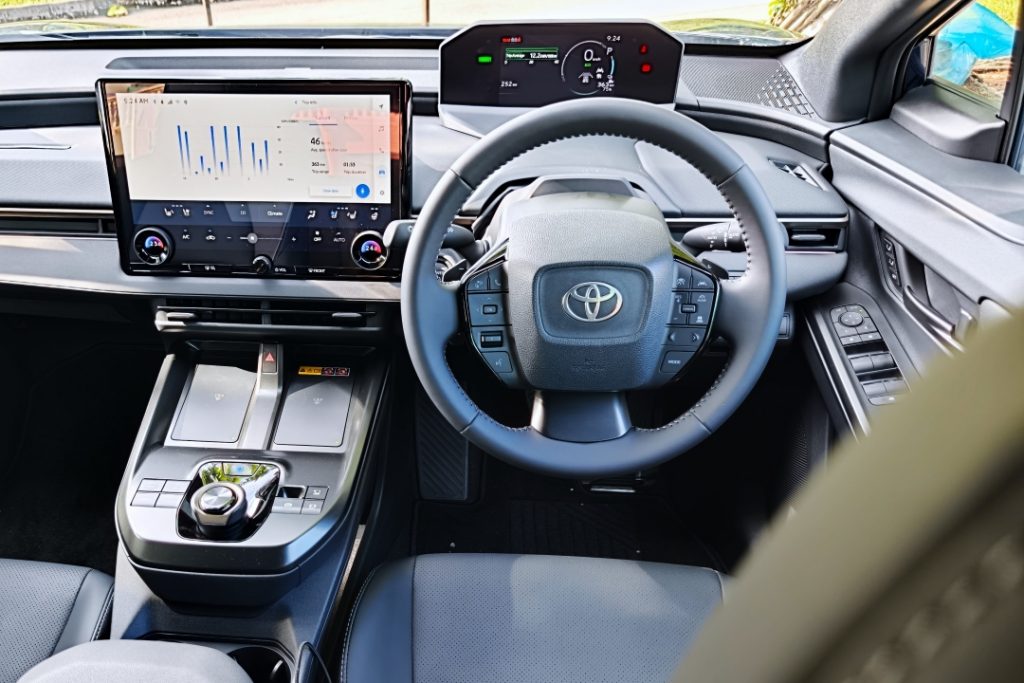
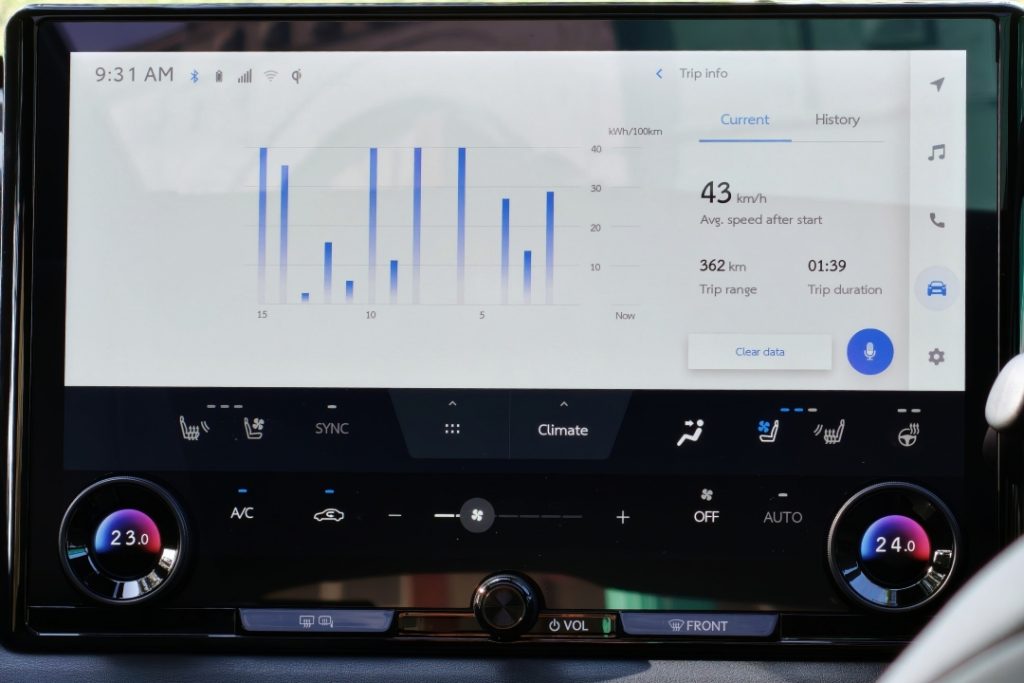
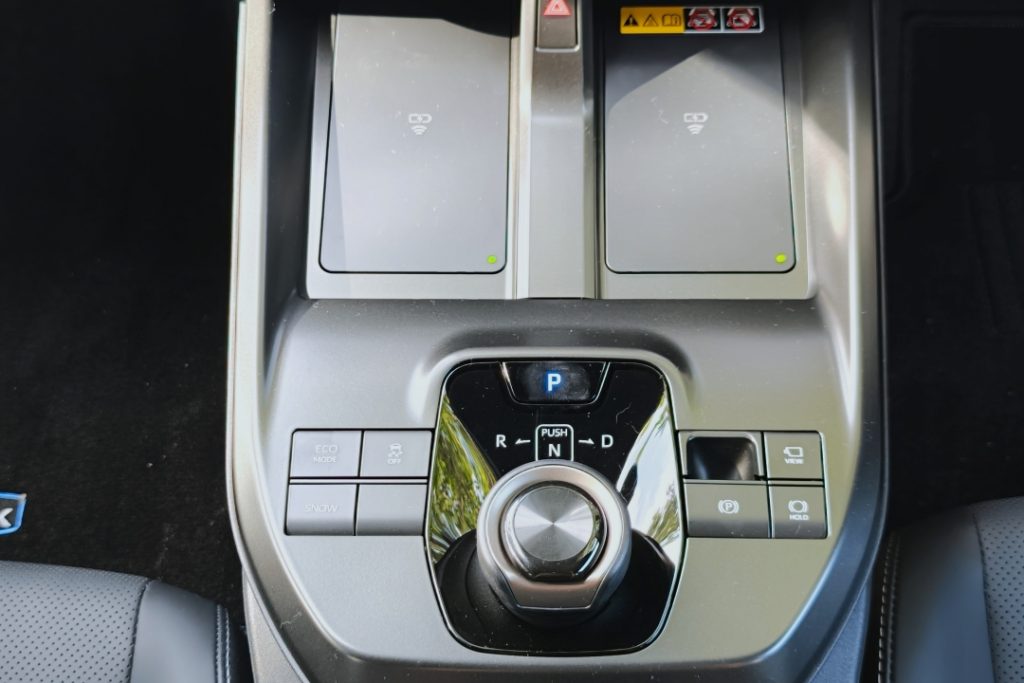
The cabin also feels well put together. There is a sense of solidity to the switchgear and trim that should be familiar to existing Toyota owners, and the overall refinement has to be one of the bZ4X’s strongest qualities.
However, there are quirks.
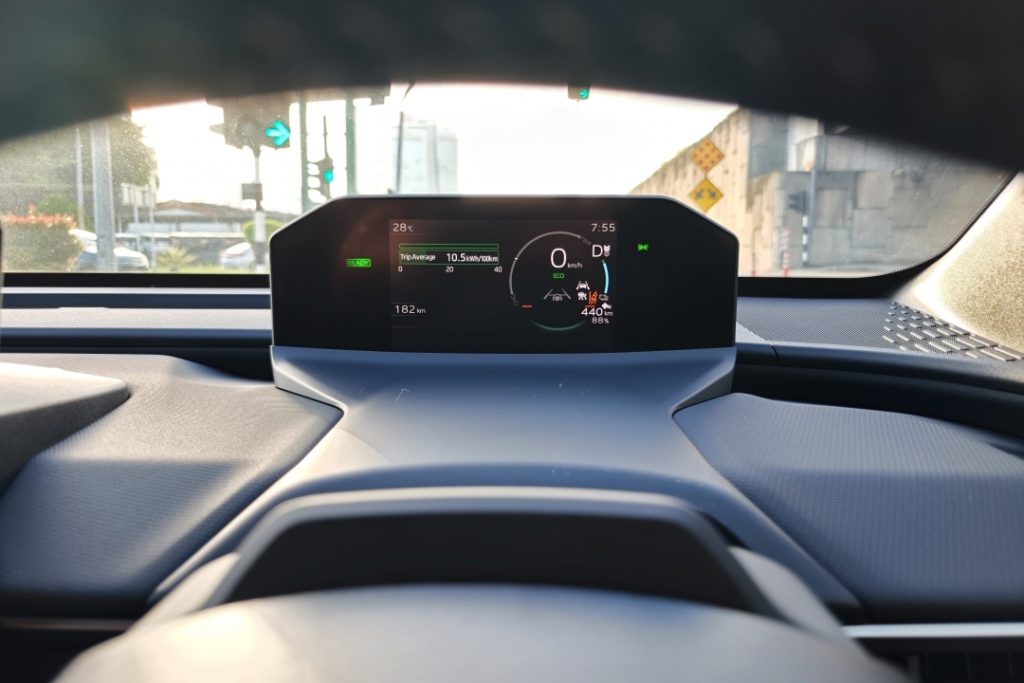
The 7-inch digital instrument display sits high on the dashboard and is designed to be viewed over the steering wheel rather than through it. Finding the ideal steering position takes some adjustment, and depending on your height, the wheel can interfere with your view of the display. At 178cm tall, I had no issue with my sitting position.
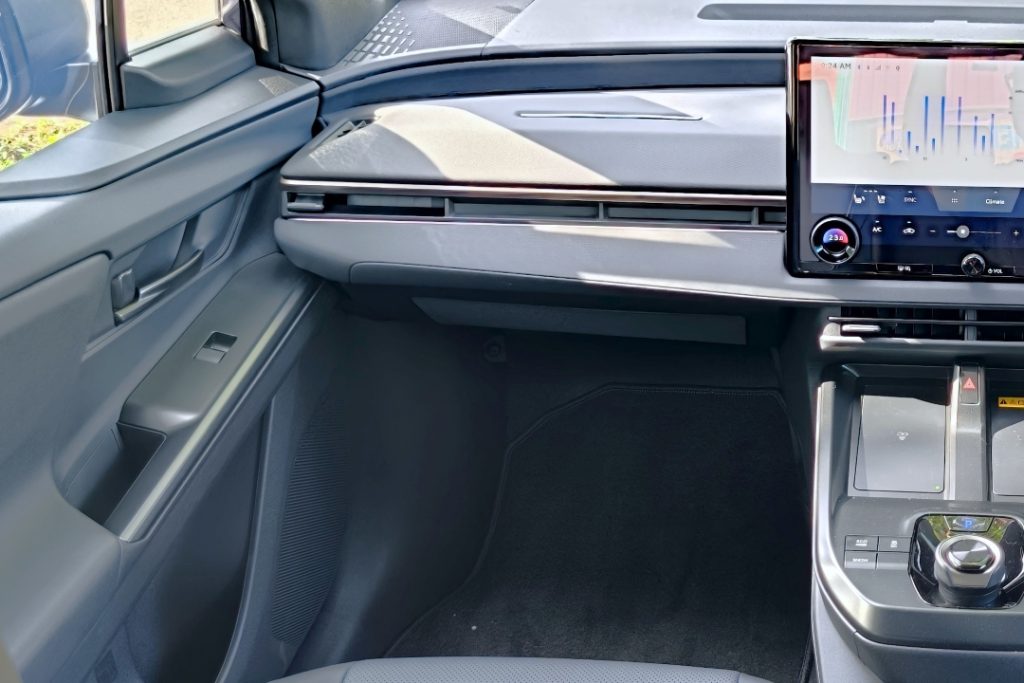
Then there is the missing glovebox.
Toyota omitted it to accommodate a radiant heater to warm the front occupants’ lower body more efficiently. It is an interesting engineering solution, but a glovebox is something most people expect to have. Fortunately, there are enough other storage options around the cabin to make its absence less of an issue.
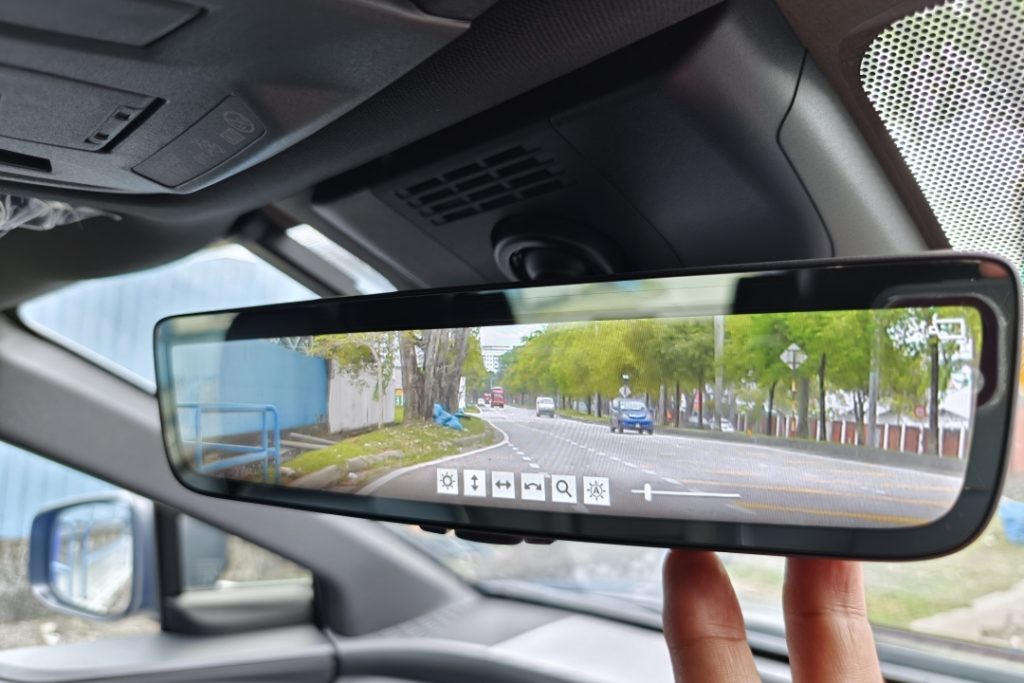
The digital rear-view mirror is useful feature, particularly when rear passengers’ heads obstruct the conventional mirror or when rear visibility is compromised. However, the resolution leaves something to be desired, and I found myself sticking with the conventional mirror most of the time.
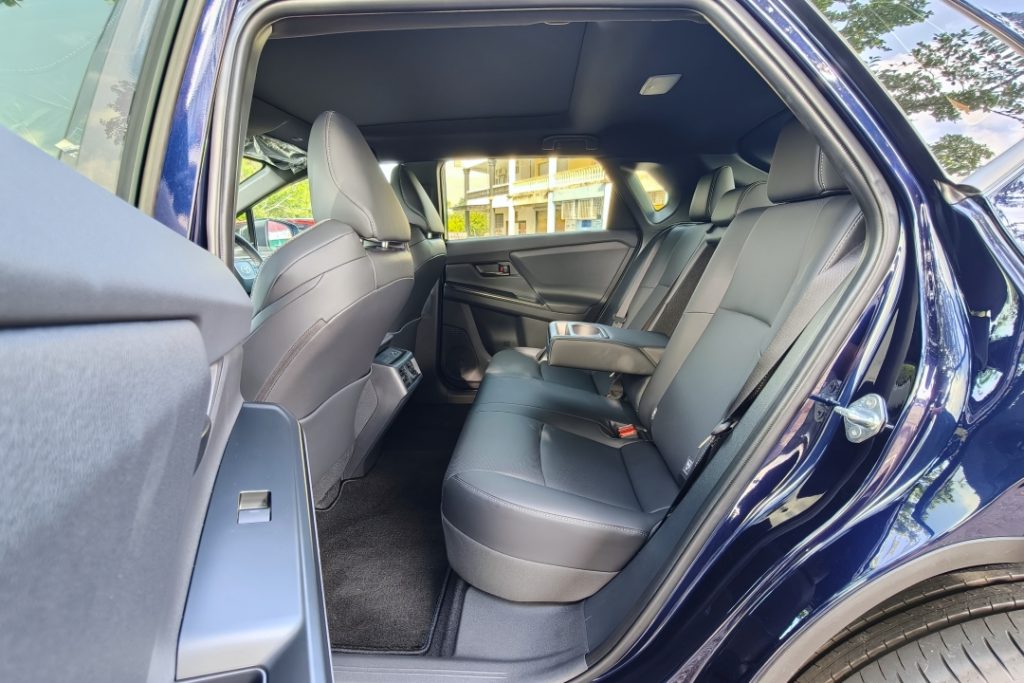
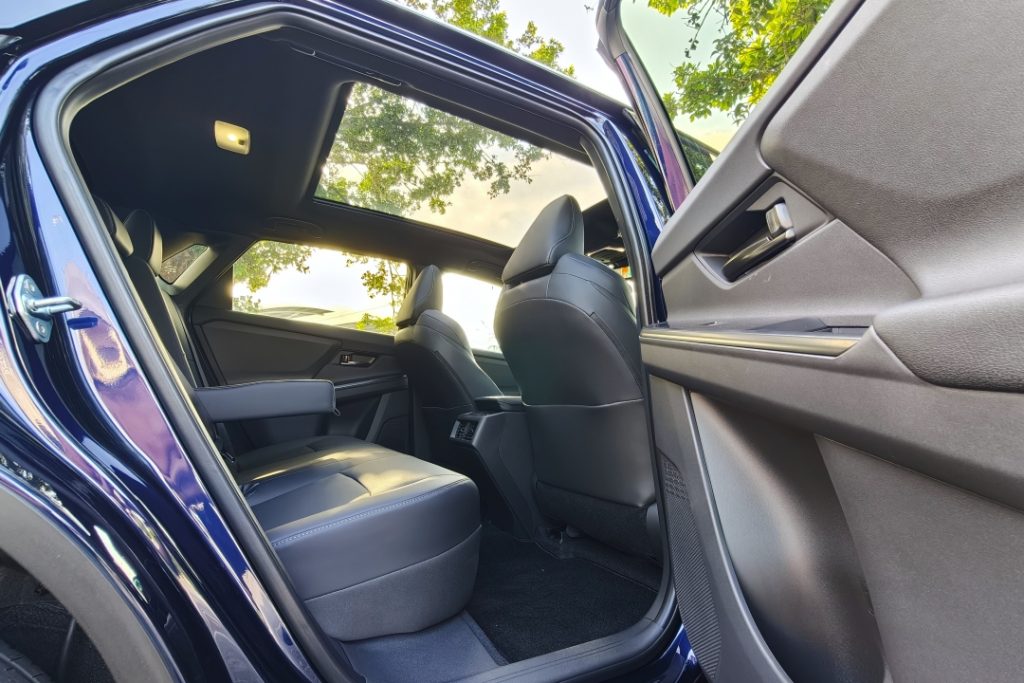
And where the bZ4X gets it very right is passenger space.
The 2,850mm wheelbase provides for a spacious rear cabin, with enough support and legroom for tall adults to stretch out. The flat floor also makes the back seat feel less compromised.
Where It Feels Most Like Toyota
The bZ4X is not a performance EV.
Its front-mounted permanent magnet synchronous motor produces 227 PS (167 kW) and 269 Nm, enough to propel it from 0-100 km/h in 7.4 seconds. These figures are respectable, but they are hardly going to worry some EVs in its segment.
And the way the bZ4X behaves signals that Toyota isn’t trying to win the power/speed contest.
The initial acceleration response is smooth rather than explosive. Put your foot down and the bZ4X gathers speed quickly and assuredly, but with none of the almost comical shove typical of some EVs.
This actually makes it easier to drive smoothly.
The bZ4X also comes with paddle shifters, but not for changing gears. Instead, they let you adjust the strength of regenerative braking on the move.
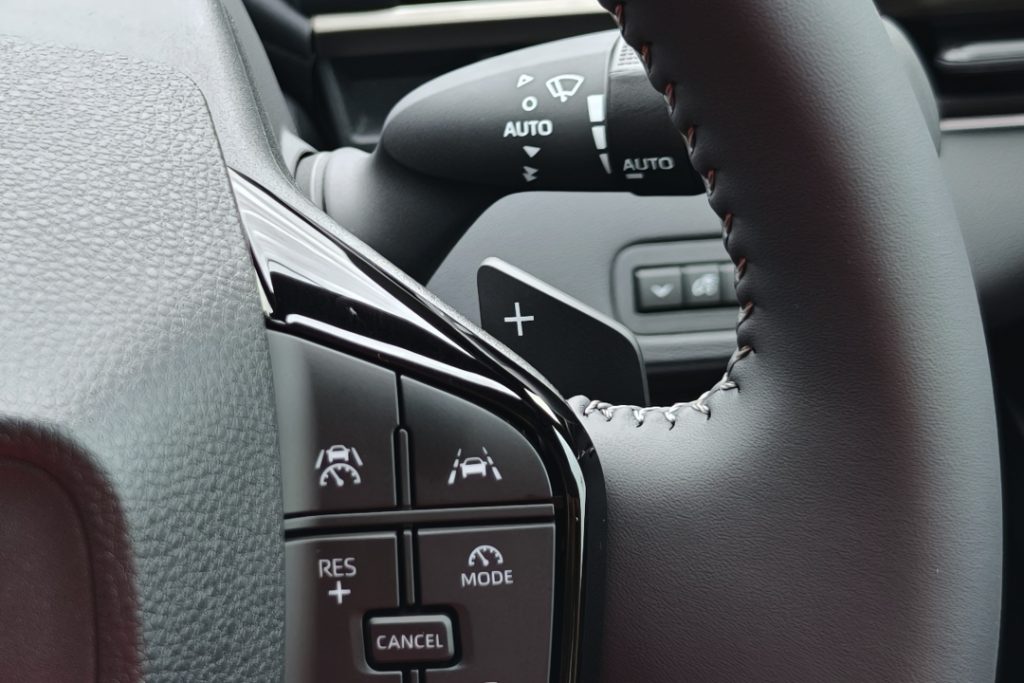
It is a small but useful feature. A few taps of the paddles allow you to increase or reduce the amount of deceleration, making it easier to tailor the car on the fly without having to dig through an infotainment menu.
I found myself using them quite regularly, particularly when approaching slower traffic or speed humps. It gave me more control over how the car sheds speed and makes the one-pedal-style driving experience feel more natural, even though the bZ4X doesn’t force you into it.
In town, the powertrain feels predictable and refined. On the highway, there is sufficient power for overtaking without the car constantly reminding you how much torque is available. It isn’t exciting in the conventional sense, but there is something satisfying about how effortlessly it gathers speed.
This refinement extends to the driver assistance systems. The bZ4X’s Adaptive Cruise Control is particularly well calibrated, with smooth responses when adjusting speed to vehicles that cut in front of you and when the road clears. Unlike some EVs, it does not feel overly eager to brake or accelerate, which makes it much less jarring for passengers. It even reduces speed around the bends.
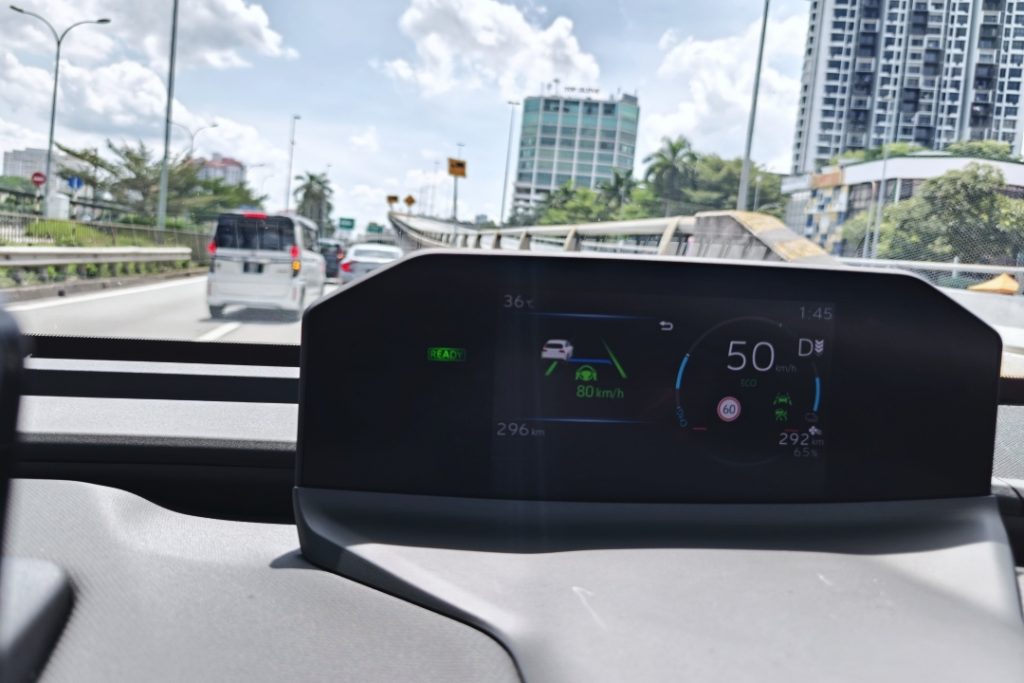
This is one of those features that is not obvious and is easy to overlook on a specification sheet but becomes much more valuable after spending several hours with the car. The system works quietly in the background rather than constantly reminding you that it is there, helping the bZ4X maintain its relaxed character on the highway.
Combined with Lane Tracing Assist and the other Toyota Safety Sense 3.0 functions, the ADAS package feels mature rather than intrusive. For a family EV, this level of refinement is more important than having the most aggressive autonomous driving features in the segment.
The ride is equally as impressive.
Despite the 20-inch wheels, the bZ4X deals with the kind of broken surfaces and patched roads that are common in Malaysia with a refined composure. There is a softness to the way it absorbs imperfections without becoming floaty, and the cabin remains impressively quiet.
The steering is similarly measured. It isn’t particularly sporty, but it feels well weighted and predictable rather than artificially light.
This is an EV designed around effortless progress, not adrenaline. And that to me, this is its biggest strength.
Range No Longer A Weakness
Toyota also made meaningful improvements with this facelift.
The battery has grown to 73.1kWh, while improvements to the powertrain help raise the claimed WLTP range to 525km. The Malaysian version uses a front-wheel-drive layout and rides on 20-inch wheels.
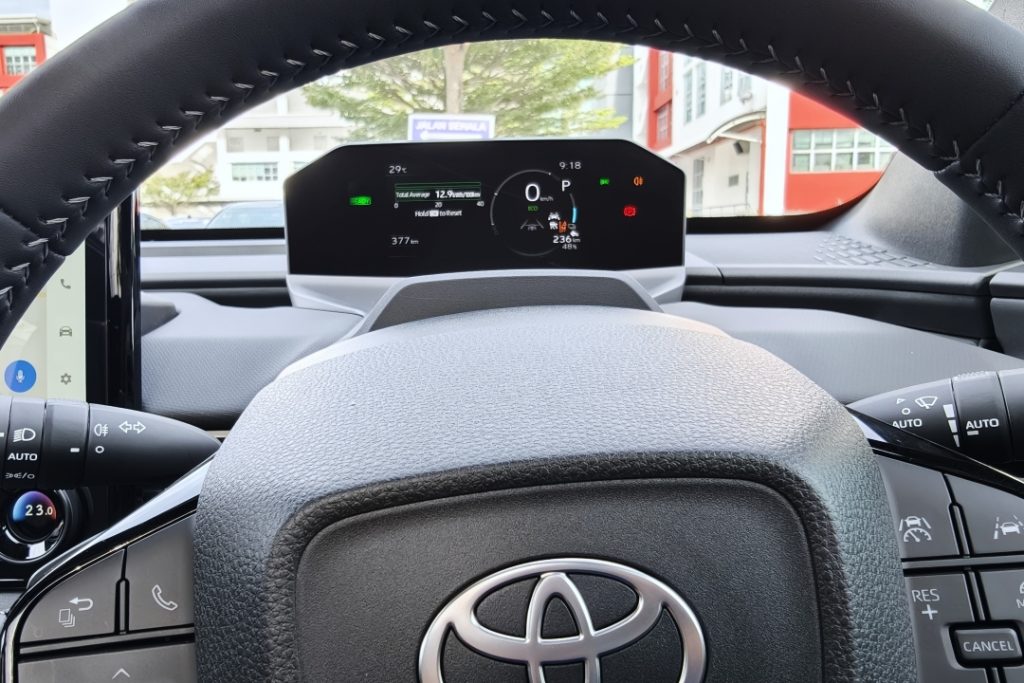
During my test drive, I covered 377km at an average consumption of just 12.9 kWh/100 km. At this rate, it theoretically works out to around 567km of range. This is not a statement of the actual range you can expect in every situation, but it provides useful context for the bZ4X’s 525km WLTP claim.
Of course, actual range will vary considerably depending on speed, traffic, air-conditioning use, weather, road gradients and driving style. But maintaining 12.9 kWh/100 km over a 377 km drive suggests the bZ4X can be impressively efficient when driven sensibly.
For a Malaysian owner, that should translate into a useful amount of range for both daily commuting and longer trips, with less need to charge every night.
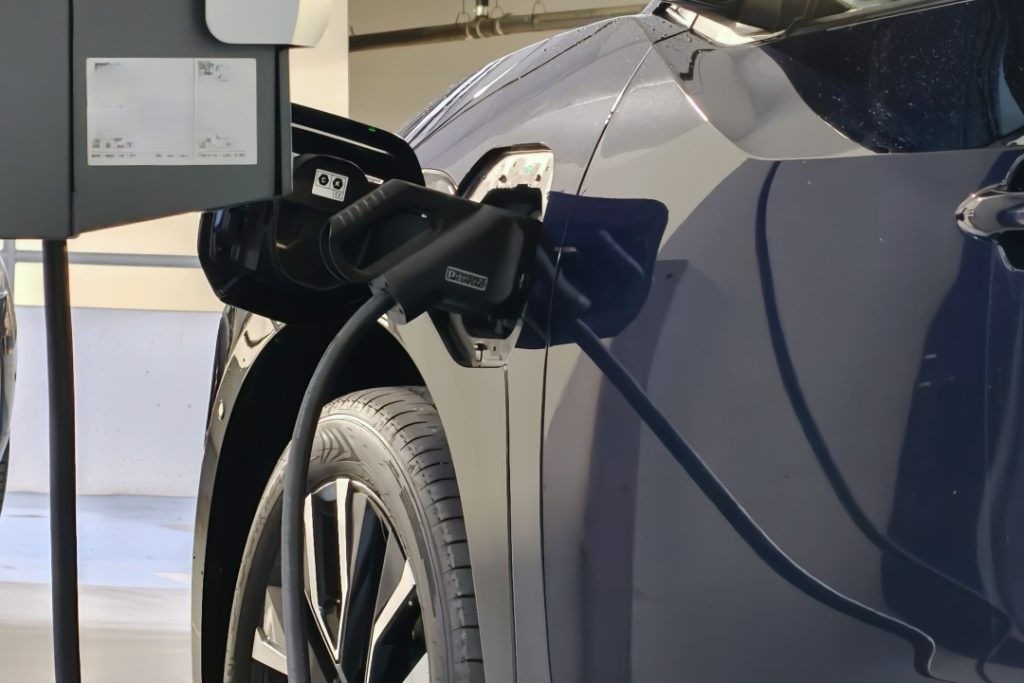
Charging is another area where the updated bZ4X is a more convincing purchase. It supports up to 22 kW AC charging and 150 kW DC fast charging, with Toyota claiming around 3.5 hours for a 10-100% AC charge and approximately 28 minutes for a 10-80% DC charge.
The 22 kW AC capability is particularly useful for owners who want to use higher-powered public AC chargers, while the 150 kW DC capability provides enough charging speed for practical highway top-ups.
Toyota won’t win the charging-speed race but it has brought the bZ4X to a point where charging performance is no longer an obvious weakness.
The Toyota Advantage
Now this is where the bZ4X becomes an interesting proposition. And a debatable one.
At RM220,000, it isn’t cheap.
For the same kind of money, you have many options offering more power, more screens, more features or more aggressive specifications. This is the reality of today’s Malaysian EV market.
Toyota’s answer is not to out-spec them.
Instead, it is offering something harder for newer brands to replicate: a car that still prioritises the fundamentals of driving and an established ownership ecosystem.
Toyota knows how to build cars that drive like one rather than a digital gizmo on wheels. It also has a nationwide sales and service network, decades of brand recognition in Malaysia and a customer base already familiar with the company’s approach to long-term ownership.
The bZ4X is also backed by a five-year unlimited-mileage vehicle warranty, while its battery coverage can be extended to 10 years with an additional payment.
So, Did Toyota Get It Right?
Mostly, yes.
The bZ4X isn’t going to win a specification-sheet battle. There are faster EVs, longer claimed range EVs, and others that offer more toys for less money.
But after spending time with it, that doesn’t feel like the point Toyota was trying to make.
The bZ4X is remarkably easy to live with. It is quiet, comfortable and spacious, while the power delivery, steering, suspension and driver-assistance systems all have the same underlying character: smooth, predictable and unobtrusive.
That extends to the smaller details. The paddle shifters that adjust regenerative braking are genuinely useful, while the Adaptive Cruise Control is refined enough to make long-distance driving less tiring rather than constantly reminding you that the car is doing something in the background.
The facelift also addresses some of the original bZ4X’s shortcomings, while the larger battery and improved charging capability make it a more convincing EV for everyday use.
Most importantly, it doesn’t feel like Toyota has tried too hard to make an “EV”. It simply feels like a Toyota that happens to be electric.
For an existing Toyota owner considering the switch to an EV, this familiarity is the bZ4X’s biggest selling point.
The tough bit is the price.
At RM220,000, the bZ4X looks like a tough sell on paper. It makes Toyota’s proposition harder to justify if you are comparing cars purely by power, range and equipment.
So yes, Toyota got the bZ4X right as a car. But you wouldn’t think so until you stop comparing specs and actually drive it.
CarTok Editor’s Note
The bZ4X is arguably a better representation of Toyota’s strengths than its first dedicated EV suggests.
Toyota didn’t chase outright performance or technology bragging rights. It focused on the things that have traditionally made its cars easy to own: refinement, predictable driving manners, and practicality.
This makes sense for the first-time EV buyer who is more interested in replacing a petrol car than owning the latest piece of automotive technology.
And if you are part of that group, RM220,000 for a CBU Japan SUV is not a bad deal. You are paying for Toyota’s engineering, refinement, established aftersales network, and familiarity of a brand that many Malaysian families have trusted for decades.
But this value proposition only works if these things matter to you. If you are shopping for the most powerful, best-equipped or fastest-charging EV at RM220,000, then the bZ4X is harder to justify.
And perhaps that is the most accurate way to look at the bZ4X. Toyota hasn’t built the EV for everyone. It built one for the buyer who wants to go electric without stepping too far outside the Toyota experience.





It is encouraging to see Toyota building on its core strengths of predictable handling and a quiet cabin, rather than focusing solely on outright performance. The review highlights the appeal of an EV that offers a smooth, familiar driving experience while making the transition to electric mobility feel natural.