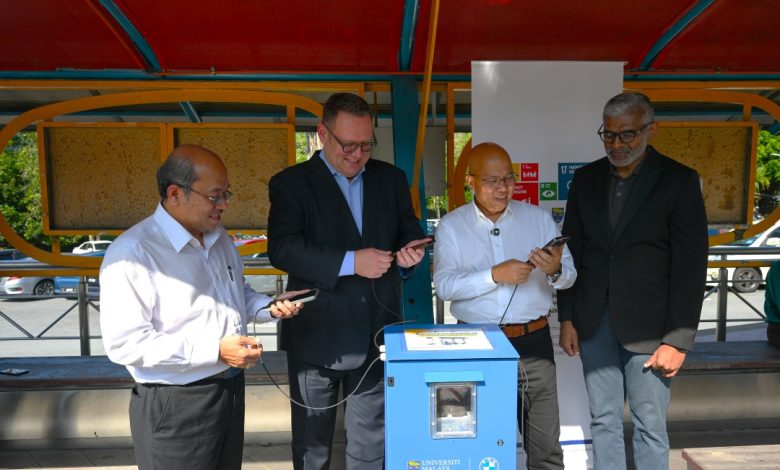
BMW Group Malaysia and Universiti Malaya (UM) have moved their second-life electric vehicle battery research from the laboratory into everyday use, with the installation of a solar-powered smartphone charging station at UM Central.
The charging station, installed at a bus stop on the Universiti Malaya campus, is powered by repurposed BMW EV battery modules connected to solar panels. It is the first completed real-world application under the RE:GENERATE x Universiti Malaya partnership between BMW Group Malaysia and UM, which was established in January 2026 to explore new uses for EV batteries after their automotive life.

The project is led by Associate Professor Dr Tan Chia Kwang and researchers and PhD students at UM Power Energy Dedicated Advanced Centre (UMPEDAC).
The location was selected for its high daily usage, with the UM Central bus stop serving more than 3,000 users a day.
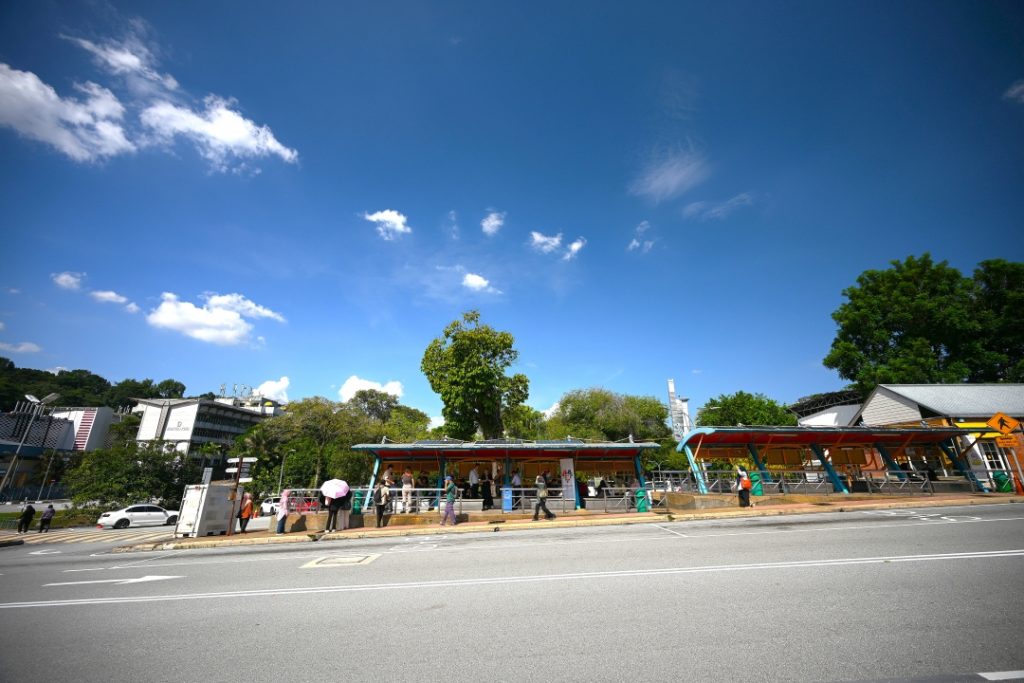
1.5kWh Battery System With Three BMW Modules
The charging station uses a 1.5kWh energy storage system assembled from three BMW battery modules, each approximately 10 years old.
Following testing, grading and modification by the UMPEDAC team, the batteries retain around 30% to 40% of their original capacity. Rather than being discarded, the lower-capacity modules have been matched to the relatively light energy demands of smartphone charging.
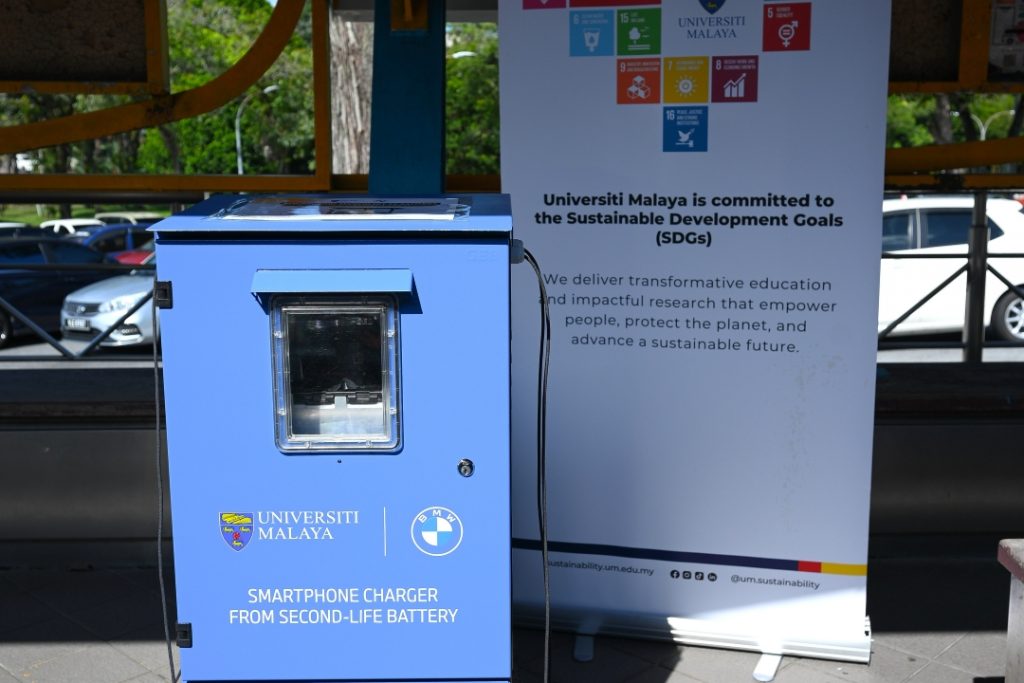
The system combines the repurposed BMW EV batteries with second-life solar panels, a solar charge controller, photovoltaic inverter, battery management system and USB fast-charging hardware.
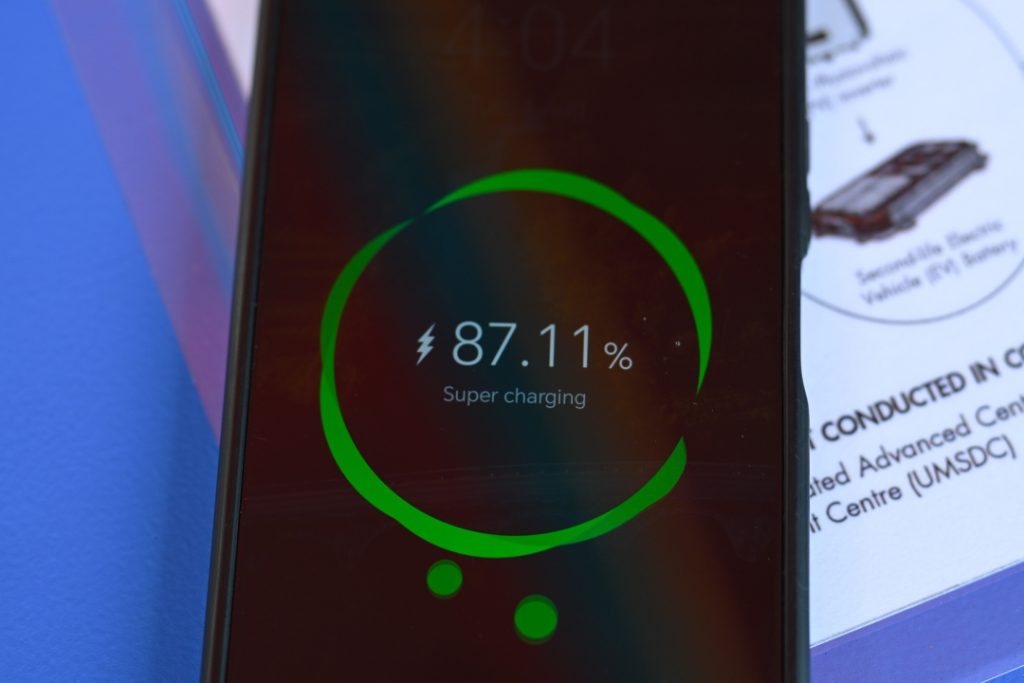
There are four charging ports – three USB-C ports and one Lightning port – with a combined output of 200W and a maximum output of 100W per port.
Data loggers have also been installed to monitor battery parameters and usage. A group of trained students is responsible for monitoring and maintaining the system, with routine maintenance largely involving analysis of the logged battery data and periodic visual inspections.
The system is designed to operate for at least five years, although its actual service life could be longer depending on usage patterns and battery degradation.
Research Programme To Support Rural Electrification
The UM campus charging station is only one of two applications being developed from the BMW-UM second-life battery research.
Higher-capacity battery packs from the programme are being prepared for deployment to Pos Sinderut in Kuala Lipis, Pahang, where they are intended to provide off-grid electricity for a Semai Orang Asli community.
These batteries have up to 80% of their original capacity, making them more suitable for the greater energy requirements of rural electrification.
The system being developed for rural use combines solar generation with repurposed EV batteries, allowing electricity generated during the day to be stored for use when required.
According to UM, the research could support applications such as lighting, fans and refrigerators in rural households, while also demonstrating how retired EV batteries can continue providing useful energy storage capacity.
Potential Third Life
The BMW-UM project also illustrates a potential three-stage lifecycle for EV batteries.
The higher-capacity batteries could first serve their original purpose in BMW electrified vehicles, followed by a second life as stationary energy storage systems for rural electrification.
Once their useful capacity for that application is eventually exhausted, the researchers plan to investigate using the batteries again in lower-demand applications such as smartphone charging stations.
This would effectively create a pathway from vehicle use, to rural energy storage, and eventually to public charging infrastructure before the batteries are finally recycled.
BMW Group Malaysia and UM first formalised their partnership in January 2026, with BMW supplying used EV batteries to UMPEDAC for research into second-life energy storage applications. The collaboration also involves the UM Community Engagement Centre (UMCares) and UM Sustainable Development Centre (UMSDC), with the broader objective of applying the research to community and sustainable development projects.
The initiative forms part of BMW Group Malaysia’s RE programme and wider circularity strategy. In May, the company said it had delivered more than 38,700 electrified vehicles in Malaysia as of March 2026 and recollected more than 13,600 batteries through its standard battery management processes.
Why Second-Life Matters
As Malaysia’s EV population grows, the question of what happens to batteries after their automotive service life will become increasingly important.
A battery that is no longer suitable for powering a vehicle does not necessarily have to be immediately recycled. If sufficient capacity remains, it can potentially be repurposed for less demanding stationary applications such as energy storage.
The BMW-UM project provides a local example of that approach, with different levels of remaining battery capacity being matched to different applications rather than treating all retired batteries in the same way.
More importantly, the project connects EV battery circularity with two practical applications: everyday energy use on a university campus and electricity access in an off-grid rural community.
For Malaysia’s developing EV ecosystem, that makes the project more significant than a simple smartphone charging station. It demonstrates how battery reuse could form another part of the EV lifecycle alongside manufacturing, vehicle use and eventual recycling.
CarTok Editor’s Note
BMW’s partnership with UM is not about the phone charger but the development of a systematic approach to giving degraded EV batteries an extended life beyond the vehicle.
Not every retired EV battery has enough remaining capacity for the same application. This project demonstrates a more practical approach: use higher-capacity batteries where more energy is required and reserve degraded units for lower-demand applications.
As Malaysia’s EV population grows, managing batteries at the end of their automotive life will become important. Extending a battery’s useful life before recycling can potentially extract more value from the materials and energy already invested in making it.
The planned progression from BMW EV to rural energy storage and, potentially, a third-life charging station also provides a tangible example of what a circular EV battery ecosystem could be like in Malaysia. This is the kind of initiative that should become an industry-wide effort, rather than remaining a one-off research project.