
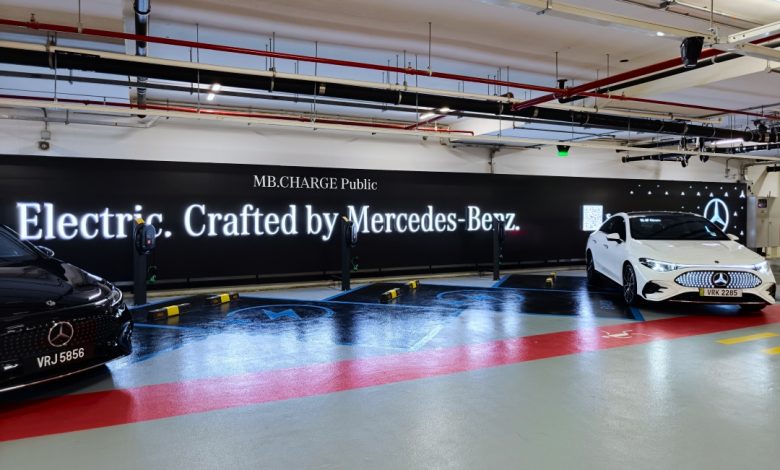
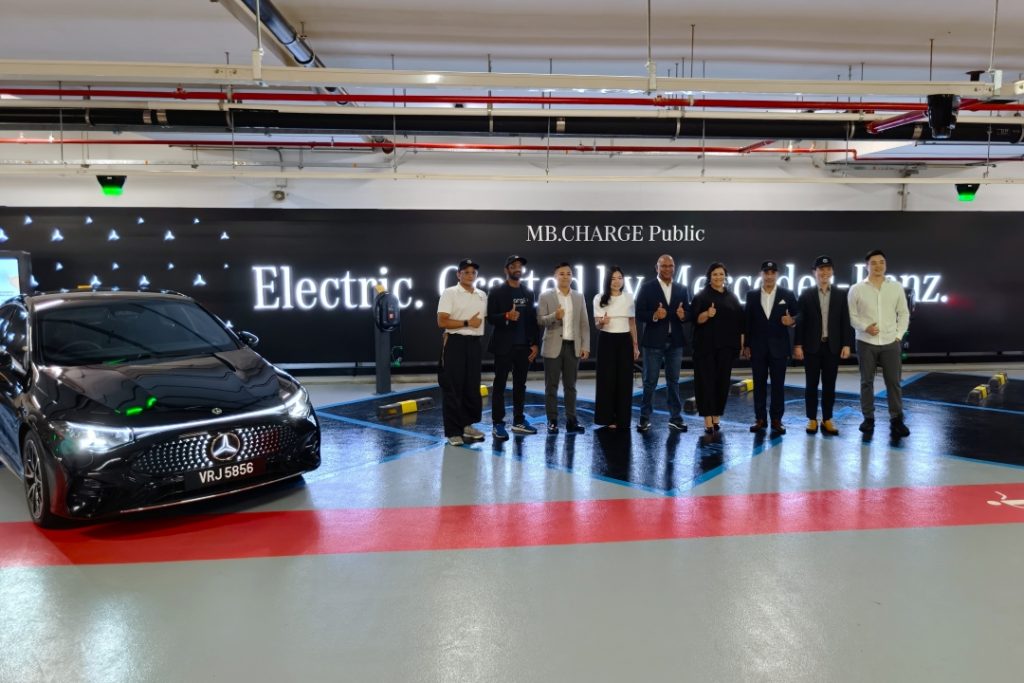
Mercedes-Benz Malaysia has introduced MB.CHARGE Public, bringing together more than 3,000 public charging points across over 1,000 locations from seven Charging Point Operators (CPOs) into a single digital charging service.
Rather than adding another charging network to Malaysia’s increasingly crowded EV infrastructure landscape, Mercedes-Benz is taking a different approach: making the existing network easier for its customers to use.

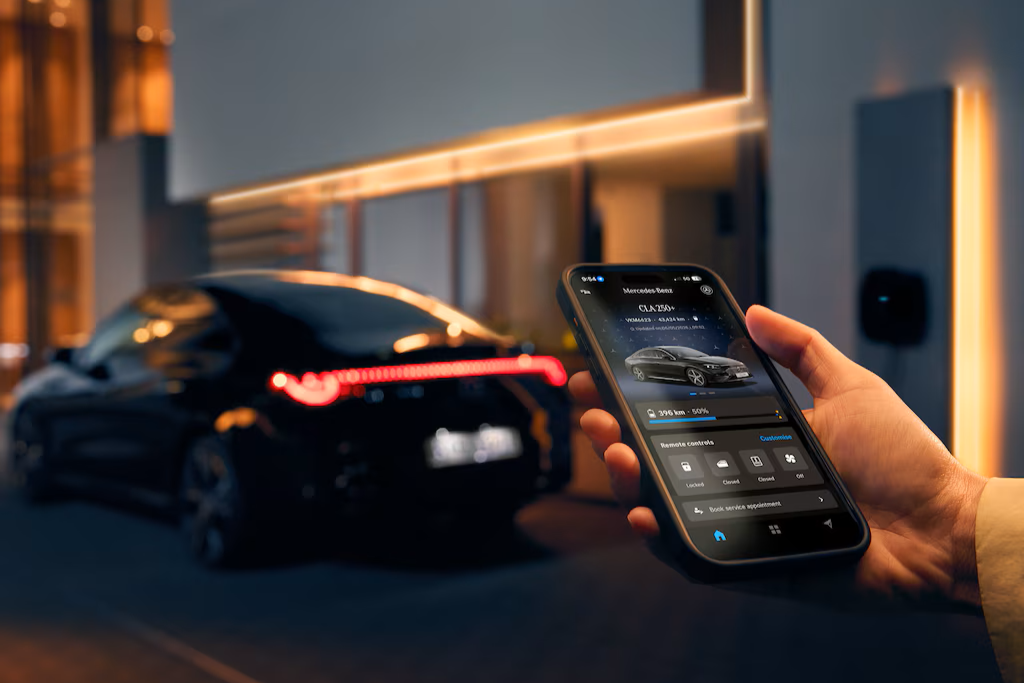
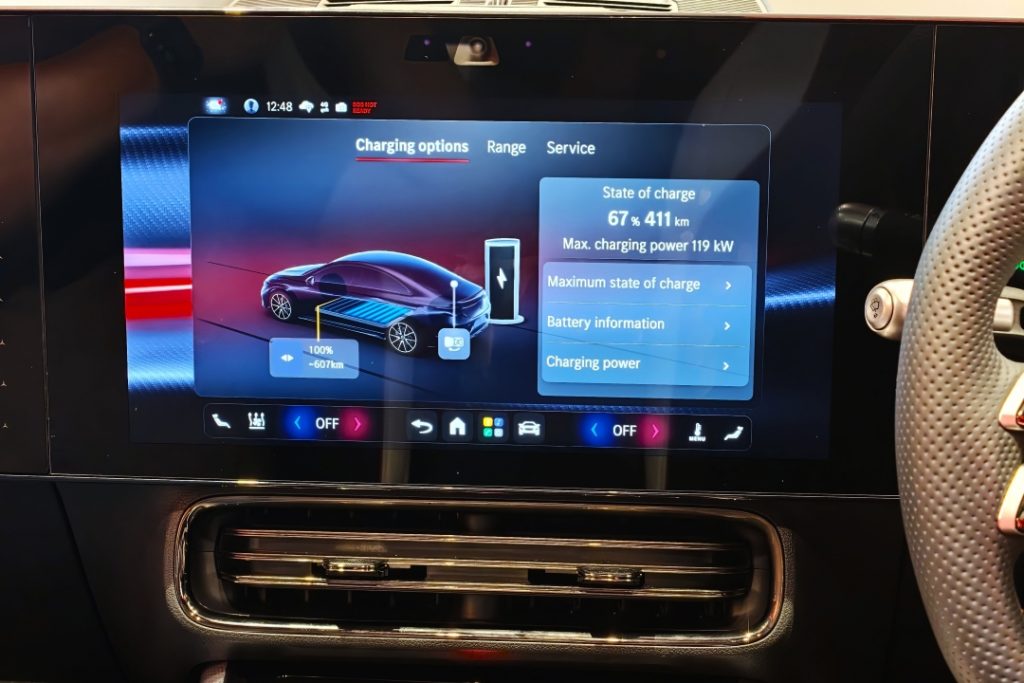
Through the Mercedes-Benz App and MBUX, Mercedes-Benz electric and plug-in hybrid owners can locate compatible charging stations, check availability, navigate to a charger, authenticate a charging session, monitor charging progress and make payments without having to manage separate subscriptions for each charging operator.
The service is available to both all-electric Mercedes-Benz vehicles and plug-in hybrid models.
Charging Convenience
Malaysia’s public charging network has expanded, but the customer experience remains fragmented.
Different operators have their own applications, accounts, payment systems and pricing structures. Thus, a driver may know that a charger exists at a particular location but still needs to determine which app is required and whether an account is necessary.
MB.CHARGE Public addresses this fragmentation at the vehicle level.
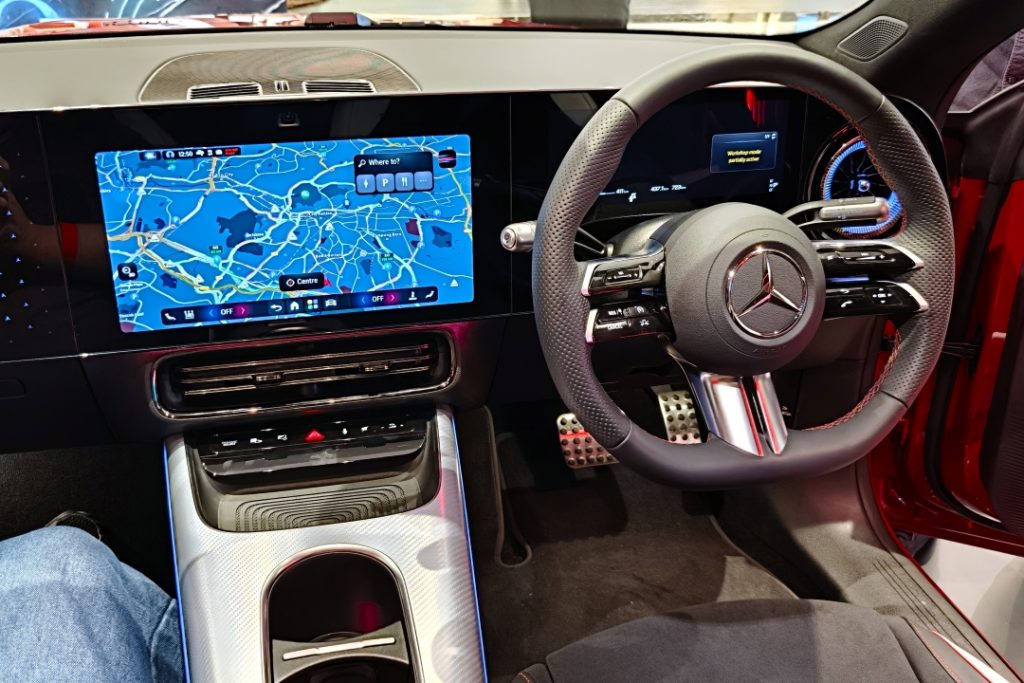
With charging information integrated into MBUX, the car can display compatible charging stations and their real-time availability. Drivers can filter chargers according to charging speed, while Mercedes-Benz’s Electric Intelligence navigation can incorporate charging stops into route planning.
This places priority on charging convenience and not simply the number of chargers.
For an EV owner, the useful infrastructure is the charger that can be found when needed, is compatible with the vehicle, has available capacity and can be accessed without unnecessary administrative steps.
By bringing these functions together, Mercedes-Benz is effectively turning multiple charging networks into a single customer-facing experience.
Over 3,000 Chargers At Disposal
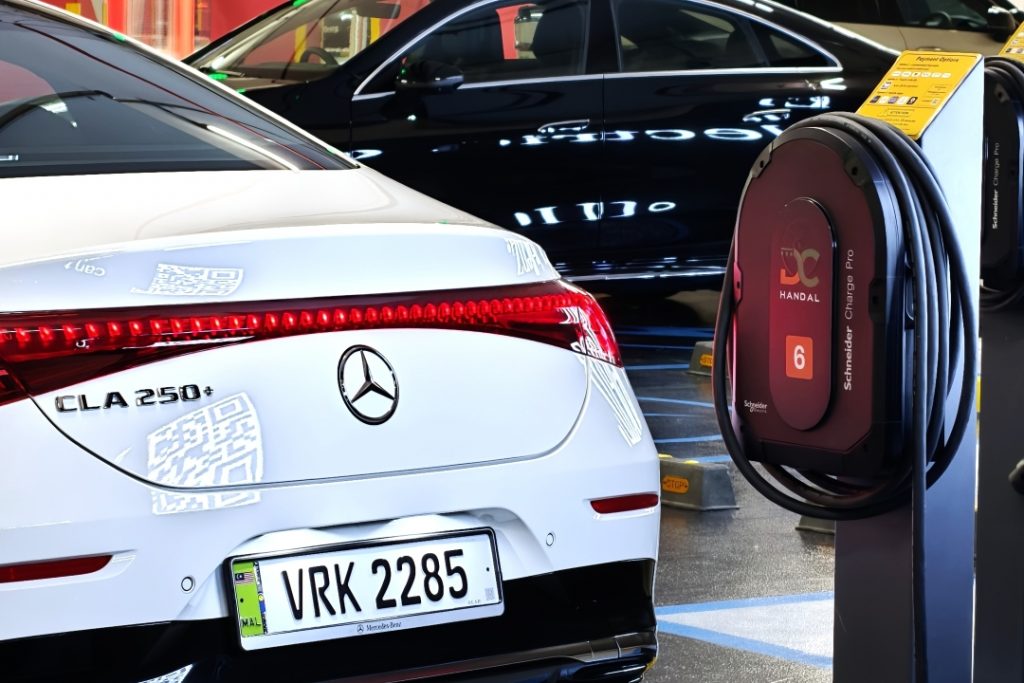
MB.CHARGE Public currently brings together networks operated by CarputZap, Charge+, ChargeSini, chargEV, DC Handal, Gentari and JomCharge.
Mercedes-Benz owners can access more than 3,000 charging points at over 1,000 locations through this service.
More importantly, Mercedes-Benz says there is no markup on charging costs. Customers pay the prevailing rate charged by the respective charging station, while charging sessions are automatically billed through MB.CHARGE Public.
Before charging begins, the service can display the applicable price per kWh or minute and, for fully electric vehicles, estimate the cost of charging to the selected maximum state of charge.
This transparency is especially useful as public charging prices can vary significantly depending on the operator, charger and location.
The Car Is Part Of Charging Network
One of the more significant aspects of MB.CHARGE Public is its integration with the vehicle itself.
Instead of treating the charging station as a separate service that the driver has to interact with independently, Mercedes-Benz connects the vehicle, navigation system, charging infrastructure and digital account.
The driver can authenticate at a charger through MBUX or the Mercedes-Benz App, while charging status can be monitored through the app.
This also means the navigation system is not simply directing the driver to a physical location. Electric Intelligence can plan a route with charging stops, taking into account factors needed to reach the destination.
For an EV owner, this integration can reduce one of the less obvious inconveniences of electric mobility: having to constantly think about charging while driving.
Malaysia-Singapore Charging Simplified
The cross-border element could be particularly useful for Mercedes-Benz customers travelling between Malaysia and Singapore.
MB.CHARGE Public allows access to charging networks in both countries through a single charging service, with charging sessions managed through one billing system.
In Singapore, the service provides access to networks from Charge+, ComfortDelGro Energy (CDG ENERGY), SP Group and Volt.
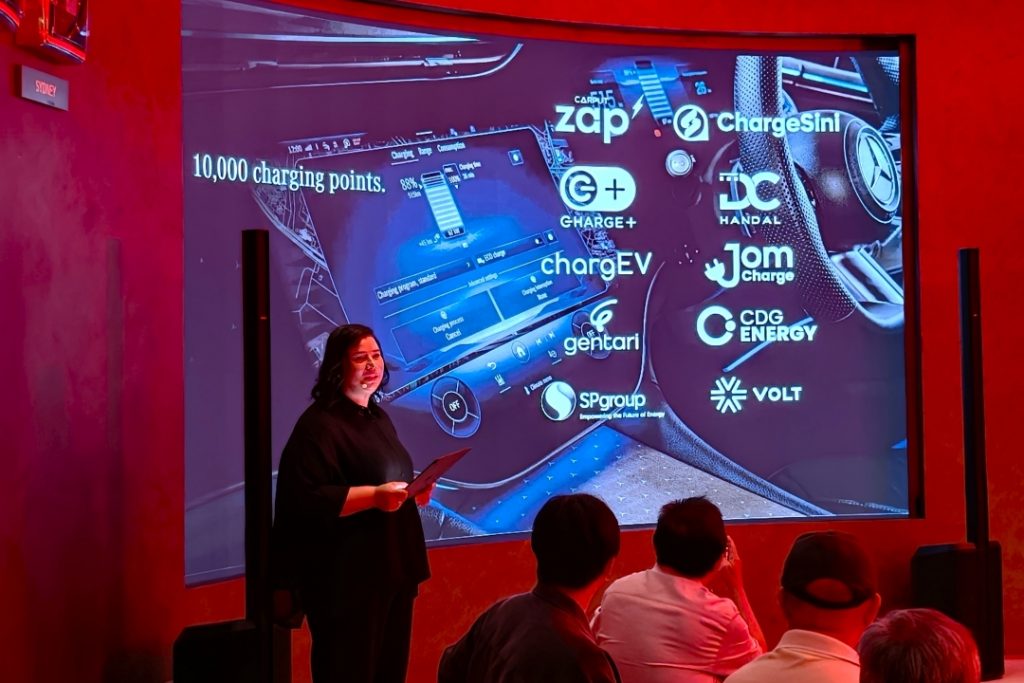
This is significant because the Malaysia-Singapore corridor is one of the country’s most established cross-border driving routes, but EV drivers have had to consider charging networks on both sides of the border separately.
A single charging service reduces another layer of complexity for customers who regularly make the journey for work, business or leisure.
Singapore-based Mercedes-Benz customers can likewise use MB.CHARGE Public when charging at participating networks in Malaysia.
A More Seamless Charging Ecosystem
MB.CHARGE Public also forms part of Mercedes-Benz Malaysia’s wider charging strategy.
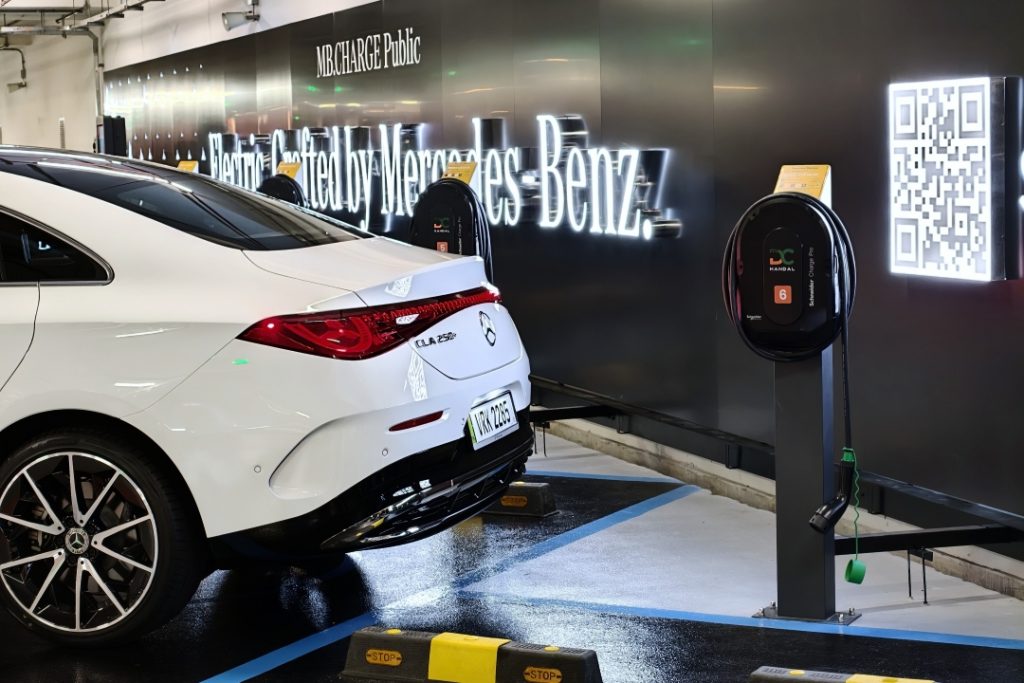
The company currently supports Charge at Home through the Mercedes-Benz Wallbox, Charge at Retail with retail partners, and Charge at Public through partnerships with locations such as golf courses, hotels and shopping malls.
Its public charging infrastructure currently spans 19 locations nationwide with 44 chargers.
MB.CHARGE Public therefore fills a different role. Rather than relying solely on infrastructure operated or installed by Mercedes-Benz, it connects customers to the wider charging ecosystem already being built by independent operators.
This approach is more practical in a market where no single company is likely to build enough chargers to serve every electric vehicle.
Contributing To EV Adoption
The significance of MB.CHARGE Public is how these charging points are presented to the customer.
Malaysia’s EV market is moving beyond the early-adopter stage. As more mainstream buyers consider electric vehicles, charging needs to become less technical and less fragmented.
The industry therefore needs interoperability between vehicles, charging operators, payment systems and navigation platforms.
Mercedes-Benz’s approach recognises that customers do not particularly care which company operates a charger. They care whether they can find it, whether it works, how much it costs and whether they can pay for it easily. Convenience is key.
So this makes the CPO partnerships behind MB.CHARGE Public just as important as the software itself.
Mercedes-Benz Malaysia says it will continue expanding its strategic partnerships, potentially increasing the number of charging networks accessible through the platform.
Globally, MB.CHARGE Public provides access to more than 3 million charging points in 37 countries, with over 380,000 active users.
For Malaysia, the immediate benefit is simpler: one service connecting a Mercedes-Benz vehicle to a much larger portion of the country’s public charging infrastructure.
CarTok Editor’s Note
The most important part of MB.CHARGE Public isn’t the 3,000-plus charging points.
Because the issue with charging experience is the fragmentation – different operators require different apps, accounts and payment methods, etc, Mercedes-Benz is addressing this problem by putting the vehicle at the centre of the charging experience.
With this approach to EV convenience, drivers should not have to know which company operates the charger ahead of a journey; the car should be able to identify a suitable charger, plan the route, provide the necessary charging information and make payment as straightforward as possible.
As Malaysia’s charging network continues to mature, interoperability will matter more than adding charging operators to the mix. MB.CHARGE Public is a good example of why the next phase of EV infrastructure development should focus not only on where chargers are installed, but also on how easily drivers can use them.


We commend Mercedes-Benz Malaysia on the strategic introduction of MB.CHARGE Public. By bringing together more than 3,000 charging points from multiple operators on a single digital platform, this initiative helps address infrastructure fragmentation while delivering a more seamless and convenient experience for EV owners.